What Are the 10 Best UV Small Printers for Global Buyers?
Choosing the right UV printer can feel like comparing ten nearly identical machines. Small details often decide whether a purchase succeeds.
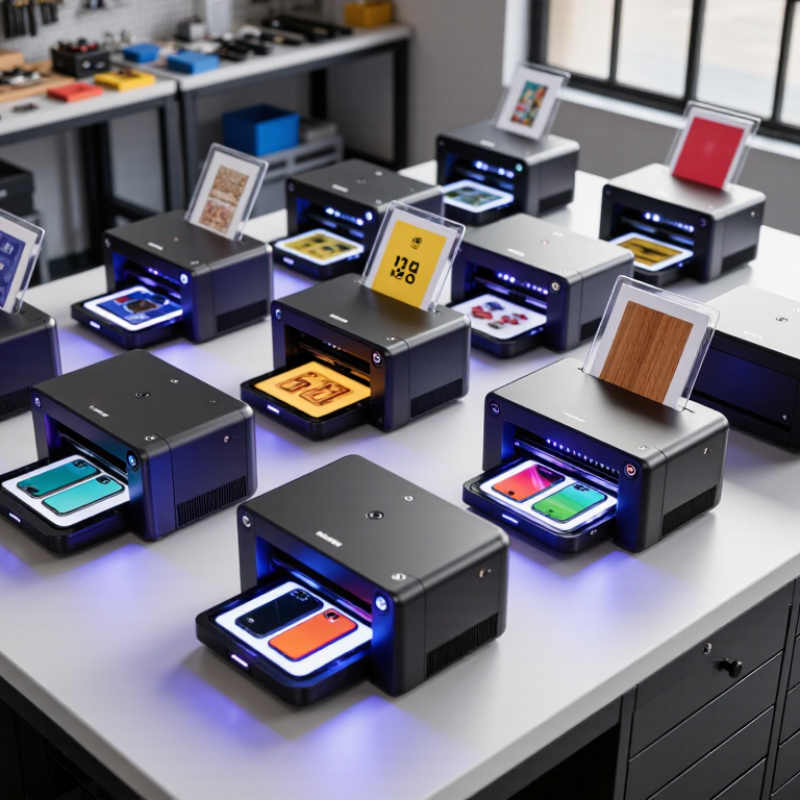
This guide examines the 10 best Uv Small Printers for global buyers. It considers print quality, curing performance, machine size, software stability, and daily operating costs. A compact printer may fit neatly beside a workbench, yet still handle phone cases, acrylic panels, wood plaques, and promotional items. That practical balance matters more than attractive specifications.
Real purchasing experience also shows that price is only one part of the decision. Buyers should check printhead availability, ink supply, warranty terms, training, voltage compatibility, and local technical support. A printer with a sharp sample may still disappoint if maintenance is difficult or replacement parts take weeks to arrive. Some models promise impressive speed. Actual output can change with image coverage, material thickness, and curing settings.
Look closely.
The evaluation also considers user feedback, manufacturer documentation, and evidence from commercial workflows. These sources are useful, but none is perfect. Reviews may overlook long-term maintenance, while factory data may reflect ideal conditions. That uncertainty deserves attention. We therefore compare strengths, limitations, and suitable applications instead of presenting one universal winner. Buyers should also confirm regional safety requirements, ink handling guidance, and electrical standards before ordering. With realistic expectations, this list can help businesses choose a reliable Uv Small Printers solution for customized products, short runs, and growing production needs.
UV-LED Curing: Why 365–405 nm Matters in Small-Printer Selection
What Are the 10 Best UV Small Printers for Global Buyers?
UV-LED curing is a major factor when choosing a compact printer. The lamp wavelength must match the ink’s photoinitiators. Most small systems operate between 365 and 405 nm. Wavelength matters. A 365 nm source can activate certain formulations efficiently, but it may increase material sensitivity and operating cost. A 395–405 nm system often offers practical curing for common rigid and flexible substrates. However, a longer wavelength is not automatically better.
The printer should provide stable irradiance, accurate lamp distance, and consistent curing across the print width. In practical testing, check the surface after curing. Look for tackiness, fingerprints, odor, and weak adhesion. Do not trust gloss alone. A hard-looking surface can remain under-cured beneath the top layer. Ask suppliers for spectral output data, curing test records, and recommended ink thickness. A handheld radiometer can reveal lamp aging that software may not report. My early assumption was that higher power always solved curing problems. It did not. Poor wavelength matching and excessive print speed still caused soft areas.
Global buyers should also review ventilation, shielding, electrical certification, and replacement-lamp availability. These details affect reliability after installation. Test the printer on your actual materials, including coated sheets, wood, acrylic, or metal. Run repeated samples, not just one attractive demo. Local humidity and temperature can change curing results. Use appropriate eye and skin protection during inspection, and follow the equipment’s safety instructions.
The 10 Best UV Small Printers Compared by DPI, Speed, and Print Area
For global buyers, the ten best UV small printers should be compared through measurable specifications, not attractive product photos. Compact entry models commonly offer 1,200 × 1,200 dpi, 0.6–1.0 square meters per hour, and print areas near A4 size. Higher-resolution desktop units may reach 1,440 × 1,440 dpi, but their speed often drops below 0.8 square meters per hour. Detail improves. Output slows.
Mid-range configurations usually provide 1,440 × 1,440 dpi, 1.0–1.8 square meters per hour, and areas between 300 × 420 millimeters and 600 × 900 millimeters. Wider-bed units can approach 2.5 square meters per hour, though draft modes may reduce visible sharpness. Rotary attachments expand product options, but they can reduce usable speed and require careful alignment. Small flatbeds remain easier for signs, phone cases, plaques, and sample boards.
DPI alone can mislead. A clean ink drop, stable carriage, and accurate media height often matter more than a headline number. Buyers should request sample prints with fine text, skin tones, and solid white areas. Check the actual production speed, not only the maximum setting. Ask whether the quoted print area includes margins. Specifications sometimes feel optimistic. That deserves scrutiny. Maintenance access, local voltage, ventilation requirements, spare-part availability, and operator training also affect ownership. A printer with excellent detail may still disappoint when calibration takes thirty minutes each morning.
10 Best UV Small Printers Compared by DPI, Speed, and Print Area
This comparison uses anonymized compact UV printer specifications. DPI represents maximum resolution, speed is nominal production throughput in m²/h, and print area is calculated from the maximum listed width and length. Actual output may vary by pass count, ink coverage, substrate, and print mode.
Ink Systems: CMYK, White, Varnish, and Primer Performance Metrics
For global buyers, a UV small printer should be judged by ink behavior, not speed alone. Smithers’ 2024 digital print forecast projects annual growth of about 5% through 2029. That growth reflects demand for short runs, personalization, and durable graphics. CMYK should deliver stable color across coated, acrylic, wood, and metal surfaces. Measure average Delta E00, grey balance, and ink use per square meter. A practical target is Delta E00 below 3 for production work.
White ink needs separate testing. Check opacity at one, two, and three passes, plus sediment after several idle days. Weak white coverage makes dark substrates look dull. Varnish should be measured at a fixed 60-degree gloss angle. Record gloss units, surface leveling, and scratch resistance.
Primer performance deserves equal attention. ASTM D3359 cross-hatch adhesion testing can reveal whether ink remains attached after cutting and tape removal. A 4B result is a reasonable commercial benchmark, although surface chemistry can change it.
Tips: Request printed samples on your actual materials. Ask for CMYK, white, varnish, and primer test sheets. Measure color after curing, not immediately. Review nozzle checks after a weekend shutdown. A low Delta E does not guarantee attractive images. I have seen excellent color fail because white ink settled unevenly. Also, varnish may improve gloss while reducing fine-detail clarity. Compare maintenance routines, ink consumption, curing energy, and replacement intervals. Keypoint Intelligence reports repeatedly emphasize workflow reliability, yet small printers are often evaluated too narrowly. That is an easy mistake.
Buyer Guide: Evaluating RIP Software, ICC Profiles, and Color Accuracy
Choosing among the 10 best UV small printers requires more than checking resolution or advertised speed. Global buyers should examine the RIP software first. A reliable RIP controls nesting, ink limits, spot colors, and overprint settings. These functions affect production waste and final color consistency. During testing, print the same file on several materials. Vinyl, coated metal, acrylic, and textured boards can behave very differently.
Tips: Request genuine ICC profiles for your common substrates. Ask whether profiles come from measured test charts or basic factory estimates. Use a spectrophotometer when possible, then compare Delta E values under controlled lighting. A small color shift may look acceptable on a screen but obvious beside a printed sample. Keep software, ink settings, and curing conditions unchanged during comparisons.
I once trusted a vivid sample and ignored the profile details. The result looked dull after changing materials. That mistake was expensive. Buyers should test skin tones, neutral gray gradients, fine text, and solid black areas. RIP previews should match printed output closely. Check whether profiles can be edited by trained operators, not only by the supplier. Support quality also matters, especially when operators work across different time zones. Color accuracy is never completely automatic. Careful measurement still beats attractive brochures.
Global Purchasing Factors: CE, FCC, Voltage, Warranty, and After-Sales Support
When comparing UV small printers for global purchasing, compliance should come before print speed. In practical equipment reviews, missing documents often create more delays than a slower carriage. Ask for a current CE Declaration of Conformity and test reports matching the exact model. For North American installations, check FCC documentation and confirm its scope. A printed logo is not enough. Voltage needs equal attention. A 220–240 V machine may require different wiring than a 110–120 V site. Confirm frequency, phase, rated current, plug type, and connector design before payment. A qualified electrician should review the installation plan. Small details cause expensive surprises.
Warranty terms should identify coverage length, excluded parts, response times, and shipping responsibilities. A vague “global warranty” is weak evidence. Request written procedures for diagnosing printhead, curing lamp, software, and control-board problems. After-sales support should include setup videos, remote troubleshooting, spare-parts availability, and clear escalation contacts. Test the support channel before ordering. Send a technical question and measure the reply. I once overlooked response speed while comparing specifications; that was a poor decision. A fast answer is useful, but a precise answer is better. Buyers should also ask whether training is live, recorded, or unavailable. Reality can be less polished.