
For global buyers, choosing the best Wheel Motor in 2026 requires more than comparing torque figures. Vehicle weight, road conditions, maintenance access, thermal control, and local service support all affect real performance. A compact delivery vehicle may need strong low-speed torque on steep streets. A light electric shuttle may value efficiency, quiet operation, and lower unsprung weight. The correct design depends on the complete vehicle system.
Dr. Peter Harrop, a recognized electric-mobility analyst, has offered a practical warning: “A wheel motor must be judged as part of the vehicle, not as an isolated component.” That view remains important for international procurement. Direct-drive motors can reduce mechanical parts and simplify power transmission. Geared designs may provide stronger launch performance, but they can add noise, wear, and service demands. In-wheel systems also place extra mass near the tire, which may influence suspension comfort and handling.
Small details matter. A motor exposed to dust, rain, salt, and repeated braking needs suitable sealing and thermal protection. Certification, warranty terms, controller compatibility, and replacement-part availability also deserve careful review. Performance numbers can look impressive. Reality may disagree.
This guide compares the leading Wheel Motor types for 2026 global buyers. It considers efficiency, torque, durability, integration difficulty, cost, and operating environment. Some recommendations remain uncertain because manufacturers report testing data differently. Buyers should verify laboratory claims through independent tests, pilot vehicles, and route-specific evaluation before making a large purchase.
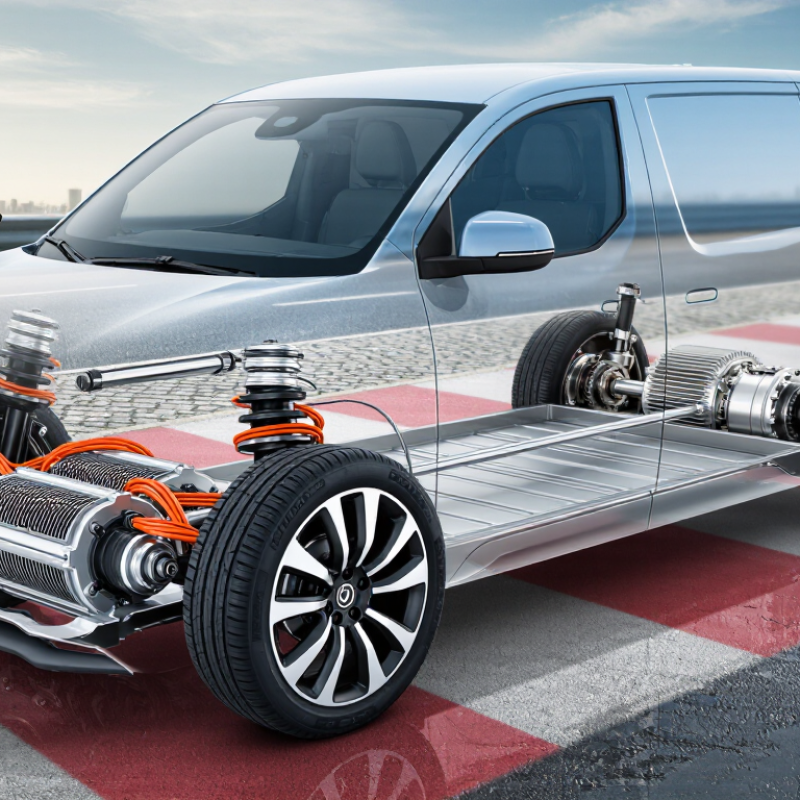
Wheel-motor architecture defines where torque is produced, transmitted, cooled, and serviced. It affects packaging, ride quality, redundancy, and repair access. These terms are not interchangeable. A hub motor sits inside the wheel assembly. An in-wheel motor drives the wheel directly, reducing mechanical transmission parts. An e-axle combines the motor, inverter, reduction gear, and differential into one axle module.
The IEA’s Global EV Outlook 2024 recorded nearly 14 million electric car sales in 2023, representing about 18% of global new-car sales. That scale increases pressure for efficient, repairable platforms. E-axles often suit passenger vehicles because they simplify assembly and protect sensitive components inside the chassis. Hub and in-wheel systems can free cabin space, but added unsprung mass may affect suspension response on rough roads. A pothole still matters.
BloombergNEF’s 2024 Electric Vehicle Outlook estimated global passenger EV sales at roughly 16.7 million units in 2024. Global buyers should therefore compare architecture with local roads, service skills, payload, and climate. In-wheel motors may support precise wheel-by-wheel control, yet sealing and thermal management become demanding. Hub motors can be practical for compact vehicles, although wheel-level maintenance may become more complex. E-axles usually offer a balanced engineering compromise, but they are not automatically superior. I would demand test data for noise, vibration, water protection, efficiency, and five-year service costs. Paper efficiency is not enough.
For wheel-motor buyers, efficiency and cost rarely point to the same design. The International Energy Agency reports that electric motor systems consume about 45% of global electricity. Small efficiency gains therefore matter, especially for delivery vehicles operating all day.
PMSM motors usually deliver the highest efficiency, often around 94–97% in published laboratory and vehicle-drive tests. They provide strong torque at low speed, which suits direct-drive wheels. However, permanent magnets increase material exposure and purchase cost.
Induction motors commonly achieve about 90–95% efficiency, according to motor-system guidance from the U.S. Department of Energy. They are generally cheaper, durable, and easier to source globally. Their heavier design can reduce range in stop-and-go service.
SRM motors can reduce magnet dependence and may offer attractive manufacturing costs. Their simple rotor is mechanically robust. Yet acoustic noise, torque ripple, and control complexity remain practical concerns. Field performance varies widely. Published comparisons are not perfectly consistent.
Cost changes fast. A 2024 vehicle-energy review from the IEA highlights how duty cycle, charging losses, and auxiliary loads affect real consumption. Buyers should compare complete systems, not motor prices alone. Ask for tested efficiency maps, thermal limits, controller costs, and service data. A cheaper induction motor may win in warm, low-mileage fleets. PMSM can justify its premium under heavy daily use. SRM remains promising, but its commercial evidence is thinner.
For 2026, wheel-motor buyers should compare torque density, thermal limits, and efficiency together. Peak numbers alone can mislead.
The U.S. Department of Energy’s Vehicle Technologies Office reports that advanced electric-drive systems can reach roughly 90–95% peak efficiency. Real road operation is less generous. Tire load, inverter losses, cooling performance, and low-speed operation reduce the average. A radial-flux permanent-magnet motor often offers strong torque density and mature control. An axial-flux design can reduce package length, but production consistency and heat removal remain important concerns. Switched-reluctance motors avoid permanent magnets, yet their noise and torque ripple require careful calibration.
Thermal behavior decides whether a wheel motor survives repeated acceleration. The International Energy Agency’s Global EV Outlook 2024 shows continued global electric-vehicle growth, increasing demand for compact and durable drive systems. However, wheel-end placement exposes motors to road splash, vibration, and limited airflow. NREL testing guidance also emphasizes duty-cycle evaluation rather than single-point efficiency claims. Ask suppliers for continuous torque, winding temperature, demagnetization margins, and efficiency maps at 25%, 50%, and 75% load. Check the test temperature.
A 95% laboratory result may hide a short measurement window. My practical view is less optimistic. For many vehicles, a stable 85–92% operating range may matter more than an impressive peak. Real durability still needs independent validation.
The IEA’s Global EV Outlook 2024 projected more than 17 million electric car sales worldwide in 2024. That scale changes motor selection. Buyers should match torque, cooling, and service access to each vehicle class.
For scooters and light three-wheelers, geared hub motors offer compact packaging and strong low-speed torque. Direct-drive hub motors suit heavier urban vehicles with simpler maintenance needs. However, unsprung weight can reduce ride comfort on rough roads. This drawback is easy to underestimate.
Passenger cars usually need central traction motors or integrated e-axles. They support better suspension tuning, thermal control, and highway efficiency. The IEA reports that electric car sales reached almost 14 million in 2023, increasing demand for scalable platforms. For buses and light commercial vehicles, liquid-cooled central motors provide steadier output under heavy loads. Regenerative braking must also match route conditions and vehicle mass.
Choose for duty cycles, not brochures.
The ICCT’s 2024 lifecycle analysis shows that electric vehicles generally produce fewer lifetime greenhouse-gas emissions than combustion vehicles, even with regional electricity differences. Yet efficiency varies with battery size, payload, climate, and charging patterns. A smaller wheel motor may be ideal for a delivery tricycle, but unsuitable for a loaded van climbing long grades. I would also question purely direct-drive designs in markets with poor road surfaces. Their mechanical simplicity is attractive, but repair logistics and wheel impact risks deserve closer testing.
Buyer-oriented comparison of wheel and in-wheel motor architectures for major electric vehicle classes. The engineering ranges below are typical design targets rather than specifications for a particular vehicle or supplier.
| Vehicle Class | Typical Global Use | Recommended Wheel Motor Type | Typical Drive Layout | Indicative Continuous Output | Indicative Peak Torque | Typical System Voltage | Key Technical Advantages | Main Engineering Trade-Offs | Buyer Suitability in 2026 |
|---|---|---|---|---|---|---|---|---|---|
| Electric Bicycles and Cargo E-Bikes | Urban commuting, delivery, last-mile cargo and short-distance personal mobility. | Geared hub motor with permanent magnets | Single rear-wheel motor; front-wheel drive is used for selected light-duty designs. | 0.25–0.75 kW per wheel | 35–80 N·m at the wheel | 24–52 V DC | Low cost, compact packaging, strong launch torque and good efficiency at urban speeds. | Limited continuous thermal capacity; gear noise and wear may increase under heavy cargo duty. | Excellent |
| Electric Three-Wheelers and Auto-Rickshaws | Passenger transport, small freight, urban delivery and developing-market mobility. | Direct-drive hub motor or sealed geared hub motor | Single rear axle motor or two independently controlled rear-wheel motors. | 1.5–5 kW per driven wheel | 100–300 N·m at the wheel | 48–96 V DC | Simple drivetrain, high low-speed torque, regenerative braking and reduced maintenance. | Unsprung mass can affect ride comfort; cooling must be designed for frequent stop-and-go operation. | Excellent |
| Small Electric Passenger Cars | Dense-city travel, short commutes, car-sharing and low-cost urban transport. | Compact in-wheel permanent-magnet motor or low-mass hub motor | Two-wheel drive, normally front or rear axle; independent wheel control is optional. | 10–25 kW per driven wheel | 150–350 N·m at the wheel | 300–400 V DC | Efficient use of cabin space, precise torque control and potential elimination of conventional differentials. | Wheel mass, sealing, impact resistance and suspension tuning are critical; high-speed efficiency must be validated. | Very Good |
| Compact and Mid-Size Electric SUVs | Family transport, mixed urban and highway use, light recreational travel and global passenger-car markets. | High-power hub motor with liquid-cooled stator; in-wheel configuration for performance-focused designs | Two-wheel drive for efficiency or four-wheel drive using one motor per driven wheel. | 25–60 kW per driven wheel | 300–700 N·m at the wheel | 400–800 V DC | Independent traction control, torque vectoring, packaging flexibility and fast response on low-grip surfaces. | Greater unsprung mass, higher sealing requirements, thermal management complexity and higher system cost. | Good with validation |
| Premium and Performance Electric Cars | High acceleration, dynamic handling, premium comfort and advanced all-wheel-drive applications. | Liquid-cooled in-wheel permanent-magnet motor with independent inverter control | Four independently controlled wheel motors. | 40–100 kW per driven wheel | 500–1,000 N·m at the wheel | 600–900 V DC | Very fast torque response, precise yaw control, flexible packaging and high regenerative-braking potential. | High cost, demanding durability testing, wheel-load sensitivity and challenging NVH management. | Specialized |
| Light Commercial Vans and Pickups | Urban delivery, service fleets, municipal operations and short-to-medium-distance cargo transport. | Heavy-duty direct-drive hub motor or reinforced geared hub motor | Rear-wheel drive; dual rear-wheel systems can be used for higher payloads. | 30–75 kW per driven wheel | 500–1,200 N·m at the wheel | 400–800 V DC | High launch torque, reduced mechanical drivetrain parts, good packaging around cargo space and strong low-speed control. | Payload changes affect thermal loading; wheel impact, water ingress and brake blending require robust design. | Good for urban fleets |
| Buses and Shuttle Vehicles | Fixed-route urban transit, airport shuttles, campuses and high-utilization passenger service. | High-torque hub motor with liquid cooling and redundant monitoring | Two-wheel rear axle drive or multiple motors across a driven axle. | 75–180 kW per driven wheel | 1,500–4,000 N·m at the wheel | 600–900 V DC | Strong regenerative braking, high launch performance, packaging flexibility and reduced transmission maintenance. | Large rotating and unsprung masses, continuous-duty heat rejection, road-shock exposure and serviceability requirements. | Good for selected routes |
| Medium and Heavy Electric Trucks | Regional distribution, refuse collection, port logistics, construction support and high-payload transport. | Reinforced hub motor or axle-integrated motor; full in-wheel systems require specialist validation | Rear tandem axle drive or multiple motors distributed across driven wheels. | 100–250 kW per driven wheel | 2,500–6,000 N·m at the wheel | 600–1,000 V DC | High starting torque, independent wheel traction management and potential reduction in mechanical drivetrain components. | Extreme wheel-load and durability demands, high unsprung mass, thermal management and service complexity. | Application-specific |
| Off-Road Utility and Agricultural Vehicles | Mining support, agriculture, forestry, construction and low-speed operation on uneven terrain. | Sealed high-torque hub motor with planetary reduction and active thermal monitoring | Four-wheel independent drive or multiple driven axles. | 20–150 kW per driven wheel | 1,000–5,000 N·m at the wheel | 400–1,000 V DC | Precise traction control, high gradeability, flexible chassis packaging and reduced mechanical transmission losses. | Shock loads, mud and water sealing, debris protection, cooling at low vehicle speed and maintenance access. | Strong for specialist use |
| Low-Speed Autonomous Mobility Platforms | Campus transport, warehouse logistics, delivery robots and controlled-area passenger services. | Low-voltage direct-drive hub motor with integrated position sensing | Two-wheel differential drive or four-wheel independent drive. | 0.5–10 kW per driven wheel | 30–250 N·m at the wheel | 48–400 V DC | Compact integration, precise low-speed maneuvering, easy software control and minimal mechanical parts. | Limited speed range, sensor and fail-safe integration requirements, and sensitivity to wheel slip. | Excellent in controlled areas |
Data basis and interpretation: The International Energy Agency reported that global electric car sales exceeded 17 million in 2024, with electric cars representing more than one-fifth of global car sales. The table uses that expanding global EV market as context while presenting practical engineering ranges commonly used for early-stage vehicle architecture selection. Actual values depend on vehicle mass, tire radius, duty cycle, cooling method, battery voltage, road grade, safety requirements and homologation rules. “In-wheel motor” places the motor inside the wheel assembly, while “hub motor” may use a motor integrated into the hub with or without a reduction gear.
Choosing a wheel motor in 2026 requires more than comparing torque and price. Direct-drive motors offer quiet operation and fewer wearing parts. Geared motors can provide stronger starting torque in compact designs. However, gearboxes add noise, lubrication needs, and possible service points. The right choice depends on terrain, vehicle mass, duty cycles, and local repair skills.
Check the IP rating carefully. IP67 protects against dust and temporary water immersion, while IP69K supports demanding washdown conditions. Neither rating guarantees long-term corrosion resistance. Ask for test conditions, cable-entry details, and connector protection. Global standards also need attention. IEC 60529, EMC requirements, and transport-related testing may apply differently across markets. One certificate rarely covers every destination.
Tips: Request independent test reports, not only supplier declarations. Build a sample unit and test it in heat, rain, dust, and repeated braking. We have seen attractive specifications fail when thermal loads were measured only in laboratory conditions. Supply chains deserve equal scrutiny. Confirm magnet, bearing, sensor, controller, and seal availability. Calculate lifecycle costs, including energy use, spare parts, software support, downtime, and technician training. A cheaper motor can become expensive after two seasons. Also, keep realistic assumptions. Road salt, overloaded wheels, and poor storage often matter more than a perfect brochure rating.
© 1999-2025 The Lincoln Electric Company