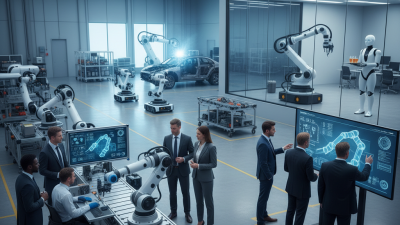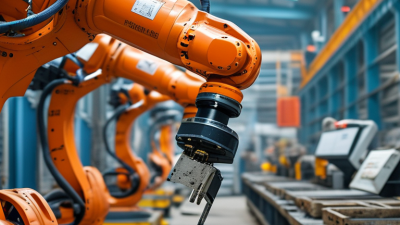

The 2026 Top Robotic Manufacturing Trends for Global Buyers will be shaped by practical pressures, not factory spectacle. Labor shortages, quality demands, energy costs, and resilient supply chains are pushing manufacturers toward measurable automation. The International Federation of Robotics reported 541,302 industrial robots installed worldwide in 2023. More than 4.28 million industrial robots were operating globally. These figures show mature adoption, but they also reveal uneven progress across regions and industries.
The direction is clear.
Buyers are evaluating collaborative robots, autonomous mobile robots, machine vision, digital twins, and artificial intelligence. However, technology alone does not guarantee productivity. Deloitte and The Manufacturing Institute estimate that United States manufacturing could face 3.8 million job openings by 2033. Robotic manufacturing may reduce repetitive workloads, but it cannot replace strong process design, maintenance skills, or responsible workforce planning.
As Marina Bill, President of the International Federation of Robotics, stated, “Robots are no longer a vision of the future. They are already an integral part of our daily lives.” Her observation matters to global buyers comparing suppliers, software, safety systems, and long-term service support. A robot beside a welding cell is only one visible part of the investment. Data quality, integration time, spare parts, training, and cybersecurity often decide the real return.
The picture is not perfectly clean.
Industry forecasts can miss economic shocks, weak infrastructure, or changing customer demand. A lower-cost machine may create higher costs later through downtime. This guide examines the leading 2026 trends with that uncertainty in mind, helping manufacturers separate proven capability from persuasive marketing.
2026 Top Robotic Manufacturing Trends for Global Buyers
Definition and Scope of Robotic Manufacturing in 2026
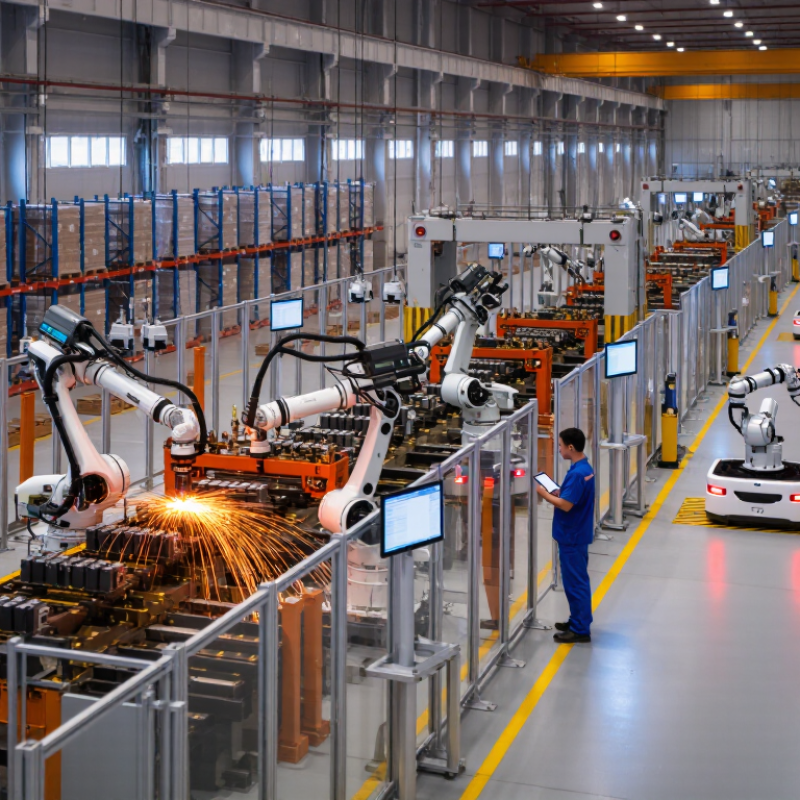
Robotic manufacturing in 2026 means more than installing mechanical arms. It includes robots, sensors, machine vision, control software, safety systems, integration, maintenance, and worker training. The scope also covers collaborative robots, autonomous mobile robots, automated inspection, and robotic material handling. A useful test is simple: can the system sense, decide, move, and report within a production process?
The numbers show why this definition matters. The International Federation of Robotics reported 541,302 industrial robot installations worldwide in 2023. Its World Robotics 2024 report also recorded more than 4.28 million industrial robots operating globally. These figures include welding, assembly, packaging, and other factory applications. They do not fully measure software quality, integration difficulty, or operator readiness. That gap can mislead global buyers.
On a typical line, one vision-guided robot checks a metal part, while another moves trays between stations. A digital system records cycle time, errors, energy use, and maintenance alerts. The robot is only one part.
The boundary remains imperfect. Some suppliers call automated equipment “robotic manufacturing” without providing real autonomy or useful data. Buyers should inspect task flexibility, safety validation, spare-part access, cybersecurity controls, and total operating cost. The International Data Corporation has identified artificial intelligence and automation as major enterprise investment areas, but adoption still depends on reliable processes and skilled people. Fast deployment is attractive. Poor integration is expensive.
Robotic manufacturing includes the use of programmable industrial robots for assembly, welding, handling, packaging, inspection, and other production tasks. Robot density is a useful benchmark for measuring automation intensity across manufacturing markets. The chart shows operational industrial robots per 10,000 manufacturing employees, based on 2022 figures reported by the International Federation of Robotics. For global buyers, these benchmarks highlight markets with strong automation ecosystems and provide context for evaluating workforce availability, integration capability, and future investment needs.
Source: International Federation of Robotics, World Robotics 2023. Values represent robots per 10,000 manufacturing employees.
Global buyers are prioritizing robotic systems that connect sensing, software, and production equipment. The International Federation of Robotics reported 541,302 industrial robot installations worldwide in 2023. Its World Robotics 2024 report also recorded more than 4.28 million robots operating in factories. That scale increases demand for adaptable technology, not merely faster machines.
AI-powered vision is becoming central to inspection, bin picking, and flexible assembly. High-resolution cameras can detect surface defects under changing light conditions. Edge computing then reduces response delays near the production line.
Digital twins add another layer, allowing engineers to test cycle times before changing physical equipment. The technology is promising. Data quality remains uneven.
Collaborative robots are also expanding where operators handle frequent, repetitive tasks. The IFR identifies electronics, automotive, and metal industries as important automation users. Predictive maintenance platforms combine vibration, temperature, and motor-current data to identify unusual behavior early. Reliable integration still matters more than impressive demonstrations. Poorly connected systems create expensive blind spots.
The Boston Consulting Group has estimated that advanced manufacturing could deliver substantial productivity gains through automation, connectivity, and artificial intelligence. However, buyers should examine training requirements, cybersecurity controls, spare-part access, and local service capacity. A technically advanced cell can underperform when workers cannot adjust it safely. That gap deserves more attention. Procurement teams should request measurable pilot results, transparent data ownership, and realistic payback assumptions before approving large-scale deployment.
Robots are moving beyond repetitive assembly into flexible, data-driven production. The International Federation of Robotics reported 541,302 industrial robot installations worldwide in 2023. Its World Robotics 2024 report also recorded more than 4.28 million robots operating globally. Automotive plants still use robots for welding, painting, fastening, and battery assembly. Electronics factories apply smaller systems for precision insertion, soldering, testing, and cleanroom handling. Accuracy matters here.
Metal manufacturers increasingly combine robotic welding with machine vision and force sensing. These tools detect uneven surfaces, adjust torch positions, and reduce rework. Food and beverage facilities use robots for picking, packing, palletizing, and hygienic material handling.
In warehouses connected to factories, autonomous mobile systems move components between storage and production cells. The World Economic Forum’s Future of Jobs Report 2025 identified robotics and autonomous systems as major business transformers for 58% of surveyed employers by 2030. However, adoption is not automatically efficient. Buyers should examine cycle time, safety validation, maintenance skills, data integration, and changeover demands. A fast robot can still create a slow factory.
This remains an uncomfortable lesson. Smaller suppliers may also need phased deployment, because integration costs and operator training are easy to underestimate.
When global buyers evaluate industrial robotic solutions in 2026, purchase decisions should begin with measurable production needs, not impressive demonstrations. Review actual cycle-time studies, payload behavior, reach at full extension, and accuracy after repeated shifts. A robot that performs well for ten minutes may struggle beside heat, dust, or vibration. Request recorded factory trials. Ask who collected the data.
Integration often determines the real return. Check compatibility with existing controllers, vision systems, conveyors, and manufacturing software. Clear communication protocols reduce future rework. Safety functions must support risk assessments, guarded areas, emergency stops, and safe maintenance access. Confirm documentation, operator training, spare-part availability, and remote support response times. These details are less exciting, but they protect production continuity.
Calculate total cost over several years. Include installation, tooling, programming, energy use, maintenance, retraining, and planned downtime. Examine whether the system can handle product changes without expensive engineering. Modular designs may help, although “scalable” claims deserve proof. Start with evidence. During supplier evaluations, involve operators and maintenance technicians; they notice awkward access points and cleaning problems early. I have seen buyers overvalue speed and undervalue recovery after a fault. That balance needs review. Cybersecurity, data ownership, and software-update responsibilities should also be written clearly before purchase.
For global buyers, 2026 robotic manufacturing decisions will depend on local conditions, not headline automation rates. The International Federation of Robotics reported 541,302 industrial robot installations worldwide in 2023, with 4.28 million units operating. That scale signals opportunity, but averages hide differences in labor costs, grid reliability, technician availability, and import requirements. A cell designed for a stable factory may fail beside a dusty press line. This risk is often underestimated.
Safety and integration deserve equal weight. ISO 10218-1:2025 and ISO 10218-2:2025 define updated safety expectations for industrial robots and applications. Buyers should request risk assessments, safeguarded access, emergency-stop validation, and documented software changes before acceptance. The World Economic Forum’s Future of Jobs Report 2025 states that 58% of employers expect robotics and autonomous systems to transform business by 2030. Yet integration remains difficult. Interfaces between robots, conveyors, vision systems, and manufacturing software need real production testing. A perfect simulation is not enough.
Tips: Inspect the actual floor before selecting equipment. Measure dust, heat, noise, network stability, and maintenance access. Ask suppliers for safety documents and fault-recovery demonstrations. Keep spare parts locally when possible. Also, challenge optimistic payback calculations; product variation and operator training can change them quickly. Some forecasts will be wrong. That is normal. Plan for revision.
| Trend / Data Dimension | Verified Market or Technical Data | 2026 Buyer Implication | Recommended Evaluation Metrics | Reference / Status |
|---|---|---|---|---|
| Global industrial robot demand | More than 540,000 industrial robots were installed worldwide in 2023, and the global operational stock exceeded 4.2 million units. | Buyers should plan for continued automation growth while prioritizing application fit, service capacity, and lifecycle support rather than purchasing volume alone. | Annual installation capacity; installed-base compatibility; mean time to repair; spare-parts availability; total cost of ownership. | International Federation of Robotics, World Robotics 2024; historical global data. |
| Asia-Pacific market concentration | Asia accounted for approximately 70% of new industrial robot installations in 2023, making regional production, logistics, and technical support important buying factors. | Global buyers should compare local integration capability, training coverage, import procedures, and spare-parts lead times by destination country. | Local response time; customs classification; delivered lead time; language support; service-part fill rate. | International Federation of Robotics, World Robotics 2024; regional share based on 2023 installations. |
| Collaborative robot adoption | Collaborative robots are designed for applications where people and robots may share a workspace, but collaboration is dependent on risk assessment, safeguarded operating modes, tooling, speed, force, and task conditions. | Do not treat a collaborative designation as automatic permission for unrestricted human-robot contact. Validate the complete application and end-of-arm tooling. | Contact-force limits; stopping performance; protective separation distance; tool safety; task-specific risk assessment. | ISO/TS 15066:2016 and ISO 10218-1/-2:2025; application-dependent safety requirements. |
| Updated robot safety framework | The 2025 editions of ISO 10218-1 and ISO 10218-2 address industrial robot safety and robot-system or cell integration, including design, integration, commissioning, operation, and maintenance considerations. | Procurement specifications should require documented safety validation, safeguarding design, operating procedures, and maintenance controls aligned with the applicable market. | Risk-assessment completeness; safety-function validation; emergency-stop performance; access-control design; training records. | ISO 10218-1:2025 and ISO 10218-2:2025; confirm legal adoption in the destination market. |
| EU regulatory preparation | The European Union Machinery Regulation (EU) 2023/1230 applies from 20 January 2027, creating a 2026 preparation milestone for machinery placed on the EU market. | Exporters and buyers should begin technical-file reviews, conformity assessment planning, instructions, cybersecurity documentation, and integration responsibility mapping during 2026. | Technical-file readiness; declaration documentation; safety-related control-system evidence; software and cybersecurity records. | Regulation (EU) 2023/1230; application date: 20 January 2027. |
| AI-supported vision and inspection | Machine vision and AI-assisted inspection can improve defect detection and process adaptability, but accuracy depends on lighting, sample quality, defect definitions, model validation, and change control. | Buyers should require a representative acceptance test using real production variation instead of relying only on laboratory demonstrations. | False-accept rate; false-reject rate; cycle time; dataset coverage; model-retraining process; traceability of inspection results. | Application-performance data should be validated through a site-specific factory acceptance test. |
| Digital integration and interoperability | OPC UA, MQTT, industrial Ethernet, and standardized data models are widely used approaches for connecting robots with manufacturing execution, supervisory, quality, and maintenance systems. | Specify open interfaces, data ownership, historian compatibility, time synchronization, and offline recovery before approving the automation design. | Data latency; message-loss recovery; protocol support; tag naming consistency; API documentation; cybersecurity controls. | IEC 62541 for OPC UA; ISO/IEC 30141 for IoT reference architecture; verify implementation details by project. |
| Cybersecurity for connected robots | Network-connected robots introduce risks involving remote access, unpatched software, unauthorized program changes, removable media, and production-data exposure. | Treat cybersecurity as part of functional safety and operational continuity. Require controlled access, secure backups, segmentation, and incident-recovery procedures. | Patch-support period; role-based access; multifactor authentication; backup restoration time; vulnerability-response process. | IEC 62443 series; NIST Cybersecurity Framework 2.0; requirements should be adapted to the plant environment. |
| Energy efficiency and sustainability | Robot energy use varies significantly with payload, motion profile, standby time, duty cycle, auxiliary equipment, and compressed-air consumption; there is no universal energy figure for all robot cells. | Request measured cell-level energy data under defined operating conditions and evaluate energy per good part rather than robot power rating alone. | Kilowatt-hours per good part; standby consumption; compressed-air use; regenerative performance; component recyclability. | Use site measurements and a consistent duty-cycle test; sustainability claims require product-specific evidence. |
| Flexible manufacturing and rapid changeover | Vision guidance, offline programming, modular tooling, automatic recipe selection, and quick-change fixtures support higher product variety and shorter changeover cycles. | Select systems that can handle expected product variants without excessive manual reprogramming or custom engineering for every new part. | Changeover time; number of validated recipes; first-pass yield; programming hours per new product; fixture-change time. | Validate with a multi-product pilot using actual production volumes and tolerance ranges. |
| Workforce and lifecycle service | Robot productivity depends on skilled programming, electrical maintenance, safety validation, process engineering, and data-integration capabilities in addition to the hardware. | Include training, documentation, remote-support governance, spare parts, and end-of-life planning in the initial purchase decision. | Training hours; local qualified technicians; uptime target; service response time; spare-parts lead time; software-support duration. | Best-practice procurement criterion; verify through contractual service-level commitments. |
Note: Market figures are historical reference data, while 2026 implications are procurement-planning guidance. Applicable legal, safety, cybersecurity, and conformity requirements should be confirmed for the destination country and the complete integrated robot cell.
© 1999-2025 The Lincoln Electric Company