
Choosing the right Vacuum Sequence Valve supplier can shape an entire fluid-control system. A dependable valve must respond consistently when pressure changes, even near demanding vacuum levels. Small details matter, such as cracking pressure, seal material, port size, and repeatability. A valve that looks suitable on paper may behave differently after installation.
This guide examines seven leading Vacuum Sequence Valve suppliers worldwide. The comparison focuses on engineering experience, product range, quality systems, technical support, and application flexibility. It also considers practical details, including stainless-steel construction, cleanroom compatibility, custom spring settings, and documentation quality. Experienced engineers often review datasheets carefully, then confirm performance through bench testing or application trials. That step is easy to skip. It should not be.
No single supplier serves every vacuum application perfectly. Some companies offer broader customization, while others provide faster delivery or stronger regional support. Public specifications can also leave important questions unanswered, including service life, leakage testing, and replacement availability. Therefore, this overview should support purchasing research, not replace technical validation. Buyers should verify current certifications, pressure ratings, material compatibility, and delivery conditions directly with each supplier.
The selected companies are assessed from a practical buyer’s perspective. Their reputation matters, but measurable performance matters more. A reliable supplier should provide clear drawings, traceable quality records, responsive engineering advice, and realistic operating limits. Those qualities reduce installation surprises and long-term maintenance costs. The ranking may invite debate. That is reasonable, because the best choice depends on the vacuum system, operating environment, budget, and required control accuracy.
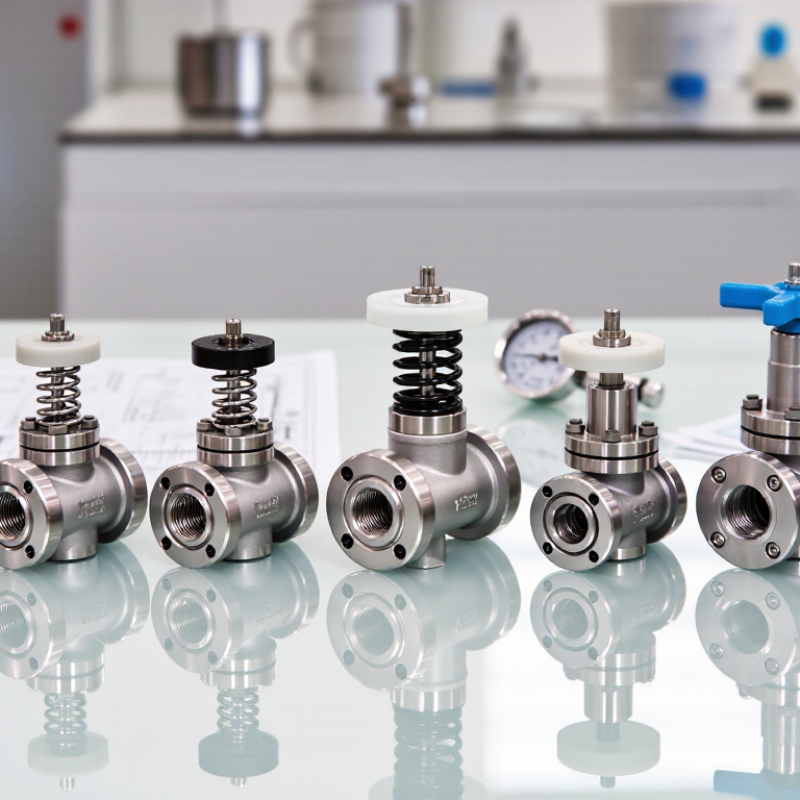
A vacuum sequence valve controls when one vacuum circuit connects to another. It responds to pressure, not a timer. When the primary chamber reaches its preset vacuum, the valve opens and starts the next stage. This staged action protects sensitive components and reduces unnecessary pump loading.
Inside, a diaphragm, spring, and poppet usually create the control mechanism. The pressure difference moves the diaphragm against the spring force. At the calibrated setpoint, the poppet lifts from its seat. When pressure rises again, the spring closes the passage. Small changes matter. A 10 kPa error can alter cycle timing, especially in automated packaging or semiconductor handling.
The practical detail is hysteresis. Opening and closing pressures should not be identical. Otherwise, the valve may chatter near the setpoint. A common commissioning mistake is ignoring conductance. A narrow tube can make a correctly rated valve perform poorly. The valve may open, but the chamber still evacuates slowly.
Grand View Research estimates the global vacuum equipment market will expand at about 5.8% annually through 2030. That growth reflects wider use in manufacturing, laboratory processing, and electronics production. MarketsandMarkets also identifies automation and process control as important vacuum-system drivers. These reports describe the wider equipment sector, not every sequence valve. That distinction matters. Selection should include pressure range, leakage rate, response time, materials, temperature limits, and serviceability. Field data is often less perfect than catalog figures. Testing under the actual gas load remains necessary.
When comparing seven global vacuum valve suppliers, technical evidence matters more than polished marketing. Request helium leak-rate data, pressure ranges, actuation times, and tested cycle counts. These figures should match your chamber design, not a generic product sheet.
Look closer.
Evaluate material choices carefully. Stainless steel, elastomers, and seals behave differently under heat, corrosive gases, and repeated cleaning. Ask whether each valve is tested at your operating temperature and vacuum level. A supplier with documented ISO 9001 processes, calibration records, and full component traceability offers stronger reliability. Request sample inspection reports. Do not accept vague claims.
Service capability often separates a dependable supplier from an inexpensive one. Check regional inventory, response times, spare-seal availability, and technician training. Ask how failures are investigated and how corrective actions are recorded. Experience with semiconductor, research, or coating systems can reveal practical competence.
However, no supplier is perfect. I would test a sample valve before approving a large order. A successful factory visit can also expose weaknesses hidden in brochures, such as poor packaging or inconsistent documentation.
Compare warranty terms, delivery history, and communication during technical questions. Suppliers should explain limitations clearly, including pressure loss, particle generation, and maintenance intervals. Reliable partners provide realistic answers, even when those answers reduce the immediate sale. Pricing still matters, but a low purchase cost can become expensive after repeated leaks, downtime, or emergency shipping.
Worldwide sourcing now includes seven leading vacuum sequence valve supplier profiles: industrial vacuum specialists, semiconductor equipment manufacturers, laboratory system makers, custom valve engineering firms, regional fluid-control distributors, OEM component producers, and maintenance-focused suppliers. This grouping helps buyers compare capability rather than advertising claims. Experienced teams check switching pressure, leak rate, pressure range, materials, and cycle life before approval. A sequence valve must switch at a defined pressure and remain stable during repeated vacuum cycles. Small errors matter.
Industrial specialists often offer broad inventories and detailed test records. Semiconductor suppliers usually provide cleaner materials and tighter process control. Laboratory suppliers focus on compact designs and simple adjustment. Custom engineering firms can adapt ports, seals, and actuation methods. Regional distributors may shorten delivery times and support local commissioning. OEM producers match existing assemblies, while maintenance suppliers provide replacement guidance, calibration, and field troubleshooting. Ask for drawings, helium leak data, spring specifications, and documented test conditions. Photos help, but they are not evidence.
From practical sourcing work, the strongest suppliers explain limitations clearly. They identify outgassing risks, temperature limits, seal wear, and unavailable spare parts. That honesty builds trust. Still, supplier rankings can be imperfect. A technically excellent valve may fail because of long lead times or weak after-sales training. Buyers should test samples under real load, record switching pressure, and inspect performance after extended cycling. Do not rely on a polished catalogue alone. The right worldwide supplier depends on vacuum level, media, contamination controls, installation space, and service expectations.
| No. | Supplier Profile | Primary Valve Types | Typical Pressure Range | Common Port Sizes | Actuation Options | Typical Applications | Common Compliance Features |
|---|---|---|---|---|---|---|---|
| 1 | Semiconductor Vacuum Specialist | Gate, slit, isolation and sequence valves | Atmospheric pressure to approximately 10-9 mbar | NW 16–NW 100; ISO and custom flange formats | Pneumatic, electric and integrated position sensing | Wafer handling, load locks and process-transfer systems | Cleanroom-compatible construction, leak testing and particle-control options |
| 2 | Industrial Vacuum Automation Supplier | Angle, inline, butterfly and pneumatic sequence valves | Atmosphere to approximately 10-7 mbar | DN 16–DN 250; ISO-KF and ISO-K connections | Single-acting and double-acting pneumatic drives | Vacuum packaging, conveying, coating and industrial automation | CE-marked configurations, replaceable seals and proximity switches |
| 3 | Custom UHV Valve Manufacturer | UHV gate, right-angle, all-metal and isolation valves | Atmosphere to approximately 10-10 mbar | DN 16–DN 160; CF, ISO-KF and ISO-F options | Manual, pneumatic, motorized and solenoid-controlled | Particle physics, surface science and advanced research equipment | Metal seals, helium leak testing and bakeable designs |
| 4 | Research Vacuum Components Supplier | Bellows-sealed angle, throttle and isolation valves | Atmosphere to approximately 10-8 mbar | NW 10–NW 100; small laboratory port sizes | Manual, pneumatic and stepper-motor control | Laboratory chambers, analytical instruments and deposition systems | Low-outgassing materials, stainless-steel bodies and documented leak rates |
| 5 | Coating and Thin-Film Equipment Supplier | High-cycle butterfly, slit and process-isolation valves | Atmosphere to approximately 10-6 mbar | DN 40–DN 400; ISO-F and custom chamber interfaces | Pneumatic or motorized with programmable position control | PVD, sputtering, evaporation and plasma-processing equipment | High-cycle testing, corrosion-resistant materials and interlock compatibility |
| 6 | General Process Vacuum Supplier | Solenoid, check, vent, relief and sequence valves | Atmosphere to approximately 10-5 mbar | G 1/8–G 2; NW 16–NW 50 | Direct-acting solenoid and pneumatic actuation | Vacuum furnaces, heat treatment, food processing and material handling | Standardized fittings, serviceable seals and electrical safety options |
| 7 | Vacuum Systems Integrator and Distributor | Isolation, vent, bypass and pneumatic sequence assemblies | Atmosphere to approximately 10-6 mbar | NW 16–NW 160; KF, ISO and threaded connections | Manual, pneumatic and electrically interlocked systems | OEM vacuum skids, laboratory systems and retrofit projects | System-level testing, documentation, spare-parts support and integration services |
Note: Pressure ranges and configurations represent commonly published industry capabilities for each supplier profile. Actual performance depends on valve design, seal material, flange standard, temperature, cycle rate and application conditions.
Choosing among seven vacuum sequence valve suppliers requires more than comparing catalog prices. Their strongest products serve different operating realities. One supplier may offer fast-acting valves for automated packaging lines. Another may focus on high-temperature models for heat-treatment chambers. Cleanroom specialists often provide low-particle designs for semiconductor tools, while corrosion-resistant versions suit chemical processing. Compact valves help laboratory systems save bench space. Heavy-duty models support repeated cycling in industrial vacuum furnaces. Custom manufacturers can adapt ports, seals, and control signals for unusual equipment.
Performance depends on the application. In food packaging, stable sequencing protects product quality during rapid evacuation. In coating systems, tight shutoff helps maintain consistent chamber pressure. Research laboratories may value quiet operation and easy maintenance more than extreme cycle speed. Medical-device production needs traceable materials and clear inspection records. I have found that published leak-rate data, cycle testing, and seal compatibility matter more than attractive brochures. Ask for test conditions, not only headline specifications.
No valve fits everything. A high-speed design may sacrifice service life. A low-cost model may need more frequent seal replacement. I would compare response time, allowable temperature, port size, controller compatibility, and local technical support. Supplier reliability also shows in spare-parts availability and practical installation guidance. One overlooked detail is operator training. Even a well-built valve can perform poorly when sequencing logic is misunderstood. The better choice is usually the supplier that explains limitations clearly, not the one making the loudest claim.
How to Select the Right Supplier for Your Vacuum System
Choosing among the world’s best vacuum sequence valve suppliers requires more than comparing prices. A 2024 Grand View Research analysis estimated steady growth in the global vacuum valve market, driven by semiconductor, coating, and analytical equipment demand. That growth increases supplier choices, but also creates quality differences. Ask for measured leak rates, cycle-life data, pressure ratings, and test conditions. A valve rated at 10⁻⁹ mbar·L/s means little without a defined testing method.
Match the valve to the process, not the catalog picture. Confirm whether the system needs pneumatic, motorized, or solenoid actuation. Check body materials, seal compatibility, bake-out temperature, and particle performance. ISO 21360 provides standardized approaches for measuring vacuum pump performance, while ISO 14644-1 supports controlled-environment classification. These references help suppliers provide comparable evidence. Still, documentation can look perfect.
Real operation is messier.
Request sample drawings, inspection records, and a written replacement schedule. For high-cycle systems, ask how the supplier validates fatigue after thousands of actuations. Review delivery capacity, regional service, spare-part availability, and technical response times. The 2024 semiconductor equipment outlook from SEMI projected substantial industry investment, making reliable maintenance support increasingly important. Do not accept vague claims about “long life.” I would also test one valve under actual temperature, contamination, and cycling conditions. A small pilot may expose weaknesses that a polished datasheet hides.
© 1999-2025 The Lincoln Electric Company