

Choosing an Omni Directional Wheel is not a simple matter of matching diameter and price. In practice, wheel performance affects turning accuracy, floor protection, noise, energy use, and equipment stability. A warehouse cart may rotate smoothly on polished concrete, yet struggle near a floor joint or metal threshold. Small details matter.
The International Federation of Robotics reported 541,302 industrial robots were installed worldwide in 2023, a 2% annual increase in its World Robotics 2024 report. This growth reflects a wider need for compact, maneuverable equipment in factories, warehouses, hospitals, and service environments. The MHI 2024 Annual Industry Report also highlights continuing investment in supply-chain technology and automation. However, automation demand does not make every wheel suitable. That assumption fails.
These seven buying tips examine load capacity, roller material, wheel diameter, traction, offset design, operating surfaces, and maintenance needs. They also consider duty cycles, temperature, debris, and turning frequency. A wheel carrying 500 kilograms should not be judged only by its advertised capacity. Dynamic loads, uneven distribution, and sudden stops can reduce real-world performance. Product datasheets sometimes simplify these conditions too much.
Reliable selection requires more than reading a catalog. Check test methods, mounting dimensions, safety margins, and manufacturer experience. Ask whether the wheel has been tested on your actual floor. If possible, run a short trial with the intended payload. It may reveal vibration, noise, or steering resistance before those problems become expensive. A careful decision is not always the fastest one, but it is usually the safer investment.
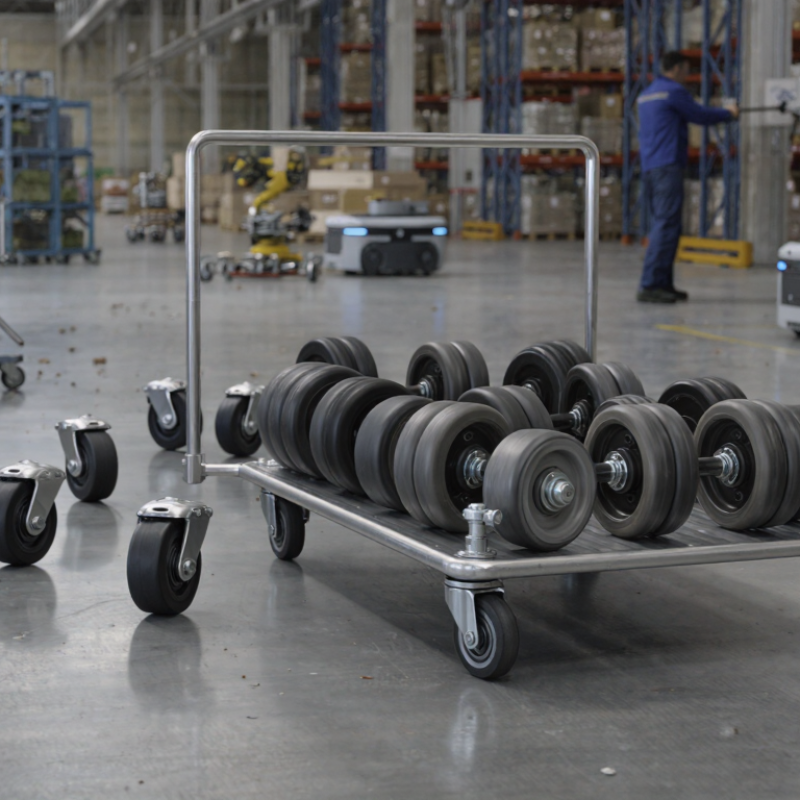
Choosing an omnidirectional wheel starts with a clear definition of the job. List the robot’s total mass, payload, battery, frame, and expected impact. Then divide the load across the wheels, but do not trust perfect division. Uneven floors and turning forces can overload one wheel. Add a practical safety margin, often 20 to 30 percent, after checking the supplier’s rating method. A static rating may not represent repeated starts, ramps, or sideways acceleration. Measure it honestly.
Speed requirements need more than a top-speed number. Calculate wheel RPM from the target speed and wheel diameter. A larger wheel travels farther per rotation, but it may demand more starting torque. Check motor torque at the intended battery voltage, not only its advertised peak. For frequent direction changes, examine acceleration and braking loads. Fast movement on a smooth floor can expose vibration, noise, or lost traction. Test the floor.
Movement requirements define the wheel geometry and contact material. Confirm whether the platform must translate sideways, rotate in place, or combine both motions. Roller spacing affects vibration, while surface hardness affects grip and floor marking. Run a loaded prototype through door thresholds, seams, and tight turns. I once treated a clean laboratory floor as typical, and the design struggled on textured concrete. That mistake was avoidable. Record current draw, wheel temperature, stopping distance, and tracking error during trials. If the data looks comfortable, repeat the test with a partly worn wheel. Real floors are rarely kind.
Choosing the right omni-directional wheel starts with platform behavior, not wheel diameter. A warehouse cart needs controlled lateral movement. A camera base may need quiet, precise rotation. The IFR World Robotics 2024 report recorded 541,302 industrial robot installations worldwide in 2023. This growth increases demand for mobile platforms, but no single wheel design fits every floor.
Compare seven buying points: wheel type, load rating, roller material, diameter, offset, floor condition, and motor compatibility. Standard Omni Wheels suit sideways correction on smooth floors. Mecanum layouts provide holonomic travel, but angled rollers can lose grip on dust, thresholds, or wet surfaces. Ball wheels turn freely, yet they often require cleaner floors and careful load distribution. Match the rated load to the real load, including batteries, tools, and brackets. Leave a safety margin. Excess margin adds mass and torque demand.
Test before ordering. Place the platform on its actual floor, then measure turning drift, vibration, noise, and stopping distance. A 10-millimeter threshold can expose weaknesses that a smooth showroom floor hides. I would also check roller wear after repeated diagonal movement; this step is easy to overlook. For industrial truck applications, review ISO 3691-4:2023 alongside the manufacturer’s technical data. A catalog drawing can look convincing and still disappoint. Floors change everything.
Material affects both movement and floor protection. Polyurethane wheels usually balance quiet rolling, abrasion resistance, and moderate shock absorption. Nylon wheels handle heavier loads, but they can feel harsh on vinyl or polished concrete. Rubber wheels reduce noise and vibration, although they may leave marks under heat or pressure. ISO 22883 recommends checking rated load, rolling resistance, and endurance through standardized caster tests. Do not trust appearance alone. A thick wheel can still fail under uneven loading.
Tip: Match the wheel to the floor, not only the equipment. Soft polyurethane suits finished wood, vinyl, and sealed concrete better than hard nylon. Carpet needs a larger diameter and a tread that will not collect fibers. ASTM F970 testing shows that resilient flooring can suffer indentation under sustained loads, so calculate the load per wheel. Divide the total weight by the number of wheels, then add a safety margin. Four wheels do not always share weight equally.
Tip: Test before buying in real conditions. Push the unit across a seam, turn sharply, and inspect the contact path after one week. I once assumed a softer tread was safer; it compressed and increased rolling resistance. That mistake matters. The 2023 U.S. Bureau of Labor Statistics recorded 888,220 private-industry cases involving days away from work, reminding buyers that stable, predictable movement deserves attention. Check temperature, moisture, debris, and cleaning chemicals too. Floor compatibility is practical, not cosmetic.
Choosing an omni directional wheel starts with measurements, not appearance. Record the wheel diameter, hub width, axle height, bolt pattern, and mounting-hole spacing. Check the frame plate thickness too. A few millimeters can shift the robot’s center of gravity and reduce stability. Measure twice.
Tip: Create a simple mounting sketch before ordering. Mark every hole center and the required clearance around the wheel. Leave space for tools, cables, and protective covers. I once ignored a small offset, and the wheel rubbed against the frame during tight turns. That mistake was avoidable.
Drive system compatibility needs equal attention. Compare the motor’s rated voltage, current, torque, and speed with the controller and power supply. The wheel must also match the motor shaft, keyway, coupling, or gearbox output. Confirm whether the controller supports the required direction changes and speed feedback. Some systems appear compatible but overheat under continuous lateral movement. Test them under realistic load, not only on a workbench. Keep a small safety margin, because calculated performance can differ from a rough workshop test.
The chart compares common omni-directional wheel diameters with representative load ratings and recommended drive speeds. Before purchasing, verify wheel diameter, hub width, axle or bolt-hole dimensions, mounting height, shaft style, and compatibility with the drive system. Actual capacity can vary with floor condition, wheel material, speed, duty cycle, and load distribution.
Buying omni-directional wheels involves more than checking load capacity and movement range. Maintenance needs can change the real cost over time. Inspect the wheel design for exposed bearings, narrow gaps, and hard-to-reach rollers. Hair, dust, and metal chips often collect around these areas in workshops. A removable roller section can reduce cleaning time. That matters.
I once underestimated maintenance labor on a warehouse cart. The wheels worked well for months, but cleaning required partial disassembly. Technicians lost nearly an hour per cart. That experience changed how I compare prices. Check the expected service interval, replacement roller cost, and tool requirements. Ask whether spare components remain available after purchase. Cheap wheels may become expensive when one damaged roller forces a full replacement.
Supplier reliability also needs practical evidence. Request test reports, load ratings, material details, and inspection records. Ask how the supplier handles inconsistent batches. A dependable supplier should explain lead times, warranty limits, packaging methods, and technical support clearly. Measure a sample batch before full installation. Small differences in wheel height can cause vibration and uneven loading. Do not rely only on polished product photos. I still find supplier promises difficult to judge without references or a trial order. That uncertainty deserves a place in the budget. Keep written records of delivery dates, defects, and response times. These details reveal reliability better than confident sales language.
| Tip | Buying Dimension | What to Check | Typical Reference Data | Practical Recommendation |
|---|---|---|---|---|
| 1 | Load Capacity and Safety Margin | Confirm the static and dynamic load rating, then include the vehicle or platform weight, payload, battery, and uneven-load effects. | For four-wheel platforms, a common design approach is to calculate the required load per wheel using the total operating weight divided by three rather than four. This allows for uneven load distribution. | Choose a wheel with at least a 25% safety margin above the calculated working load. Use a higher margin for shock loads, ramps, thresholds, or frequent stopping. |
| 2 | Wheel Diameter and Obstacle Performance | Compare wheel diameter with floor gaps, expansion joints, debris, thresholds, and the available installation height. | Larger wheels generally roll more easily over small obstacles and require less pushing force. Smaller wheels reduce the overall equipment height but are more sensitive to uneven floors. | Measure the largest floor obstacle before ordering. Do not select a wheel based only on its outer diameter; check the complete wheel assembly height and mounting clearance. |
| 3 | Roller Material and Floor Compatibility | Review the roller tread material, hardness, floor type, noise requirements, and resistance to oil, water, chemicals, or temperature changes. | Polyurethane rollers commonly provide lower noise and good floor protection. Nylon rollers usually offer low rolling resistance and wear resistance but may be noisier and harder on delicate floors. | Use softer, non-marking rollers for finished indoor floors. Use harder or specialty materials where high loads, moisture, chemicals, or outdoor exposure are expected. |
| 4 | Maintenance and Serviceability | Inspect bearings, axles, roller spacing, fasteners, lubrication points, and the availability of replacement rollers or wheel assemblies. | Maintenance frequency depends on load, operating hours, contamination, and floor conditions. Dust, fibers, metal chips, and liquids can increase bearing resistance and accelerate wear. | Prefer sealed bearings in dusty or damp environments, removable roller modules where possible, and a design that permits visual inspection without dismantling the whole machine. |
| 5 | Motion, Traction, and Control | Evaluate the required travel direction, turning accuracy, acceleration, stopping behavior, and traction on the intended floor surface. | Omni directional wheels enable lateral movement, but smooth movement also depends on wheel alignment, frame stiffness, motor torque, floor flatness, and correct load distribution. | Request test results under the actual payload. Check for vibration, roller slip, excessive noise, and reduced control during diagonal or sideways travel. |
| 6 | Total Cost of Ownership | Compare purchase price with installation hardware, spare parts, cleaning, downtime, replacement labor, and expected service life. | Indicative industrial wheel pricing can range from approximately US$30–US$150 per wheel for basic to medium-duty configurations, while heavy-duty or customized assemblies may cost more. | Do not choose solely by unit price. Calculate cost per operating year and include at least one replacement set when the equipment is critical to production. |
| 7 | Supplier Reliability and Documentation | Verify drawings, load-test methods, material specifications, dimensional tolerances, inspection procedures, warranty terms, and replacement-part support. | Useful supplier evidence includes a traceable quality process, consistent technical documentation, sample approval, clearly stated lead times, and written responses to nonconformance issues. | Before bulk purchasing, obtain samples and confirm the wheel under real operating conditions. Ask for a written specification sheet and agree on acceptance criteria, packaging, and spare-part availability. |
Note: The cost figures are general purchasing references in U.S. dollars, not fixed quotations. Actual performance, service life, and pricing vary according to wheel diameter, load rating, roller material, bearing design, operating environment, order quantity, and customization.
© 1999-2025 The Lincoln Electric Company