
Choosing the best Laser Film manufacturer in China requires more than comparing catalog prices. The right supplier must combine optical clarity, stable coating quality, precise thickness control, and dependable delivery. Smithers’ packaging-film research highlights continued demand for higher-performance films, improved barrier properties, and more sustainable material structures. These trends affect laser film buyers directly. A visually attractive sample means little if its holographic effect weakens after lamination.
Industry data rarely separates Laser Film from broader holographic, optical, or flexible-film categories. That limitation deserves attention. MarketsandMarkets and Grand View Research both identify packaging, security printing, and decorative applications as important growth areas for advanced film technologies. However, their figures use different definitions and forecasting methods. Buyers should avoid treating one market estimate as absolute truth.
A credible Chinese manufacturer should provide measurable evidence. Ask for thickness tolerances, haze and gloss results, peel-strength data, roll-length records, and batch traceability. Request samples that match your actual adhesive, printing ink, and production temperature. A factory visit can reveal practical details, including clean coating rooms, calibrated inspection equipment, and protected finished rolls.
Certifications also matter, but certificates alone do not prove manufacturing excellence. Review ISO 9001 systems, material declarations, inspection reports, and customer references. The best supplier may not offer the lowest quotation. It should offer repeatable performance, responsive technical support, realistic lead times, and transparent corrective actions. In practice, no manufacturer is ideal for every project. The strongest choice is the one that fits your application, volume, compliance requirements, and tolerance for risk.
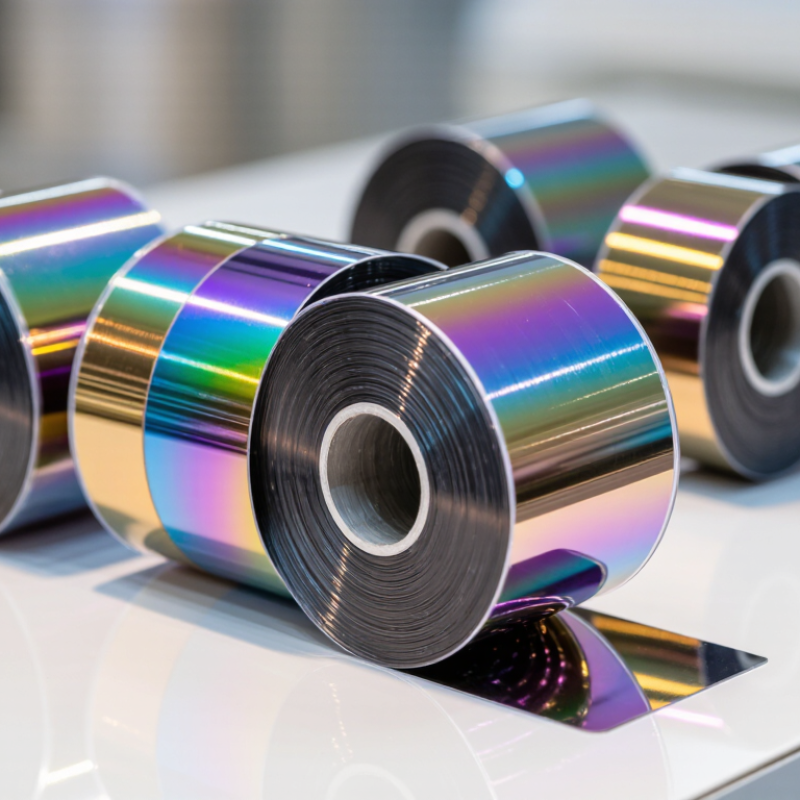
Laser film is a thin polymer material that creates shifting colors and bright optical effects. Its surface contains microscopic patterns that diffract light. When viewed from different angles, the image may appear to move, shine, or change tone. This effect is not ordinary printing. It depends on accurate microstructure replication, coating control, and careful lamination. In my experience, small defects can create visible dull areas or uneven reflections.
Laser film is used in packaging, labels, decorative panels, greeting cards, and product presentation. It can add depth to a simple surface and make printed graphics more noticeable. Some films also support product identification through customized optical patterns. However, laser film is not suitable for every application. Heat, moisture, bending, and adhesive choice can affect its appearance. A manufacturer should provide stable thickness, clear technical data, and samples tested under real conditions.
Tips: Check the film under warm and cool lighting. Compare samples after bending and lamination. Ask about surface durability, color consistency, and storage conditions. Do not judge quality from one attractive sample. A practical trial often reveals problems that photographs hide. It is easy to focus on brilliance and overlook processing limits. That mistake can increase waste and delay production. Reliable suppliers should explain these limits honestly and offer test support before large-scale manufacturing.
A high-quality laser film manufacturer is defined by consistent performance, not attractive samples alone. The film should maintain stable thickness, optical clarity, low haze, and reliable light transmission across every production batch. Small defects matter. Tiny particles, uneven coating, or edge wrinkles can reduce image sharpness and increase material waste.
Practical evaluation should begin with a sample roll tested on the customer’s actual equipment. Check how the film handles heat, pressure, winding tension, and repeated processing. A capable manufacturer uses calibrated instruments to measure thickness, gloss, haze, tensile strength, and adhesive uniformity. It should also provide batch records, inspection reports, and clear storage guidance. These details show technical discipline. They also make problems easier to trace.
Reliable manufacturers do more than meet a written specification. They ask about application conditions, expected service life, and production speed before recommending a structure. Their engineers explain limitations instead of promising perfect results. That honesty matters. A glossy film may still perform poorly under harsh lighting or high temperatures. I would also review quality-system documentation, material safety data, regulatory compliance, and delivery history. However, certificates alone prove little without repeatable test results and responsive support. A manufacturer may pass one inspection and still need improvement in daily communication, packaging, or after-sales handling.
How to Compare Chinese Laser Film Manufacturers
Choosing the best laser film manufacturer in China requires more than comparing prices. Start with film structure, optical clarity, coating uniformity, and production controls. Ask for technical data sheets, not only sample rolls. Check thickness tolerance, haze, peel strength, gloss, and roll width accuracy. A reliable supplier should explain its testing method and provide recent batch records. ISO 9001 certification helps, but it does not replace factory verification.
Market evidence also matters. Mordor Intelligence estimates that the global holographic film market may grow at approximately 6% annually through 2029. This growth increases capacity, but quality can vary sharply between factories. Compare monthly output, rejection rates, and lead-time records. Request samples from three separate production batches. Watch the edges. Uneven embossing or small wrinkles often appear there first. It is easy to judge a film under showroom lighting.
For packaging applications, review adhesive compatibility, heat resistance, and storage performance. Ask whether the factory controls temperature and humidity during coating and slitting. Independent laboratory testing is valuable for haze, tensile strength, and color stability. Samples should also survive your real converting process, including lamination and high-speed cutting. A practical audit may reveal weaknesses that certificates miss. My own caution is simple: a low quotation can hide unstable raw materials, slower replacement support, or excessive trimming waste. Compare total usable yield, not price per roll.
| Evaluation Dimension | Recommended Comparison Data | Practical Benchmark or Requirement | Evidence to Request | Suggested Weight |
|---|---|---|---|---|
| Application Compatibility | Compatible laser wavelength, film structure, coating type, and target substrate | The film should be tested with the actual laser source, including wavelength, power, speed, focus, and pulse settings. | Technical data sheet, application test report, and production sample made with the buyer’s laser parameters | 20% |
| Film Thickness Control | Nominal thickness and measured thickness variation across the roll | The supplier should define a written thickness tolerance and provide measurement results from different roll positions. | Thickness specification, calibrated gauge records, and cross-web inspection data | 10% |
| Optical Performance | Transmittance, haze, reflectivity, contrast, and visual uniformity | Acceptance limits must be matched to the application; optical values should be measured using consistent test methods. | Optical test report, sample inspection under standard lighting, and agreed acceptance samples | 12% |
| Laser Marking Quality | Marking contrast, edge sharpness, readability, residue, distortion, and repeatability | A qualified supplier should demonstrate stable results over repeated runs and across the usable roll width. | Repeated marking samples, microscope images where appropriate, and process-window test results | 15% |
| Mechanical Properties | Tensile strength, elongation, tear resistance, dimensional stability, and winding quality | Values should remain suitable for converting, laminating, feeding, and end-use handling at the specified temperature range. | Mechanical test report, roll inspection record, and converting-line trial results | 10% |
| Adhesion and Surface Treatment | Coating adhesion, surface energy, adhesive compatibility, and resistance to delamination | The film should maintain adhesion after the intended processing, storage, temperature, and humidity exposure. | Peel or adhesion test results, surface-treatment details, and aging-test samples | 8% |
| Environmental and Chemical Compliance | Restricted substances, heavy metals, chemical composition, and environmental declarations | For international supply, verify applicable RoHS, REACH, packaging, and destination-market requirements. | Current compliance declarations, third-party laboratory reports, and material safety documentation | 8% |
| Quality Management | Incoming inspection, in-process controls, final inspection, traceability, and corrective actions | A documented quality system, preferably supported by a valid ISO 9001 certificate and batch-level traceability. | Quality certificate, inspection plan, certificate of analysis, and sample corrective-action report | 7% |
| Production Capacity and Lead Time | Monthly capacity, minimum order quantity, standard lead time, and emergency capacity | Capacity claims should be supported by production records and should cover both trial orders and repeat orders. | Capacity statement, production schedule, order history summary, and agreed delivery terms | 5% |
| Technical Support and Customization | Sampling speed, formulation support, coating adjustment, packaging options, and engineering response time | The supplier should provide a clear sampling process and documented response procedures for technical issues. | Sample-development plan, engineering contact details, and response-time records | 3% |
| Commercial Value | Total landed cost, yield, waste rate, packaging, shipping, payment terms, and warranty support | Compare cost per usable square meter or finished unit rather than purchase price alone. | Formal quotation, packaging specification, defect policy, and total-cost calculation | 2% |
| Total Evaluation Weight | 100% | |||
The best laser film manufacturer is not defined by price alone. Manufacturing discipline matters more. A reliable factory should operate under a documented quality system, such as ISO 9001, with clear procedures for raw material control, production, inspection, and corrective action.
Clean production areas are important for optical films. Dust, fingerprints, and uneven coating can reduce clarity or weaken laser performance. Ask how the factory controls temperature, humidity, and particle levels. Production equipment should be calibrated regularly. Film thickness, light transmission, haze, adhesion, and surface defects need measurable acceptance limits. “Looks good” is not enough.
Testing should continue after production. A capable manufacturer can provide aging tests, scratch resistance data, heat exposure results, and batch traceability. Compliance with relevant chemical and environmental requirements also deserves careful review. Documents should match the actual product, not a similar sample.
During factory evaluations, I pay attention to simple details. Are inspection records complete? Can operators explain the testing process? Are rejected rolls isolated? These answers often reveal more than a polished presentation. No factory is flawless. A stronger partner admits process gaps and shows how they are corrected. One overlooked issue remains possible, even in a certified facility. Independent sample testing can reduce that risk before large-scale purchasing.
What Is the Best Laser Film Manufacturer in China?
Choosing the best laser film supplier starts with your application, not a catalog. A film for protective windows needs different performance from one used in optical filtering. Define the laser wavelength, power level, working temperature, film thickness, and required transmission first. Small details matter. A slight haze increase can weaken beam visibility or image quality.
Ask the supplier for samples made with the same coating process as production material. Review optical density, transmittance, surface uniformity, adhesion, and heat resistance. Request test reports with test methods, not only performance numbers. A reliable manufacturer should explain measurement conditions clearly. Check whether each roll has traceable batch records, consistent dimensions, and suitable packaging. For demanding applications, inspect sample edges and winding quality under bright light.
Experience also comes from asking uncomfortable questions. Can the supplier control coating thickness across a wide roll? How are rejected sections marked? What happens when raw material changes? Factory audits, technical communication, and response speed reveal more than polished brochures. I have learned that a low quotation can hide higher waste, longer approval cycles, or unstable delivery. Still, no supplier is perfect. Your first sample may pass testing but fail during assembly. Keep a second validation round, record every change, and choose the supplier that responds honestly when problems appear.
The chart presents a practical evaluation framework for comparing laser film suppliers. Application performance, optical quality, and production consistency should receive the highest priority, while lead time, compliance documentation, and commercial terms help confirm whether a supplier is suitable for long-term production.
© 1999-2025 The Lincoln Electric Company