10 Best Robotic Welding Techniques for Efficient Manufacturing?
Robotic welding has transformed the manufacturing landscape. This technology enhances efficiency and precision, streamlining production processes. With the rise of automation, manufacturers are increasingly adopting robotic solutions for various welding applications.
However, integrating robotic welding systems is not without challenges. Companies must navigate initial costs and operational changes. It requires thorough training for operators to manage these advanced machines effectively. Not all industries may achieve seamless implementation. Some processes may still rely on traditional methods for specific tasks.
Despite these hurdles, the benefits are significant. Robotic welding can improve quality while reducing labor costs. By examining the ten best techniques for robotic welding, manufacturers can optimize their processes. Each technique has unique strengths and focuses on different aspects of production, pushing the boundaries of what is possible in automated welding systems.

Understanding Robotic Welding: Key Concepts and Benefits
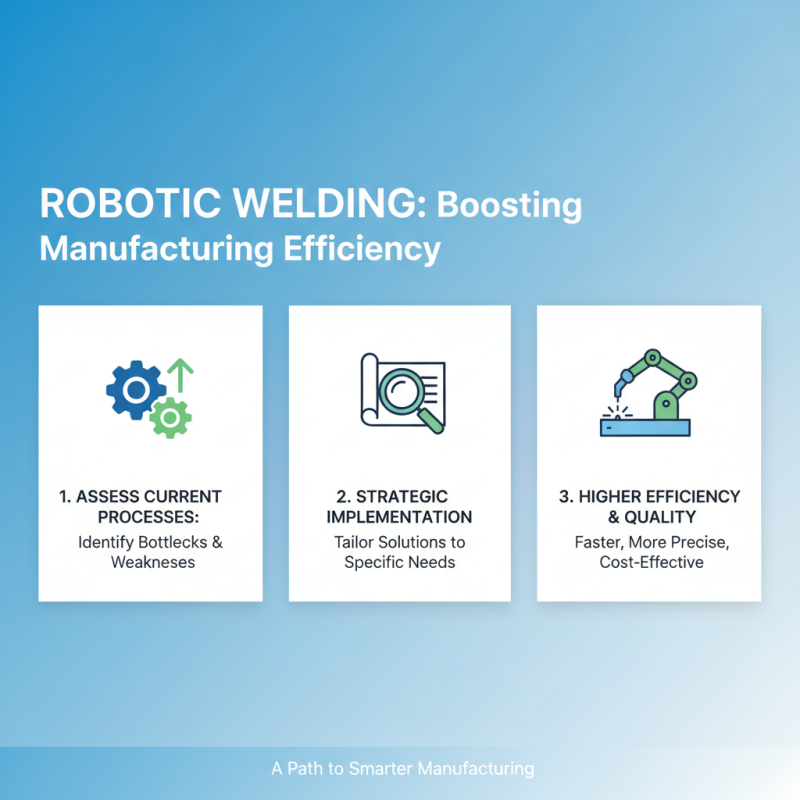
Robotic welding has transformed modern manufacturing. Understanding its key concepts helps businesses improve efficiency. These techniques automate welding tasks, reducing labor costs. They ensure consistent weld quality over time. The outcome? Higher productivity and shorter cycle times.
One major benefit is precision. Robots perform repetitive tasks with unmatched accuracy. This leads to fewer defects and more reliable products. However, there are challenges. Not every task suits automation. Complex shapes or materials can pose issues. Manufacturers must assess their needs carefully.
Training is vital in robotic welding. Operators need to understand how to program and maintain machines. Skills like troubleshooting are crucial too. The initial investment in technology can be significant. Yet, the long-term gains often outweigh these costs. It’s a balance that requires reflection and adjustment.
Common Types of Robotic Welding Techniques in Manufacturing
Robotic welding techniques have transformed manufacturing. Companies are increasingly adopting these methods for their efficiency. Among these techniques, arc welding stands out. This method is prevalent due to its versatility and strength. Reports suggest that arc welding can increase production rates by up to 40%.
Another significant technique is spot welding. It is often used in automotive manufacturing. Spot welding allows for quick and precise joining of metal sheets. However, it requires skilled programming to ensure accurate placement. Inaccurate settings can lead to weak joints and costly rework.
Laser welding has gained attention as well. It offers high precision and speed, making it suitable for intricate designs. Yet, it has a steep learning curve. Many manufacturers struggle to find skilled operators. Data indicates that 30% of companies face challenges in maintaining consistent quality with laser welding. This highlights the need for ongoing training and development.
Evaluating the Efficiency of Robotic Welding Processes
Robotic welding has transformed manufacturing. It offers precision, speed, and repeatability. According to a recent industry report, robotic welding can increase productivity by up to 30%. These systems are ideal for high-volume production. Yet, some challenges remain.
One concern is the initial investment cost. While automation pays off over time, small manufacturers might hesitate. The learning curve associated with robotic systems can also be steep. Training staff is essential. Companies might face downtime during the transition. A balance between automation and skilled labor is crucial.
Tips for enhancing robotic welding efficiency include regular maintenance. Keeping robots in top shape prevents unexpected failures. Operators should monitor performance metrics. Data analysis can reveal process bottlenecks. Lastly, consider utilizing simulation software to optimize weld paths. This can lead to faster production times and reduced scrap rates. Remember, constant evaluation is key.
Innovations in Robotic Welding Technology for Future Manufacturing
Robotic welding technology is rapidly evolving. Recent innovations are reshaping manufacturing. These advancements promise increased efficiency and quality. Techniques like adaptive welding and real-time monitoring are at the forefront. Adaptive welding adjusts parameters on the fly. This ensures optimal results in varying conditions.
Tips for implementing new techniques: Start small. Test innovations on a limited scale before broader application. This helps identify potential issues early. Training staff is crucial. Proper training ensures that the team maximizes the benefits of new technologies. Always gather feedback from operators. Their insights can highlight areas needing improvement.
Additionally, assessment is key. Monitor performance metrics closely. Address discrepancies quickly. Not all innovations will fit seamlessly into existing processes. Be prepared to make adjustments as you learn. Embrace a culture of continuous improvement. This mindset fosters innovation and efficiency in robotic welding.
10 Best Robotic Welding Techniques for Efficient Manufacturing
This chart showcases the efficiency ratings of various robotic welding techniques commonly used in modern manufacturing. The efficiency rating, measured out of 100, reflects the effectiveness and reliability of each welding technique in an industrial setting.