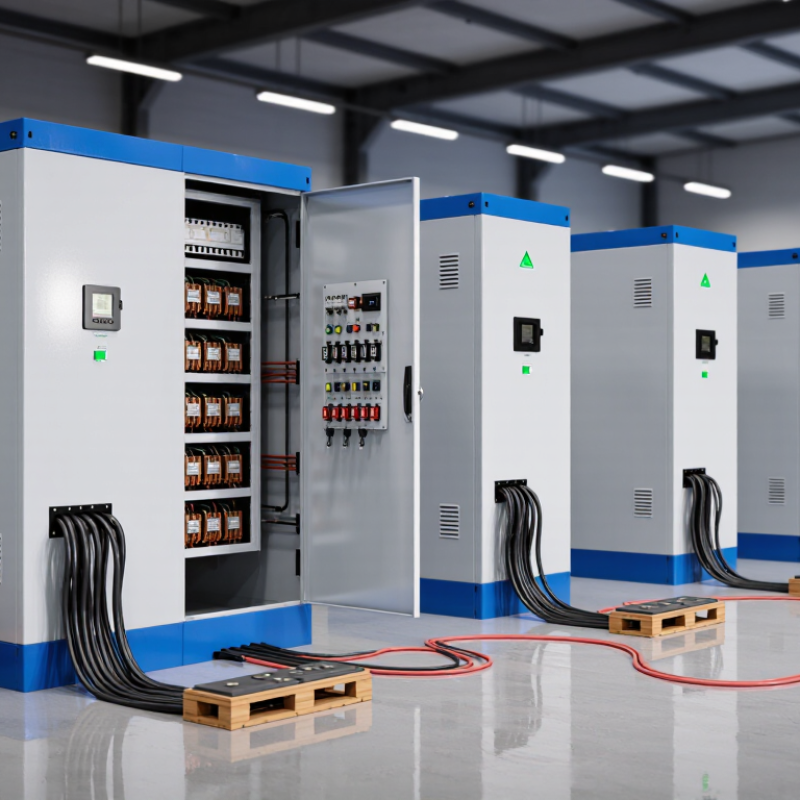
Choosing the right Power Phase Converter begins with understanding the buyer’s real operating conditions. Voltage, frequency, motor size, starting current, and duty cycle all influence the correct solution. A converter that performs well in a clean workshop may struggle in a dusty factory or remote production site. Small details matter. Cable length matters too.
Robert W. Erickson, a respected power-electronics researcher and author, describes the field as “the technology associated with efficient conversion, control, and conditioning of electric power.” His statement reflects the central role of a Power Phase Converter in modern industrial operations. It is not merely a device that changes electrical phases. It must deliver stable output, protect connected equipment, and support dependable production.
China has become a major sourcing base for phase-conversion equipment. Experienced suppliers combine engineering design, controlled manufacturing, component testing, and export support. Reliable manufacturers can provide technical drawings, efficiency data, protection details, and test records before shipment. That evidence is more useful than a polished sales promise.
Still, no supplier fits every application. This is where buyers must remain careful. Some product pages omit starting-current limits or cooling requirements. That omission can create expensive surprises. A professional evaluation should compare the converter’s rated capacity with the actual load, not only the motor nameplate.
This guide examines how global buyers can identify a capable China Power Phase Converter supplier. It considers product quality, customization, certification awareness, communication, after-sales service, and long-term reliability. The goal is practical selection, not exaggerated claims.
A power phase converter changes available electrical power into a form required by industrial equipment. It is commonly used when a site has single-phase utility service but machinery needs three-phase input. Three-phase motors often run more smoothly, distribute load better, and deliver steadier starting torque. This matters in workshops, farms, and remote production rooms. The converter does not create free energy. It changes how power is supplied.
In practical installations, the unit receives single-phase alternating current through an input circuit. Its controls then generate, switch, or balance additional phase waveforms. A rotary design uses a motor-generator arrangement, while a static design relies on capacitors and electronic controls.
Digital units can synthesize a controlled output waveform through power electronics. The motor’s voltage, frequency, starting current, and rated load must match converter capacity. A larger horsepower label alone is not enough.
During commissioning, an electrician checks phase voltage with a calibrated meter under load. They also inspect grounding, conductor size, ventilation, and protective disconnects. I have seen converters appear stable while a compressor starts, then trip after several cycles. That warning is easy to miss. Load imbalance, long cable runs, or poor settings may cause excess heat and nuisance shutdowns. Selection should reflect real duty cycles, not only nameplate horsepower. This is where specifications deserve a second look.
Industrial buyers usually choose among rotary, static, and electronic phase converters. Rotary converters use a motor-generator arrangement to create balanced three-phase output. They suit machine tools, pumps, and compressors with changing loads. Static converters use capacitors and are smaller, but their output may be less stable under heavy starting current. Electronic converters provide precise voltage control and quieter operation. They fit sensitive automation equipment, although heat management becomes critical.
The choice affects operating costs. The U.S. Department of Energy reports that motor-driven systems can consume about 70% of industrial electricity in many facilities. A poorly matched converter may increase current, vibration, and maintenance visits. In commissioning work, engineers should check motor horsepower, starting torque, duty cycle, phase imbalance, and local frequency. A 60 Hz machine cannot always perform correctly on a 50 Hz supply.
Small detail. Serious consequence.
Recent market analysis by Grand View Research valued the global power electronics market at approximately USD 29.11 billion in 2022, with continued growth expected through 2030. This expansion supports wider adoption of digitally controlled converters. However, published ratings can be optimistic. Ambient temperature, cable distance, and dust may reduce real capacity. Buyers should request verified efficiency curves, overload data, protection functions, and test records. Compliance with applicable IEC or regional electrical requirements also improves reliability across export projects.
When comparing Chinese phase converter suppliers, begin with the electrical specification, not the quotation. Confirm input voltage, output voltage, frequency, phase sequence, rated kVA, and overload duration. A converter rated for 30 kVA may not support a motor’s starting current.
The IEA estimates electric motor-driven systems consume about 46% of global electricity (Energy-Efficiency Policy Opportunities, 2011). Efficiency therefore deserves careful review. Request measured efficiency at 25%, 50%, and 100% load, plus output voltage balance and total harmonic distortion. For sensitive equipment, ask whether the supplier tests waveform quality under changing loads. Published figures can look perfect. Real factories are less forgiving.
Check compliance evidence against relevant IEC standards, EMC requirements, insulation class, cooling method, ambient temperature, and enclosure protection. Ask for factory test records, calibration details, component traceability, and a sample unit before a large order. Independent laboratory reports carry more weight than a self-issued certificate. Suppliers should also state warranty length, spare-parts availability, lead time, and remote troubleshooting procedures. An unclear service process is a hidden specification.
A practical comparison should include installation diagrams and terminal markings. These details prevent costly wiring mistakes. Do not compare efficiency alone. A cheaper converter may require larger cables, extra ventilation, or frequent maintenance. No supplier review is flawless; site conditions can expose assumptions that laboratory tests miss. Capture actual load behavior after installation, then question the original selection if temperatures or phase imbalance exceed the stated limits.
For global buyers, a power phase converter supplier must prove more than production capacity. Manufacturing quality begins with controlled winding, secure terminals, and clean enclosure assembly. Each unit should receive insulation resistance, load, temperature-rise, and vibration checks before shipment. Test records matter. A reliable factory keeps serial-linked reports, calibration dates, and inspection photos. This evidence helps engineers compare performance across batches, not just trust a sales promise.
Certifications should match the destination market and product design. Buyers can request current certificates, scope statements, and laboratory details. ISO 9001 supports consistent process control, while applicable electrical safety and EMC evaluations address operational risks. Certificates alone are not enough. A converter may pass a standard test yet fail under unstable loads or poor installation. Factory acceptance testing with witnessed sampling can expose these weaknesses before delivery.
Customization is practical when handled by experienced engineers. Input and output voltages, frequency, phase balance, enclosure rating, cooling method, and cable access may require adjustment. A strong supplier provides drawings, prototype testing, and change-control records. Site conditions should be discussed early. Dust, heat, long cable runs, and limited maintenance space can change the design. Some requests are technically possible but commercially unwise. That should be stated clearly. I have seen projects lose time because assumptions stayed undocumented. Better questioning would have prevented it.
China Best Power Phase Converter Supplier for Global Buyers
International Purchasing, Shipping, Installation, and After-Sales Support
Buying a power phase converter internationally requires more than comparing prices. Our engineers review voltage, frequency, phase type, motor load, starting current, and operating environment. We request clear equipment data before preparing a quotation. This prevents costly sizing mistakes and unnecessary delays. However, incomplete customer information can still affect the first recommendation. We check it again.
For international purchasing, we provide technical specifications, commercial documents, packing details, and inspection records. Export packaging uses reinforced cartons, moisture protection, and internal shock control. Shipping plans depend on destination, delivery time, customs requirements, and cargo weight. Buyers receive practical guidance for document preparation. Small details matter here.
Installation support includes wiring guidance, safety checks, parameter setting, and commissioning instructions. Remote assistance is available through photos, videos, and live communication. For complex applications, qualified technicians can support on-site work when appropriate. After commissioning, our service team helps with troubleshooting, maintenance intervals, and replacement parts. A converter may operate well in testing but behave differently under a real factory load. We therefore encourage a monitored trial period and keep technical records for future service.
| Purchasing Dimension | Typical Requirement | Practical Data for Global Buyers | Key Verification Points |
|---|---|---|---|
| Converter Application | Single-phase to three-phase | Used where a three-phase load must operate from an available single-phase supply. Common applications include machine tools, pumps, compressors, fans, and workshop equipment. | Confirm the motor nameplate voltage, frequency, rated current, starting current, rotation direction, and whether other three-phase loads will operate at the same time. |
| Converter Technology | Rotary, static, or electronic | Rotary converters can supply three-phase power for motor loads. Static converters are generally intended for selected motor applications and may not provide full three-phase output. Electronic solutions may provide voltage and frequency control for compatible motors. | Match the technology to the load type. A converter suitable for one motor may not be suitable for heating elements, welders, CNC equipment, or multiple mixed loads. |
| Input Voltage | Country- and site-dependent | Common low-voltage systems include approximately 110–120 V, 208–240 V, 380–415 V, and 440–480 V, depending on the country and installation. | Use the actual measured supply voltage and confirm allowable voltage tolerance before quotation or production. |
| Output Voltage | Matched to the equipment nameplate | Typical industrial motor systems use three-phase outputs such as 208 V, 230 V, 380 V, 400 V, 415 V, or 460–480 V. | Output voltage must match the equipment requirements. A voltage mismatch can cause overheating, poor performance, or equipment damage. |
| Operating Frequency | 50 Hz or 60 Hz | 50 Hz systems are widely used in Europe, Asia, Africa, and many other markets. 60 Hz systems are common in North America and selected other markets. | Confirm whether the connected equipment is rated for 50 Hz, 60 Hz, or both. Motor speed changes when operating frequency changes. |
| Rated Capacity | Selected according to load demand | Capacity is commonly specified in kW, kVA, or horsepower. Motor starting requirements may be substantially higher than normal running demand. | Calculate continuous load, starting load, duty cycle, simultaneous-load demand, and ambient temperature. Do not select capacity using motor horsepower alone. |
| Motor Starting Method | Direct-on-line, soft start, or variable-speed drive | Direct-on-line starting can create a high inrush current. Soft starters and variable-frequency drives can reduce starting stress when correctly selected and configured. | Provide the motor starting method, acceleration time, load inertia, and required starting torque during technical review. |
| Protection Functions | Electrical and thermal protection | Relevant functions may include overload protection, short-circuit protection, over-temperature protection, phase-loss monitoring, under-voltage protection, and over-voltage protection. | Protection supplied inside the converter does not replace correctly rated upstream circuit breakers, fuses, disconnects, grounding, and local safety devices. |
| Enclosure and Installation | Indoor, outdoor, clean, or industrial environment | Enclosure selection depends on dust, moisture, corrosive substances, ventilation, ambient temperature, and access requirements. Outdoor installations generally require weather protection and suitable ingress protection. | Confirm enclosure rating, ventilation clearance, altitude, ambient temperature range, cable-entry method, and required mounting orientation. |
| Electrical Safety Documentation | Product and installation records | A standard technical package may include a user manual, wiring diagram, nameplate information, test records, packing list, commercial invoice, and applicable conformity documentation. | Documentation requirements vary by destination, product design, voltage level, and intended use. Verify local regulatory requirements before shipment. |
| Pre-Shipment Inspection | Functional and visual checks | Inspection can cover enclosure condition, terminal labeling, insulation condition, output voltage, operating frequency, protection functions, abnormal noise, and basic load performance where applicable. | Agree on the inspection checklist, test conditions, acceptance limits, photographs, and report format before dispatch. |
| Export Packaging | Moisture- and impact-resistant packing | Industrial electrical equipment is commonly protected with an inner moisture barrier, cushioning materials, reinforced cartons, or a suitable wooden case according to size and transport conditions. | Check gross weight, net weight, package dimensions, lifting points, shock protection, desiccant use, and whether the packaging complies with the chosen transport method. |
| International Shipping | Sea, air, rail, or courier transport | Sea freight is generally suitable for heavier or less urgent consignments. Air freight and courier services can reduce transit time but usually cost more and may have stricter shipment limits. | Confirm destination port or airport, delivery address, customs broker, insurance, dangerous-goods status if applicable, and required import documents. |
| Trade Terms | Incoterms® 2020 selection | Common options include EXW, FCA, FOB, CIF, CPT, CIP, DAP, and DDP. Each term assigns different responsibilities for transport, insurance, customs clearance, and delivery risk. | Specify the exact named place and Incoterms® version. Import duties, taxes, permits, and local clearance responsibilities should be confirmed in writing. |
| Import Classification | Customs code and product description | The correct customs classification depends on the equipment design, electrical function, and destination-country rules. Product descriptions should clearly identify the equipment as a power phase conversion device. | Ask the customs broker or relevant authority to verify the tariff classification before shipment. Do not rely solely on a code supplied for a different product configuration. |
| Typical Production Planning | Standard or customized configuration | Standard configurations can normally be prepared faster than customized units. Special voltage, frequency, enclosure, control, protection, or documentation requirements may extend the schedule. | Request a written schedule covering technical confirmation, component preparation, assembly, testing, packing, and dispatch. The final schedule depends on configuration and order quantity. |
| Installation Requirements | Qualified electrical personnel | Installation normally includes mechanical mounting, cable sizing, grounding, protective-device coordination, phase-sequence checking, control wiring, and no-load and load testing. | Installation should follow the equipment manual and local electrical codes. Power must be isolated before wiring, inspection, or maintenance. |
| Commissioning Checks | Verification before normal operation | Recommended checks include input and output voltage, frequency, phase sequence, motor rotation, current balance, protective-device operation, temperature rise, vibration, and abnormal sound. | Record commissioning readings and retain them with the equipment documentation for future troubleshooting and maintenance. |
| After-Sales Technical Support | Remote diagnosis and replacement support | Useful support may include wiring clarification, parameter guidance, fault-code analysis, installation review, replacement-part identification, and troubleshooting based on photographs and measured values. | Define response channels, support hours, required diagnostic information, spare-part availability, warranty scope, and the procedure for handling transport damage or product faults. |
| Warranty Administration | Written warranty terms | A complete warranty policy should state the coverage period, covered components, exclusions, evidence requirements, repair or replacement process, and responsibility for return shipping. | Confirm whether the warranty applies to the converter only or also includes installation, commissioning, labor, travel, and connected equipment. |
| Recommended Buyer Data | Technical information for quotation | Provide destination country, supply voltage, frequency, phase arrangement, motor or equipment rating, quantity, operating environment, installation location, preferred trade term, and delivery address. | Complete technical data reduces the risk of incorrect sizing, delayed customs clearance, unsuitable protection, and incompatibility with the connected equipment. |
© 1999-2025 The Lincoln Electric Company