
China Best USB C Bulkhead Connector Manufacturers
Choosing among China’s best USB C bulkhead connector manufacturers takes more than comparing prices. A Usb C Bulkhead Connector must fit the panel, mate reliably, and suit the device’s power and data requirements. Small details matter. Check the mounting diameter, thread or fastening style, connector orientation, and cable clearance. A few millimeters can affect installation inside a crowded enclosure. Ask for drawings and confirm that the sample matches them. Materials also deserve attention: a metal shell, suitable plating, and a well-fitted seal can support durability, but the exact design determines performance. Do not assume every connector offers the same water or dust protection. Verify the stated rating and the conditions under which it was tested.
A capable manufacturer should explain its inspection process, provide clear specifications, and respond precisely to technical questions. Request information on contact materials, rated voltage and current, data capabilities, mating cycles, and operating temperature. These figures should match your application, not just a product listing. If the connector will face vibration or frequent use, evaluate a production sample in a representative enclosure. That detail is easy to overlook. Compare lead times, customization options, minimum order quantities, and quality records before committing to volume. A polished catalogue is useful, but it cannot replace verification. Even a careful supplier may miss a requirement when the drawing is vague, so review the interface together and document any changes.
What Is a USB-C Bulkhead Connector, and How Is It Installed?
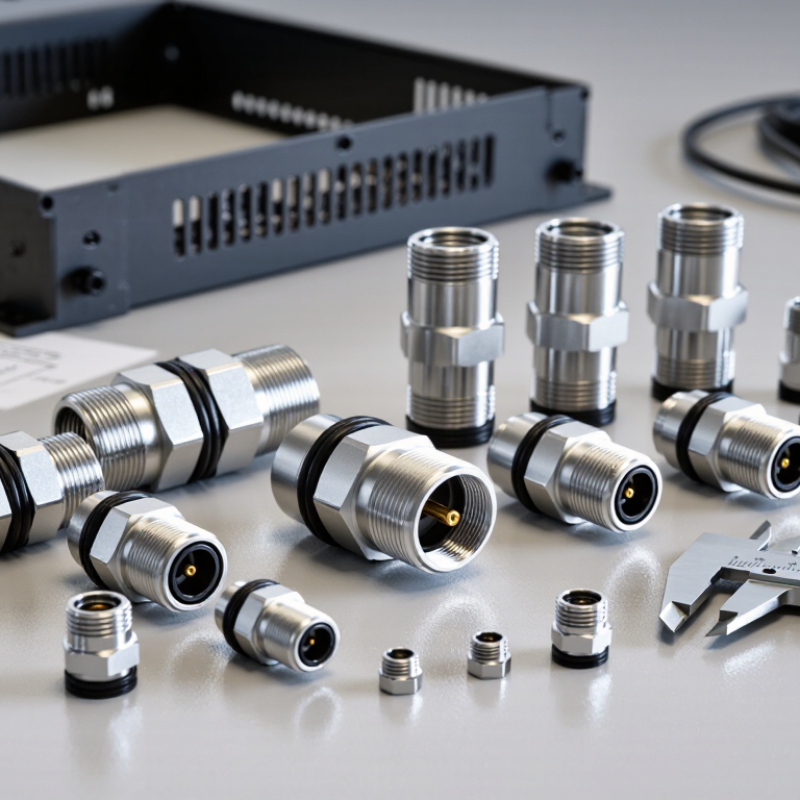
A USB-C bulkhead connector is a panel-mounted pass-through that lets a USB-C cable connect through an enclosure wall. It keeps the exterior connection accessible while protecting internal wiring from routine handling. USB-C describes the connector shape, not guaranteed speed, power, or sealing performance. Those depend on the connector’s specifications and the cable behind it. Grand View Research estimated the global USB Type-C market at about USD 2.77 billion in 2022, with projected growth of 23.6% annually from 2023 to 2030. That growth makes careful component matching more important, not less.
For installation, check the panel thickness, cutout dimensions, mounting method, and required ingress protection before drilling. Mark the cutout, remove burrs, then fit the connector and its gasket flush against the panel. Tighten the retaining nut to the manufacturer’s torque guidance; overtightening can damage threads or compress a seal unevenly. Small detail, big consequence. Connect the internal cable to the correct pinout, and preserve shield continuity where the design requires it. USB-IF’s USB Power Delivery 3.1 specification allows up to 240 watts, but a bulkhead connector must be explicitly rated for the intended power. Test continuity, data transfer, and sealing after assembly. In practice, a tidy exterior can hide a poor internal bend radius, so inspect the cable path before closing the enclosure.
China Best USB C Bulkhead Connector Manufacturers - What Is a USB-C Bulkhead Connector, and How Is It Installed?
| Category | Item | Key Information | Selection or Installation Note |
|---|---|---|---|
| Definition | USB-C bulkhead connector | A panel-mounted USB Type-C receptacle that provides an accessible connection through an enclosure wall, equipment panel, or mounting plate. | It may use a threaded body, retaining nut, flange, or another mounting arrangement. The mounting style depends on the connector design. |
| Interface | USB Type-C receptacle | The USB Type-C connector system uses a compact, reversible plug and receptacle. A standard USB Type-C receptacle has 24 contact positions. | Contact count alone does not establish data rate, charging capability, or support for every USB-C feature. |
| Data | Data transfer capability | USB-C products can support different USB data specifications, including USB 2.0 and higher-speed USB options. | Confirm the connector assembly, internal wiring, cable, and connected equipment all support the required data mode. The USB-C shape by itself does not specify data speed. |
| Power | Charging and power delivery | USB Power Delivery capabilities depend on the power source, receiving device, cable, and implementation. USB PD 3.1 defines power levels up to 240 W. | Do not assume a bulkhead connector supports a particular voltage or current without checking its electrical rating and the ratings of the complete system. |
| Protection | Ingress protection | Environmental protection varies by product and installation. Seals, gaskets, caps, panel thickness, and the mating connection can affect the finished assembly. | Use the manufacturer’s specified panel cutout, gasket, and tightening method. Verify any stated IP rating under the stated test and mating conditions. |
| Before installation | Check the product documentation | Identify the connector’s mounting method, panel cutout dimensions, permitted panel thickness, wiring arrangement, and electrical ratings. | There is no universal cutout size or panel-thickness range for all USB-C bulkhead connectors. |
| Installation | Prepare the panel | Mark and make the opening using the dimensions and tolerances specified for the selected connector. Remove burrs and debris. | Keep the opening aligned with the connector and avoid damaging nearby wiring or components. Follow the enclosure’s safety procedures. |
| Installation | Mount and secure the connector | Fit the connector through the panel or attach its flange as designed. Install the supplied seal or gasket in the specified position, then secure the hardware. | Use the specified tightening method and torque, if provided. Over-tightening can damage the connector, panel, or seal. |
| Installation | Connect internal wiring | Connect the internal cable or circuit board according to the connector pinout and assembly instructions. | USB-C wiring may include high-speed signal pairs and configuration-channel contacts. Incorrect wiring can prevent operation or damage equipment. |
| Verification | Test the completed assembly | Check mechanical stability, connector alignment, continuity where appropriate, and operation with compatible cables and devices. | Test the specific functions required, such as data transfer or charging. Perform any environmental testing required for the finished enclosure. |
| Application | Common use cases | Panel access for computers, test equipment, control enclosures, vehicle accessories, and other electronic systems. | Choose a connector assembly suited to the required environment, mounting space, cable routing, and electrical performance. |