How to Choose the Best Robotic Welding Solutions for Your Needs?
In the rapidly evolving field of manufacturing, choosing the best robotic welding solutions can be challenging. Experts emphasize the importance of understanding your specific needs. According to Dr. Emily Tan, a leading expert in industrial robotics, "The right welding solution can significantly enhance productivity and quality." Her insights guide many companies in their decision-making process.
Robotic welding solutions come in various configurations. Each option addresses unique requirements, from precision to speed. As industries adopt advanced technologies, the complexity of choices increases. It’s vital to consider not just the equipment but also the entire integration process. Many companies overlook the importance of training and support. Without proper implementation, even the best solutions may fall short.
Evaluating options requires a clear understanding of project demands. Focus on specific tasks, production volume, and existing workflows. This ensures that the chosen robotic welding solutions align with operational goals. Reflecting on past decisions can lead to better outcomes. Companies must acknowledge that there's no one-size-fits-all approach in robotic welding.
Understanding Your Welding Needs and Requirements
Understanding your welding needs and requirements is crucial for selecting the best robotic welding solutions. According to a report by the American Welding Society, 70% of manufacturers cite increased production efficiency as a primary motivation for adopting robotic welding. However, efficiency shouldn't be the sole focus. An understanding of your specific applications, materials, and production volume is essential. For instance, metals such as aluminum and stainless steel require different approaches and settings to optimize weld quality.
Another critical aspect is evaluating your workspace. Research indicates that 62% of companies fail to consider layout before investing in robotic systems, which can lead to costly modifications later. The size and configuration of your operations can significantly influence the type of robotic welding equipment that serves your needs best. Additionally, think about the required precision levels and adaptability to changing project specifications. These factors can drastically impact production speed and product quality.
Automation doesn't eliminate the need for skilled oversight. While robots can enhance productivity, they need human expertise for maintenance and optimization. A study from the International Federation of Robotics highlighted that nearly 40% of users report initial challenges in programming and integrating robotic systems into existing workflows. This reality prompts organizations to invest in training, ensuring their workforce can effectively harness the technology's full potential.
Evaluating Different Types of Robotic Welding Technologies
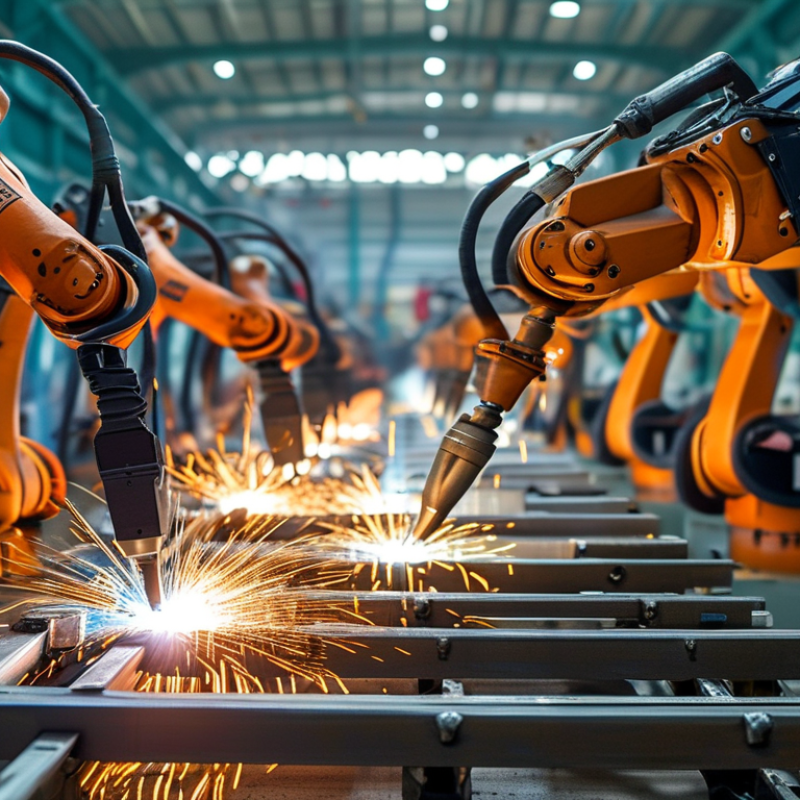
When evaluating robotic welding technologies, it’s essential to understand the various options available in the market. Arc welding robots dominate the industry, accounting for nearly 60% of robotic welding applications. These robots excel in high-volume projects, where consistency is crucial. Their ability to adapt to different welding methods, such as MIG and TIG, makes them versatile for various materials.
Another significant technology is laser welding, known for its precision and speed. Industry reports indicate that the adoption of laser welding systems has increased by 25% in recent years. This growth highlights a shift towards more efficient manufacturing processes. However, laser welding may require higher initial investments. Businesses must weigh the long-term benefits against upfront costs.
Resistance spot welding robots are also gaining popularity, particularly in the automotive sector. Their efficiency in assembling parts can reduce cycle times significantly. Yet, they often lack the flexibility of arc welding robots. Assessing specific project requirements is necessary to make informed decisions. Understanding these varying technologies allows businesses to choose solutions that best fit their operational needs. Each option has unique strengths and weaknesses, necessitating a careful evaluation process.
Comparison of Different Robotic Welding Technologies
Assessing Cost-Effectiveness and Return on Investment
When considering robotic welding solutions, assessing cost-effectiveness and return on investment (ROI) is crucial. A recent study by the International Federation of Robotics revealed that automation can reduce labor costs by as much as 30%. This statistic highlights the potential savings available when transitioning to robotic systems. However, the initial investment can be significant, often ranging from tens of thousands to over a million dollars, depending on system complexity.
Evaluating ROI goes beyond upfront costs. It includes factors such as productivity improvements and reduced error rates. According to industry reports, organizations that implement robotic welding see productivity increases of 20-40%. These improvements can offset initial expenditures within a few years. Additionally, maintenance costs and downtime must be factored into the overall analysis. Failure to address these elements may lead to an inaccurate assessment of long-term value.
Investing in robotic welding solutions can also enhance quality consistency. A study from a manufacturing association reported that companies adopting automation experienced a 50% reduction in rework costs. Yet, potential buyers should reflect on their unique needs. Choosing the wrong system can lead to underperformance and frustration. Thus, conducting thorough research and utilizing expert analysis is essential for determining the best fit for your business goals.
Identifying Key Features and Specifications to Look For
When selecting robotic welding solutions, identifying key features is crucial. Precision in welding is essential. According to the International Federation of Robotics, robot welding systems can achieve accuracy of up to 0.1 mm. This level of precision reduces the risk of defects, making it essential for high-quality production.
Another critical specification is the payload capacity. The right robotics system must handle the weight of the welding tools. Some reports suggest that payloads can range from a few kilograms to over 100 kg. Evaluating your specific workloads helps in choosing a suitable option. Furthermore, consider the versatility of the robotic system. Does it support multiple welding techniques? Systems capable of MIG, TIG, and spot welding offer flexibility in operations.
Integration potential is often overlooked. Ensuring compatibility with existing systems can reduce downtime. A seamless integration can increase overall efficiency. However, potential challenges may arise, such as the need for additional programming or adjustments. Assessing the required integration efforts is vital for long-term success. In exploring these features, it's essential to reflect on your unique needs, operational conditions, and future growth plans. This thorough approach will guide you toward making a more informed decision in robotic welding solutions.
How to Choose the Best Robotic Welding Solutions for Your Needs?
| Feature |
Specification |
Considerations |
| Welding type |
MIG, TIG, Stick |
Choose based on material compatibility |
| Payload capacity |
Up to 500 kg |
Ensure it can handle your workpieces |
| Reach |
500 mm - 2000 mm |
Determine the required distance for your applications |
| Speed |
Up to 2000 mm/s |
Match with production speed requirements |
| Precision |
+- 0.1 mm |
Important for high-quality welds |
| Control system |
Programmable and User-Friendly |
Consider ease of use for your staff |
| Safety features |
Emergency stop, guards |
Ensure compliance with safety regulations |
Comparing Leading Robotic Welding Solution Providers and Models
When comparing leading robotic welding solution providers, understanding their strengths and weaknesses can help in making an informed choice. Many manufacturers offer varied models, each designed for specific applications. Some focus on high-speed operations, while others excel in precision. Analyze the technical specifications and the intended use case of each model to determine which aligns with your needs.
Additionally, customer support plays a crucial role in selecting a provider. Consider how available their resources are. Look for companies that provide thorough training and assistance during installation and operation. Recent advancements in software integration have made some systems easier to program and operate. However, these features can come with a steep learning curve.
While evaluating options, reflect on how well each solution fits into your existing setup. Compatibility issues may arise with legacy equipment, creating potential downtime. It’s essential to weigh the short-term costs against long-term productivity gains. Remember, robotic welding solutions should not only meet current demands but also adapt to future needs in your production environment.