

How to Choose High Quality Cabinet Hardware in 2026?
Choosing High Quality Cabinet Hardware in 2026 requires more than matching a finish to painted doors. It requires evidence, careful handling, and realistic expectations. Houzz’s 2024 U.S. Kitchen Trends Study reports that 76% of renovating homeowners added specialty storage. That figure matters because frequent drawer use exposes weak slides, loose screws, and poor alignment quickly. NKBA trend research also continues to emphasize durable materials, practical storage, and easy maintenance. Hardware now carries daily performance, not merely decorative value.
The American National Standards Institute and Builders Hardware Manufacturers Association provide testing guidance through ANSI/BHMA A156.9. Buyers should examine mounting strength, corrosion resistance, load behavior, thread quality, and finish consistency. A bright sample may look excellent under showroom lighting. It may still scratch beside a sink. Kitchen designer Susan Serra, CKD, has described cabinet hardware as “the jewelry of the kitchen.” The comparison is useful, but incomplete. Jewelry is rarely opened fifty times daily.
In this guide, we will compare brass, stainless steel, zinc alloy, and aluminum hardware. We will examine pull dimensions, screw compatibility, coating methods, ergonomic shape, and replacement support. Product specifications deserve more trust than vague words such as premium or luxury. Independent testing helps, too. Still, no standard predicts every household’s experience. A heavy cast pull can feel reassuring, yet its sharp edges may disappoint children and older users. I would not treat a high price as proof of quality. The better question is simple: will this handle remain secure, comfortable, and attractive after years of ordinary use?
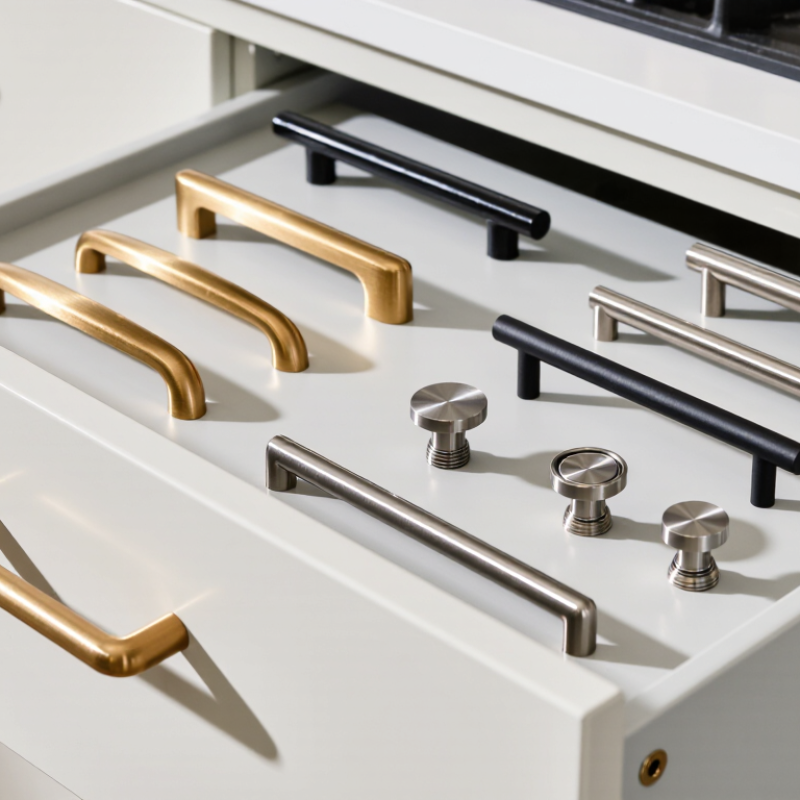
Defining Quality Standards for Cabinet Hardware in 2026
How to Choose High Quality Cabinet Hardware in 2026?
Defining Quality Standards for Cabinet Hardware in 2026
Quality cabinet hardware should perform reliably, not merely look attractive in a showroom. In practical inspections, I check the base material, moving parts, mounting strength, and surface finish. Solid metal usually feels denser and resists deformation better than thin pressed components. However, weight alone proves little. A heavy handle can still have weak threads or uneven plating.
Modern quality standards should include repeated cycle testing. Hinges, runners, and drawer slides need smooth movement after thousands of openings. Ask for documented test results, load ratings, corrosion testing, and installation instructions. These records show professional control. They also help buyers compare products fairly. Screws should engage deeply without stripping. Adjusters should remain stable after installation. Small details matter.
Finish durability deserves close attention in kitchens and bathrooms. Look for resistance against moisture, fingerprints, mild cleaners, and temperature changes. Sharp edges, rattling parts, or inconsistent gaps suggest poor manufacturing. Touch the hardware before purchasing. Listen during movement. Looks can mislead.
I once trusted a polished finish that failed quickly near a sink. That mistake changed my inspection routine. I now test samples under realistic conditions whenever possible. Still, no test predicts every household. Manufacturing batches may vary, and installation errors can reduce performance. Reliable suppliers should provide clear specifications, traceable quality information, and responsive technical support. A responsible choice balances appearance, evidence, serviceability, and long-term use.
How to Choose High Quality Cabinet Hardware in 2026? - Defining Quality Standards for Cabinet Hardware in 2026
| Quality Dimension | What to Inspect | Recommended 2026 Benchmark | Why It Matters | Practical Verification |
|---|---|---|---|---|
| Base Material | Metal composition, structural density, corrosion resistance, and suitability for the installation environment. | Use solid brass, stainless steel, aluminum, or zinc alloy selected according to load, moisture, and design requirements. Avoid thin shells with excessive porosity or brittle castings. | The base material determines strength, weight, service life, and resistance to moisture-related deterioration. | Request the material specification and inspect an unfinished sample or a cut section where available. |
| Dimensional Accuracy | Hole spacing, mounting plate alignment, thread quality, and consistency between production batches. | Critical dimensions should match the approved technical drawing; hole spacing should remain within the manufacturer’s stated tolerance, commonly about ±0.2 mm for precision components. | Accurate dimensions prevent loose installation, uneven alignment, and problems when replacing existing hardware. | Measure several samples with a caliper and compare them with the installation drawing. |
| Load Capacity | Static load rating, dynamic movement, mounting strength, and safety margin. | Select hardware with a rated capacity above the actual door, drawer, or shelf load. For frequently used components, a design safety margin of at least 25% is advisable. | Correct load selection reduces sagging, detachment, deformation, and premature mechanical failure. | Check independently documented load data and confirm that testing reflects the intended installation method. |
| Cycle Durability | Opening and closing cycles, wear of moving parts, spring performance, and adjustment retention. | For residential hinges and runners, look for documented testing of at least 50,000 cycles. Heavy-use applications should specify a higher cycle target based on usage frequency. | Cycle testing provides a practical indication of how the mechanism will perform over years of daily use. | Review a test report or written test method identifying load, speed, alignment, and pass/fail criteria. |
| Corrosion Resistance | Resistance to humidity, salt exposure, cleaning agents, and indoor environmental changes. | For ordinary interiors, require a suitable protective finish and documented salt-spray or equivalent corrosion testing. Coastal, bathroom, and outdoor-adjacent applications require enhanced corrosion protection. | Corrosion can weaken fasteners, stain cabinet surfaces, and cause moving parts to seize. | Verify the test duration and standard used; do not judge corrosion resistance by appearance alone. |
| Surface Finish | Coating adhesion, color consistency, scratch resistance, edge coverage, and resistance to household chemicals. | The finish should be uniform, free from pinholes and sharp edges, and resistant to normal cleaning with a soft cloth and mild detergent. | A durable finish protects the substrate while maintaining the intended appearance during daily handling. | Inspect edges and concealed areas, then review abrasion, adhesion, and chemical-resistance test results. |
| Fastener Quality | Screw grade, thread engagement, head design, corrosion protection, and compatibility with the cabinet material. | Fasteners should be correctly sized for the hardware and substrate, with adequate thread engagement and corrosion protection. Soft or damaged screw heads are unacceptable. | High-quality hardware can still fail when supplied screws strip, loosen, or corrode. | Check screw dimensions, drive fit, thread condition, and installation torque on a sample panel. |
| Adjustment and Installation | Three-dimensional adjustment, mounting access, installation repeatability, and compatibility with common cabinet construction. | Hinges and drawer systems should provide stable adjustment for height, depth, and side alignment where applicable, with clear installation instructions. | Adjustability helps installers achieve consistent gaps and correct minor cabinet or door deviations. | Install a sample using standard tools and confirm that adjustments remain secure after repeated operation. |
| Smooth Operation | Operating force, noise, soft-close action, movement consistency, and resistance to binding. | Movement should be controlled and repeatable, without grinding, excessive play, sudden impact, or inconsistent closing behavior. | Smooth operation improves user comfort and reduces shock loads on the cabinet structure. | Operate the component repeatedly under its intended load and listen for abnormal noise or vibration. |
| Safety and Compliance | Pinch-point control, edge safety, material declarations, installation instructions, and applicable regional requirements. | Products should include safe-use instructions and comply with applicable building, furniture, chemical, and consumer-product requirements for the target market. | Compliance reduces safety risks and supports responsible sourcing and market access. | Request declarations, technical files, and relevant third-party or laboratory test documentation. |
| Environmental Performance | Material efficiency, repairability, packaging, recycled content, and end-of-life recyclability. | Prefer durable products with replaceable wear parts, recyclable metal content, minimal packaging, and transparent material information. | Long service life and responsible material use can reduce replacement waste and total environmental impact. | Review the product material declaration, packaging specification, and availability of replacement components. |
| Documentation and Traceability | Technical drawings, batch identification, inspection records, installation guides, and change-control procedures. | A reliable product should have a traceable production batch, current specifications, inspection records, and clearly controlled revisions. | Traceability makes quality issues easier to investigate and helps maintain consistent supply over time. | Check lot markings, inspection records, revision dates, and the consistency between samples and documents. |
| Service Life and Support | Availability of replacement parts, warranty terms, technical assistance, and expected service conditions. | Choose products with clearly stated service conditions, accessible replacement parts, and written warranty terms that identify exclusions and maintenance requirements. | Supportability can extend the useful life of the cabinet system and reduce unnecessary replacement. | Review the warranty document and confirm lead times for common wear parts before purchase. |
Selection principle: Compare documented test results, material specifications, installation performance, and long-term serviceability rather than relying on appearance or price alone.