

Choosing reliable H Beam Manufacturers worldwide requires more than comparing prices on a supplier website. It demands practical judgment, technical knowledge, and careful verification. H beams support warehouses, bridges, factories, and commercial buildings, so small quality differences can affect safety, cost, and installation time.
Experienced buyers usually examine steel grades, flange thickness, web dimensions, straightness, welding quality, and surface condition. Ask manufacturers for recent mill test certificates, production photos, inspection records, and traceable batch numbers. These details help confirm whether the quoted material matches the delivered product. A reputable supplier should also explain applicable standards, such as ASTM, EN, JIS, or other project requirements, without making vague claims.
Communication matters.
Reliable H Beam Manufacturers answer technical questions clearly and provide consistent drawings, tolerances, packing details, and delivery schedules. Independent inspection can offer additional confidence, especially for large orders or unfamiliar factories. Check how the manufacturer handles rejected products, dimensional deviations, coating damage, and delayed shipments. Their response often reveals more than promotional language.
However, no supplier is perfect. Even a well-established mill may face equipment problems, material shortages, or shipping disruptions. This is where realistic contracts, documented inspections, and contingency planning become valuable. Do not rely on attractive certificates alone; verify issuing organizations and compare documents with physical samples when possible. Customer references, factory audits, and transparent business records strengthen the evaluation, but they cannot replace professional engineering review. The best decision balances quality, compliance, capacity, communication, and total delivered cost. It also leaves room for careful doubt.
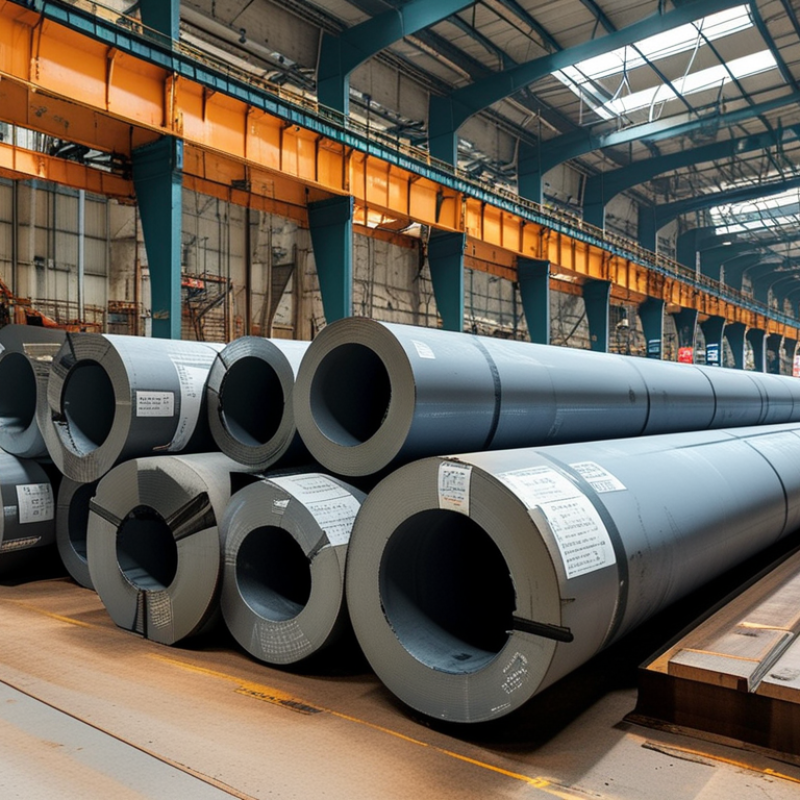
Reliable H beam selection begins with understanding section types, not comparing prices alone. Hot-rolled H beams suit columns, warehouse frames, platforms, and bridge girders. Welded built-up beams can provide deeper sections for long spans, but weld quality needs closer inspection. Regional names also differ. Chinese HW, HM, and HN series may not match European HEA, HEB, or HEM dimensions. Always compare mass per metre, flange width, web thickness, and section properties.
Standards matter more.
ASTM A6 controls dimensions and tolerances, while ASTM A36 defines a common structural steel grade. EN 10025 covers grades such as S275 and S355. JIS G3192 addresses Japanese rolled steel shapes. A credible manufacturer should state the exact standard, grade, tolerance class, and test method. Request heat numbers, mill certificates, tensile results, impact values, and ultrasonic testing records when project risk is high. ISO 9001 helps, but it does not replace product-level evidence.
According to the World Steel Association’s 2024 World Steel in Figures, global crude steel production reached about 1.89 billion tonnes in 2023. This huge supply base can hide uneven quality. OECD Steel Committee market reviews also continue to highlight global steel overcapacity, so impressive capacity claims deserve verification. A lower price can look convincing. However, inconsistent straightness, coating thickness, or traceability may increase installation costs. Reliable suppliers disclose production equipment, inspection stages, delivery tolerances, and corrective procedures.
I would still check independent test reports; supplier documents alone can be incomplete.
Reliable H beam sourcing begins with evidence, not polished brochures. Study the manufacturer’s years in structural steel and comparable project records. Ask for traceable mill certificates, inspection reports, and recent customer references. A supplier experienced with bridges may still lack the controls needed for high-rise frames. Request samples from actual production, not specially prepared pieces. Small details matter: flange straightness, web thickness, surface scale, and packing condition.
Production capacity should be tested against your delivery schedule. Review rolling mill size, furnace output, shift patterns, storage space, and monthly volumes. Ask how the factory handles peak orders without extending lead times. A large stated capacity can be misleading. Check dispatch records and observe loading areas when possible. Confirm whether cutting, drilling, coating, and bundling occur in-house or through subcontractors. Each handoff adds delay and accountability risk.
Technology supports consistency, but equipment alone proves little. Inspect calibration records for gauges, automated rolling controls, ultrasonic testing, and dimensional inspection tools. Ask how nonconforming beams are isolated and corrected. The answer reveals operational maturity. Independent testing can verify yield strength, chemical composition, and weldability. Do not expect a flawless factory; real production has deviations. More important is transparent reporting and documented corrective action. A manufacturer that explains one past failure may be more reliable than one claiming none. Compare technical data with observed practice, then record every promise in the purchase specification.
| Assessment Dimension | Verifiable Data Point | Benchmark for a Reliable Manufacturer | Evidence to Request | Suggested Weight |
|---|---|---|---|---|
| Manufacturing Experience | Years producing structural steel sections and H beams | At least 10 years of documented structural-steel production; longer operating history generally indicates stronger process continuity. | Business registration, production records, project references, and dated facility photographs or audit reports | 15% |
| Annual Production Capacity | Rated and actual annual output of structural sections | Capacity should match the order size, delivery schedule, and required section range; verify actual utilization rather than relying only on stated capacity. | Audited capacity statement, rolling-mill specifications, recent shipment records, and monthly production data | 15% |
| Section Size Capability | Available H beam dimensions, mass per metre, length, and thickness range | The manufacturer should provide a current size chart and confirm tolerances for flange width, web depth, thickness, straightness, and length. | Mill certificate, dimensional inspection report, product catalogue, and calibrated measuring records | 10% |
| Applicable Standards | Product and quality standards specified in the purchase contract | Capability to manufacture and document compliance with the buyer’s required standard, such as ASTM, EN, JIS, or GB/T, without mixing requirements between standards. | Standards declaration, test certificate, inspection plan, and clause-by-clause compliance statement | 12% |
| Production Technology | Rolling, welding, heat-treatment, straightening, and finishing processes | Modern automated process control, traceable production parameters, controlled cooling or heat treatment where specified, and documented maintenance procedures. | Process flow chart, equipment list, maintenance records, calibration certificates, and quality-control plan | 15% |
| Material Traceability | Link between raw material heat number, production batch, test results, and delivered bundle | Full heat-number traceability from incoming steel to final shipment, with permanent or controlled bundle identification. | Heat certificates, bundle tags, production logs, and traceability sample from a previous shipment | 10% |
| Testing and Inspection | Chemical, mechanical, dimensional, and non-destructive testing capability | Routine tensile testing, yield-strength verification, elongation testing, dimensional inspection, and additional ultrasonic or other NDT when contractually required. | Laboratory accreditation, equipment calibration, test reports, inspector qualifications, and independent inspection arrangements | 12% |
| Quality Management | Formal quality-management system and corrective-action process | A current ISO 9001 certificate issued by an accredited certification body, supported by documented nonconformity and corrective-action procedures. | Certificate scope, validity verification, internal-audit records, inspection and test plan, and nonconformance reports | 8% |
| Export and Logistics Capability | Experience with international documentation, packaging, port handling, and delivery terms | Ability to provide accurate commercial invoices, packing lists, certificates of origin, mill certificates, and export-compliant bundle packaging. | Redacted shipping documents, packaging specifications, loading photographs, and agreed Incoterms® responsibilities | 8% |
| Supplier Verification Score | Weighted evaluation before purchase approval | 80–100: preferred supplier | 60–79: conditional approval with corrective actions | Below 60: further verification required | Completed audit checklist, verified documents, sample inspection, and signed technical specification | 100% |
Choosing a reliable H beam manufacturer starts with evidence, not polished photographs or fast quotations. Ask for recent mill test certificates for the exact section, grade, and production batch. Check yield strength, tensile strength, elongation, chemical composition, dimensions, and test standards. Numbers should match the applicable specification and your purchase order. A certificate copied from another project is a warning sign. Paper is not proof.
Request the manufacturer’s quality certificates and confirm their scope, validity, and issuing body. ISO 9001 supports controlled processes, but it does not replace product testing. EN 10204 3.1 inspection documents can provide useful batch-level evidence. Depending on the project, independent inspection may include ultrasonic testing, dimensional checks, and witness sampling. Ask who performed each test and when. Documents can look complete but lack a heat number. That small gap mattered. Certification supports trust, yet site verification remains valuable.
Traceability should follow each beam from furnace to final bundle. The heat number must appear on the certificate, production record, and physical marking. Compare markings during loading, especially after cutting, shot blasting, or repainting. Request photos of bundled beams, packing lists, and dispatch records before shipment. Keep samples, inspection reports, and delivery notes in one controlled file. Be realistic: labeling errors happen, and digital systems are not automatically accurate. A second check by an independent inspector may cost more, but it can prevent untraceable steel from reaching the jobsite.
Choosing reliable H beam manufacturers worldwide requires more than comparing a price sheet. Ask for steel grades, mill certificates, dimensional tolerances, and recent inspection records. An experienced buyer should verify whether certificates match the shipped heat numbers. This small check often reveals weak quality control. Request a detailed quote showing unit price, cutting fees, surface treatment, packing, and inland transport. A cheaper offer may exclude important costs. I have seen budgets change after loading, when “standard packing” meant loose bundles exposed to rain. That detail matters.
Delivery terms deserve equal attention. Confirm production lead time, port schedules, loading photographs, and responsibility for transit damage. The contract should state acceptable delays and claim requirements. Ask whether the manufacturer can provide trial pieces or drawings before mass production. Custom H beams may need unusual lengths, holes, welding, or primer coatings. Clarify tolerances in millimetres, not vague phrases like “as requested.” Some suppliers promise flexibility too quickly. That should make you pause. A technical meeting with an engineer can prevent costly rework.
Tips: Compare at least three like-for-like quotations. Check references from projects using similar beam sizes and quantities. Request independent pre-shipment inspection for substantial orders. Agree on photos, packing lists, and document deadlines before payment. After-sales support should include replacement procedures, response times, and a named contact. Test the contact before ordering. If replies become slow during negotiations, support may be worse after delivery.
How to Choose Reliable H Beam Manufacturers Worldwide?
Building a Reliable Framework for Selecting Global H Beam Suppliers
Selecting a reliable H beam supplier requires more than comparing quoted prices. A sound framework begins with traceable evidence, including mill certificates, production records, and dimensional data. Ask where the steel is melted, rolled, tested, and stored. Details matter. Experienced procurement teams also review section tolerances, straightness, surface condition, and weldability before approval. These checks connect technical claims with actual site performance.
Request recent inspection reports from independent laboratories, not only internal quality statements. Verify chemical composition, yield strength, tensile strength, and impact results against the project specification. A dependable supplier should explain sampling frequency and corrective actions clearly. If answers remain vague, pause the evaluation. Capacity deserves practical testing. Review rolling schedules, furnace capacity, stock control, packaging, and export documentation. A supplier may promise volume, yet struggle with mixed sizes or changing delivery windows.
Use reference projects with similar beam grades, spans, climates, and delivery distances. Speak with previous buyers about communication, claims handling, and replacement procedures. A professional supplier shares limitations instead of presenting perfect performance. That honesty is valuable. Still, no framework is flawless. Documents can be current while factory discipline changes later. For higher-risk orders, arrange a pre-shipment inspection and retain sealed samples for independent review. Record every decision, including rejected evidence and unresolved questions. This creates accountability across purchasing, engineering, and construction teams.
© 1999-2025 The Lincoln Electric Company