How to Choose the Right Fanuc Welding Robot for Your Business Needs?
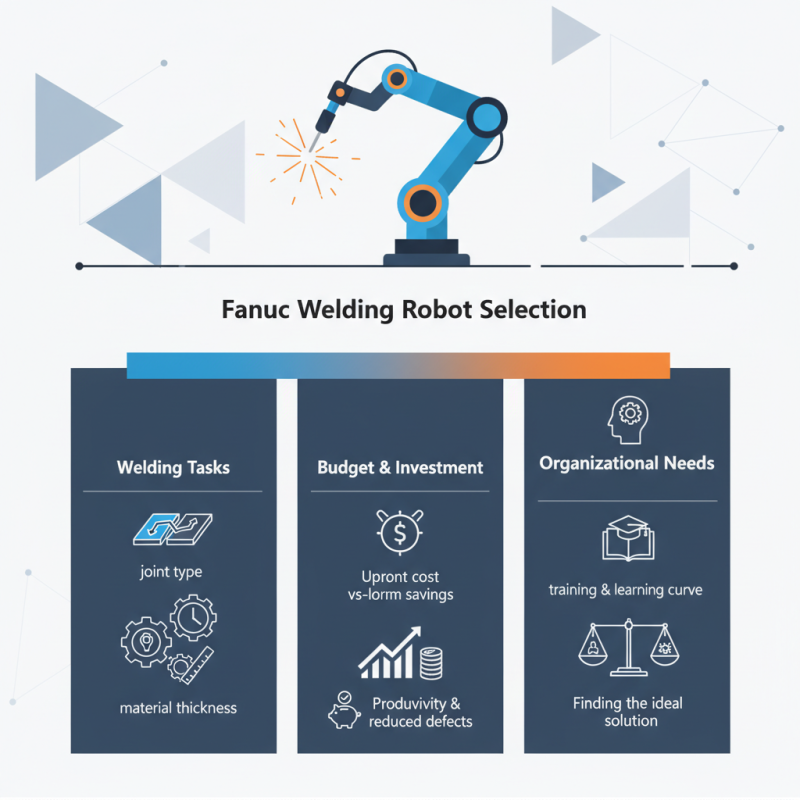
Choosing the right fanuc welding robot can significantly impact your production efficiency. Businesses must consider various factors before making a decision. One key aspect is the specific welding tasks required by your operations. Different models offer various capabilities, which can dramatically affect quality and speed.
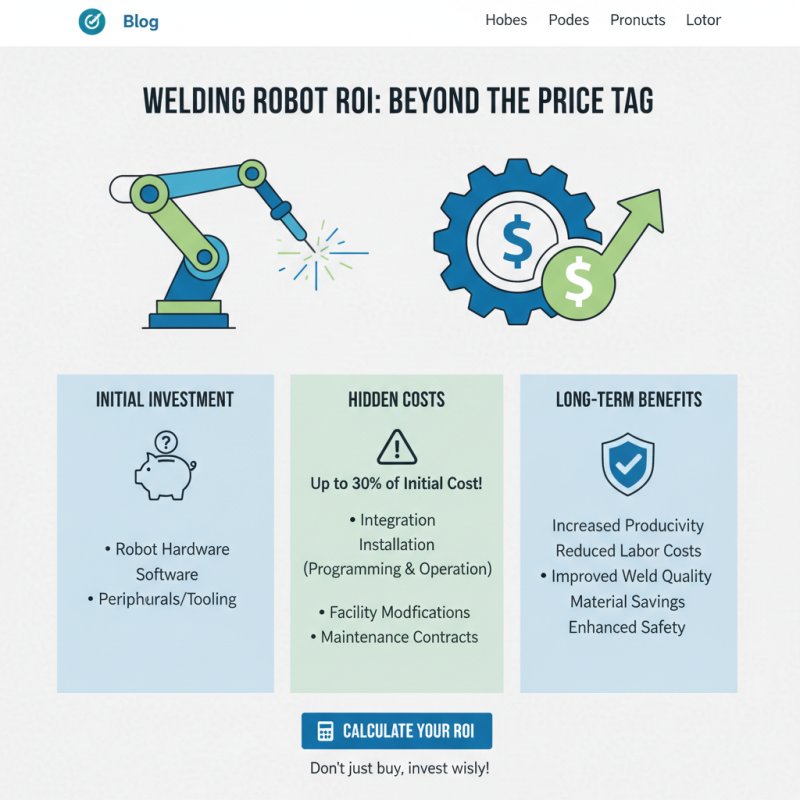
Additionally, assess your budget and the long-term investment in technology. A more advanced fanuc welding robot may have higher upfront costs. However, it can lead to savings through increased productivity and reduced defects.
Reflecting on your organization's needs is vital. Consider the training required for your team. An overly complex robot may lead to an unintended learning curve. Balancing efficiency, cost, and usability will help you find the ideal solution for your business.
Understanding Your Business Welding Requirements
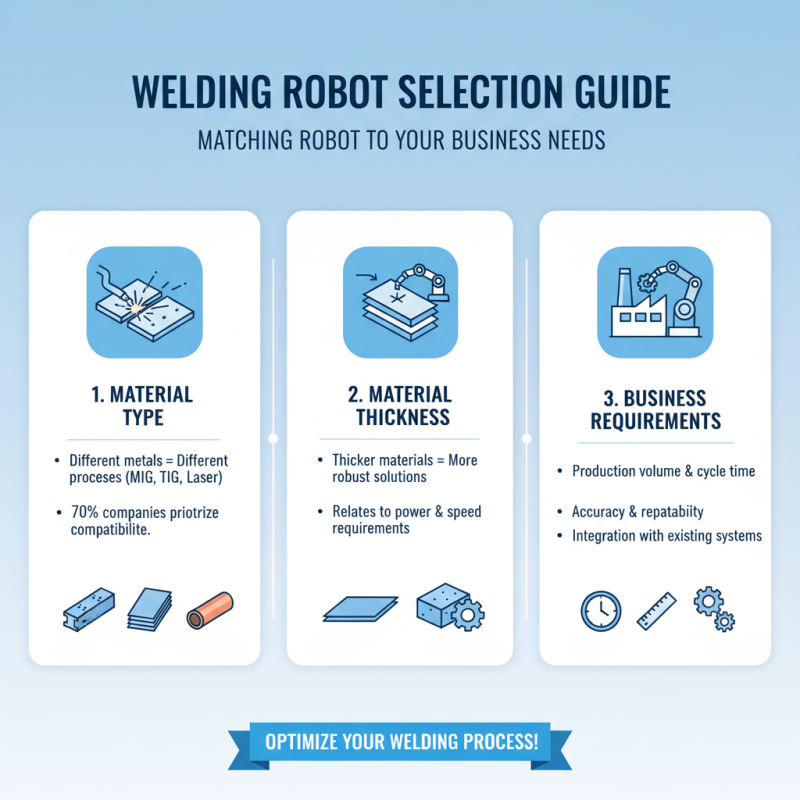
When selecting a welding robot, it's crucial to understand your specific business requirements. Evaluate the type of materials you work with. Different metals may require different welding processes. According to industry reports, approximately 70% of companies note that material compatibility is a top priority when choosing a robot. Assess the thickness of the materials too. Thicker materials often need more robust welding solutions.
Consider the volume of production. Are you a small shop with periodic welding needs? Or do you have high-volume production that requires consistent output? A study by a robotics association found that businesses with increased production demands tend to benefit most from automated solutions.
**Tip:** Start with a trial evaluation. Many providers offer demo options. Testing a robot in your work environment can provide valuable insights.
Also, think about your workspace. Is it large enough for a robotic arm's range of motion? Limited space can affect performance and safety. Gather insights from employees too. Their practical experience might reveal requirements you hadn't considered.
**Tip:** Conduct a needs assessment survey with your team. This can highlight unforeseen issues and improve your final decision.
Analyzing Different Fanuc Welding Robot Models
When analyzing different welding robot models, it’s crucial to consider various factors that fit your specific business needs. Each model comes with unique features, payload capacities, and operational speeds. Some may excel in precision, while others focus on speed. It's essential to align these attributes with your production requirements.
Also, think about the complexity of the tasks. Some robots are ideal for simple welds, while others handle intricate designs. Flexibility is key. A model that adapts to different workflows could save time and costs. However, remember that a more complex robot might require advanced programming skills. This can create a skill gap in your team that needs addressing.
Evaluate the support and maintenance options available as well. A less popular model might seem cost-effective but could end up being more expensive in repairs. No model is perfect. Each has its limitations and trade-offs. Identifying these early will help you avoid potential pitfalls as you scale your operations. Balancing features, costs, and support can be tricky but is essential for long-term success.
Evaluating Key Features and Specifications
Choosing the right welding robot is crucial for any business. Focus on key features and specifications that influence performance and efficiency. One major aspect is payload capacity. Ensure the robot can handle the weight of the welding materials without strain. A robot that cannot support your needs may lead to errors or downtime.
Next, consider the working range. The robot should move freely within your workspace. A restricted range limits functionality and productivity. Evaluating speed is also essential. A faster robot can significantly shorten production time. However, balance speed with precision. High speed might reduce weld quality.
Another critical feature is the software interface. A user-friendly interface can simplify programming and operations. If the programming is complex, it may require additional training. This could slow down the integration process. Reflect on the flexibility of the robot as well. A versatile robot can adapt to different tasks, saving costs in the long run. Choosing the right specifications requires careful thought. Each detail matters in achieving optimal results for your business.
Comparison of Key Features in Fanuc Welding Robots
Assessing After-Sales Support and Maintenance Options
When selecting a welding robot, after-sales support is crucial. Many businesses overlook this aspect. However, it can deeply affect your operations. You need a partner who can provide timely assistance. Ask about response times for service calls. Delays can lead to costly downtime.
Maintenance options also matter. Some robots require regular checks to keep them running smoothly. Check if the company offers training for your staff. Well-trained employees can handle minor issues. This reduces reliance on external support. It’s also important to examine warranty coverage. A solid warranty can save you from unexpected repair costs.
While evaluating, consider how well the support staff communicates. Are they easily reachable? Are they knowledgeable? These factors can make or break your experience. Remember, a great robot is only as good as the support that comes with it.
How to Choose the Right Fanuc Welding Robot for Your Business Needs? - Assessing After-Sales Support and Maintenance Options
| Robot Model |
Payload Capacity (kg) |
Reach (mm) |
After-Sales Support |
Maintenance Frequency (months) |
Training Options |
| Model A |
10 |
1500 |
24/7 Support |
12 |
Onsite and Online |
| Model B |
15 |
1800 |
Business Hours Support |
6 |
Online Training Only |
| Model C |
20 |
2100 |
Email Support |
8 |
Onsite Training Available |
| Model D |
25 |
2500 |
24/7 Support with SLA |
10 |
Comprehensive Training Program |