How to Choose the Best Agricultural Drones for Your Farm?
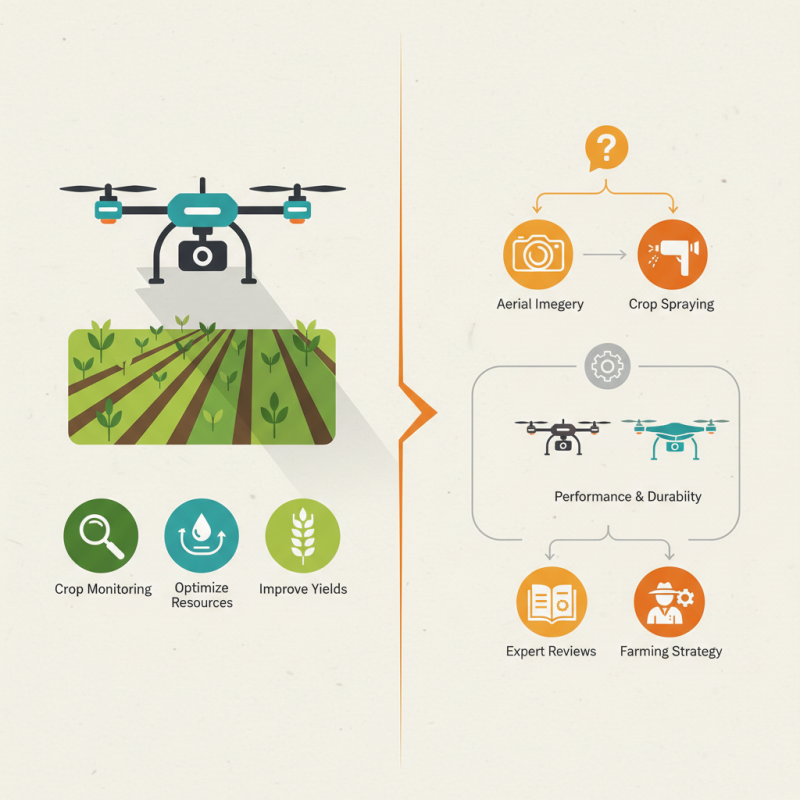
Choosing the best Agricultural Drones for your farm can be daunting. With the rapid advancements in technology, various options are available. Agricultural drones offer remarkable benefits to modern farming practices. They can enhance crop monitoring, optimize resources, and improve yields. Yet, the wide range of features can confuse anyone who is not well-informed.
Consider your specific needs when selecting a drone. Will you require aerial imagery, or is crop spraying your priority? Understanding the purpose of the drone will help narrow down your options. Performance and durability are crucial factors to evaluate. Some drones are built for rugged environments; others may not withstand challenging conditions.
Research plays a vital role in making an informed decision. Look for expert reviews and user experiences to guide you. Trustworthy sources can shed light on each model's capabilities and limitations. Reflect on your own farming practices and how a drone could meet your needs. Choosing the right agricultural drone is not just about the latest technology; it's about finding a tool that enhances your unique farming strategy.
Understanding Your Farming Needs and Goals
When selecting agricultural drones, understanding your farming needs is crucial. Each farm has unique requirements. Assess your crop types, the size of your fields, and your specific farming practices. For instance, precision irrigation or pest monitoring might be on your radar. This clarity will help you choose the right drone features.
Consider what data you need. A multispectral camera helps with plant health analysis, while mapping capabilities support field management. Gauge your experience level too. If you’re new to drones, user-friendly models with intuitive controls might be best. Reflecting on your goals helps align drone functions with your farming vision.
Lastly, think about your budget. Higher-end drones boast advanced features, but they might not be necessary for all farms. A balance between cost and capability is key. Don't hesitate to seek advice or research extensively. Mistakes can lead to wasted resources, and industry insights often highlight overlooked aspects.
Comparison of Agricultural Drone Features
This bar chart compares various features of different agricultural drones including maximum flight time, payload capacity, and camera resolution. Understanding these specifications can help farmers make informed decisions when selecting the best drone for their agricultural needs.
Exploring Different Types of Agricultural Drones
When selecting agricultural drones, understanding the various types is crucial. Drones can be classified into multispectral, thermal, and RGB (Red-Green-Blue) camera drones. Each type serves different purposes in precision agriculture. For instance, multispectral drones assess crop health by capturing data beyond visible light, helping in identifying issues like nutrient deficiencies.
According to a recent report by MarketsandMarkets, the agricultural drone market is projected to reach $6.5 billion by 2026, reflecting a 32% CAGR from 2021. Utilizing these drones can enhance efficiency and productivity on farms, allowing for precise monitoring of large areas quickly. Farmers now invest in technology to improve yield and reduce costs.
Tip: Assess your specific farming needs before choosing a drone type. Infrared sensors can help identify water stress, while RGB drones focus on overall plant health. Always consider the learning curve associated with operating different drones, as not all may be user-friendly.
Moreover, regulatory hurdles remain a significant consideration. Compliance with local laws varies across regions, affecting operational capabilities. Researching local regulations and obtaining necessary permits is essential for effective drone use. Balancing technology with legal requirements can present challenges that require careful planning.
Evaluating Drone Features and Specifications
When selecting agricultural drones, focus on specific features that align with your farming needs. Begin by assessing the drone's payload capacity. This dictates how much equipment or sensors it can carry. A higher capacity can support advanced imaging technology, which is beneficial for crop monitoring. Look for drones with high-resolution cameras and multispectral sensors. These tools provide detailed insights into crop health.
Consider flight time as another critical factor. Drones with longer battery life can cover larger areas in a single flight. This leads to more efficient surveying of your farmland. Additionally, check the operational range of the drone. A larger range allows for consistent monitoring of expansive fields without needing constant recharging.
Finally, pay attention to ease of use. Some drones come with user-friendly interfaces and automated flight paths. However, not all models are simple. You may need training or practice to operate more complex systems. Reflect on how much time you can dedicate to learning. Balancing advanced technology with your farming routine is vital for successful integration.
Assessing Budget and Cost-Effectiveness
When choosing agricultural drones, budget and cost-effectiveness are crucial. A well-planned investment can lead to better yields and efficiency. Start by determining the features you truly need. Some drones may offer advanced sensors or imaging technology that could be useful for specific crops. However, if your farm is small, simpler models might suffice.
Consider the total cost of ownership. This includes maintenance, software, and potential training. A cheaper drone might seem appealing initially but could result in higher costs over time. Think about durability and warranty options as well. Drones should withstand rough weather and prolonged use.
It's also wise to reflect on your farming practices. Are there specific challenges you face? A drone that excels in one area may not be the best fit for another. Be open to revisiting your choices. Prioritize cost-effectiveness, but remember not to compromise on functionality. Make sure your investment aligns with your long-term farming goals. This balance is key to making a wise decision.
How to Choose the Best Agricultural Drones for Your Farm? - Assessing Budget and Cost-Effectiveness
| Feature | Budget Option | Mid-Range Option | High-End Option |
| Price Range | $500 - $1,000 | $1,000 - $3,000 | $3,000 - $10,000 |
| Camera Quality | 720p HD | 1080p Full HD | 4K Ultra HD |
| Flight Time | 20 minutes | 30 minutes | 40 minutes |
| Payload Capacity | 0.5 kg | 1 kg | 2 kg |
| Flight Range | 1 km | 3 km | 5 km |
| Additional Features | Basic GPS | Advanced Mapping | AI Obstacle Avoidance |
Comparing Leading Agricultural Drone Brands and Models
Choosing the right agricultural drone for your farm involves understanding key features and specifications of leading models. Research from the American Farm Bureau Federation highlights that precise agricultural drones can enhance crop monitoring, increase yields, and reduce costs effectively. These devices vary in price, flight time, camera quality, and data analysis capabilities.
Evaluate the payload capacity of a drone. Higher capacity allows for more advanced sensors and cameras. Additionally, consider battery life; some models only fly for 20 minutes, while others can last for over 60 minutes. Flight stability and control systems play critical roles too. Look for drones equipped with GPS and real-time data transmission for efficient field analysis.
Tip: Test different models before purchasing. Many companies offer trials. It’s also wise to read reviews and check their service support. You want to ensure proper assistance post-purchase. Remember, not all drones suit every type of farm. Some might excel in vineyards, while others work better with expansive fields. Awareness of these nuances helps in making an informed decision.
Another important aspect is software integration for analytics. Data gathered by drones can drive significant insights into soil health and crop conditions. Ensure that the drone's software aligns with the precision agriculture tools you currently use. Investing in a compatible system can enhance functionality and ease of use.