
Choosing a Palletizing Machine in 2026 is not simply a matter of selecting the fastest robot. It is a production decision involving product stability, labor conditions, floor space, maintenance skills, and future demand. A machine that handles 60 cases per minute may still fail when cartons arrive unevenly, stretch film varies, or package sizes change weekly. Real performance appears on the factory floor, not only in a polished brochure.
Jeff Burnstein, former president of the Association for Advancing Automation, stated, “Robots are not going to take all the jobs; they are going to change the jobs.” That observation remains important for palletizing projects. Operators still monitor patterns, inspect loads, solve faults, and protect product quality. The right Palletizing Machine should reduce repetitive lifting while giving people clearer control over the process. It should also connect reliably with conveyors, scanners, pallet dispensers, and warehouse systems.
This guide examines the practical questions behind a confident purchase. Can the machine manage your heaviest case? Can its gripper handle crushed corners? How quickly can staff change a pallet pattern? What happens during a sensor failure at 2 a.m.? These details matter more than impressive cycle-time claims. A factory test is strongly recommended, although it cannot predict every future problem. Some buyers also underestimate cleaning access and spare-part availability. That mistake can become expensive. Careful selection means balancing speed, flexibility, safety, integration, and total ownership cost, while accepting that no machine solves every operational weakness.
How to Choose a Palletizing Machine in 2026?
Understanding Palletizing Machines and Their Main Types
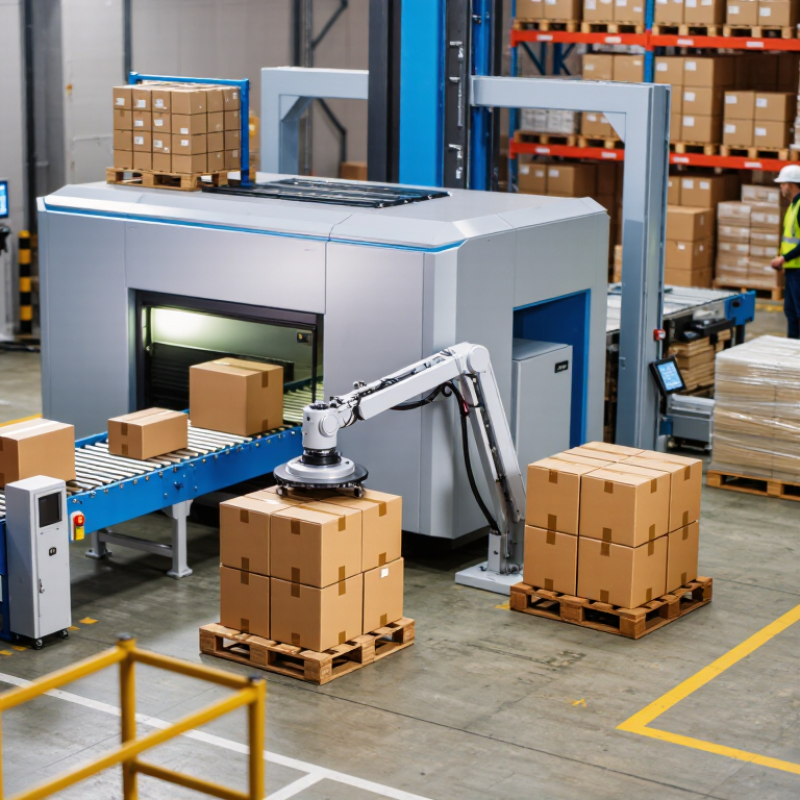
A palletizing machine arranges cartons, bags, trays, or containers into stable loads. The right choice depends on product shape, weight, speed, and available floor space. A conventional layer palletizer suits high-volume lines with consistent packages. It places complete layers quickly and delivers predictable stacking patterns. Robotic palletizers offer greater flexibility when products, pallet sizes, or patterns change often. They can also serve several production lines with suitable tooling.
Gantry palletizers move on overhead axes and handle heavy loads with controlled motion. They usually need more installation height, but their work area remains organized. Collaborative palletizing systems can support smaller operations where people and automation share nearby space. Their speed may be lower. Safety still requires risk assessment, guarding, and reliable stop functions.
Start with real production data, not a sales estimate. Record peak cartons per minute, package dimensions, pallet height, and shift length. A carton that looks rigid in the morning may soften after hours in a humid room. That detail matters. Check gripper performance with dusty, slippery, or uneven packages. Ask for changeover demonstrations using your actual products. A neat specification sheet can still mislead. Maintenance access, spare-part availability, operator training, and software diagnostics affect long-term reliability. Leave room for future products, but avoid buying capacity that your line may never use.
Defining your product is the real starting point. Measure each item, including its weight, dimensions, surface, and packaging strength. A sealed carton behaves differently from a soft bag or unstable tray. Record the smallest and largest formats. Include damaged edges and occasional product variation. These details affect gripping, layer formation, and pallet stability. A machine that handles only perfect cases may disappoint during busy shifts. It sounds obvious, but product data is often incomplete.
Output requirements need more than an hourly target. Separate average production from peak demand. Note changeovers, short stops, rejected units, and planned breaks. A suitable system should meet the required rate without running constantly at its limit. Ask for a real acceptance test using your products. Review cycle time, stacking accuracy, and recovery after a fault. Fast is not always dependable.
Workplace conditions can decide the purchase. Check floor space, ceiling height, pallet access, lighting, temperature, dust, and available utilities. Leave enough room for cleaning and maintenance. Operators also need clear access and safe sightlines. Noise and manual handling deserve attention. A layout drawing may look efficient, yet block a doorway or service panel. That mistake is expensive. Compare the proposed design with actual walking routes, not just empty floor measurements. Revisit the plan with operators before approval. They often notice practical problems that technical documents miss.
Choosing a palletizing machine in 2026 starts with configuration, not advertised speed. Robotic cells suit varied product sizes and changing pallet patterns. Conventional systems often provide steady output for one package format. Hybrid designs can balance both needs when production changes seasonally.
Measure the real load first. Include product weight, case dimensions, pallet height, and required stacking patterns. A gripper must hold cartons firmly without crushing corners. Vacuum tools may struggle with dusty or porous surfaces. Mechanical clamps can offer better control, but they may slow changeovers. In plant trials, a five-minute format change can matter more than a higher peak rate.
Automation level should match your operators and maintenance resources. Manual pallet positioning costs labor but keeps control simple. Semi-automatic cells add conveyors, sensors, and guided pallet exchange. Fully automatic systems can coordinate wrapping, pallet dispensing, and production data. They also demand stronger training and planned maintenance.
More automation is not always better. A poorly supported system can create longer stoppages. Test recovery procedures, not only normal operation.
Ask whether operators can clear a misaligned case safely and restart the cell without specialist help. Check guarding, emergency stops, access points, and documented performance data before approval.
A reliable decision comes from timed trials using your actual products, pallets, and shift conditions. Specification sheets rarely show everything.
How to Choose a Palletizing Machine in 2026?
Evaluating Safety, Integration, Maintenance, and Total Cost
A palletizing machine should fit your real production floor, not only a sales specification. Watch a complete shift before choosing a model. Observe pallet movement, operator access, product changes, and occasional jams. Safety begins with a documented risk assessment, guarded moving areas, emergency stops, and clear access for cleaning. Lockout procedures must remain practical during night shifts. If workers bypass a guard to save two minutes, the design needs reconsideration.
Integration deserves equal attention. Confirm communication with your existing controller, conveyors, scanners, and warehouse software. Test different carton sizes and unstable loads, not just perfect samples. A short trial can reveal sensor delays, awkward handoffs, or pallet patterns that collapse near the wrapper. Ask for documented cycle times and realistic tolerances. Claims based on ideal conditions can mislead.
Maintenance costs often appear after installation. Inspect grease points, belts, grippers, sensors, and electrical cabinets before signing. Can a technician reach them without removing half the machine? Spare parts availability, remote diagnostics, training, and service response affect uptime. Calculate energy use, labor, planned maintenance, rejected products, and lost production during failures. A cheaper machine may become expensive after repeated stoppages. I have seen teams underestimate changeover time because they measured one product only. That mistake is easy to repeat. Keep a written test record, including faults, recovery time, and operator feedback. The less glamorous details usually decide the true cost.
Comparative planning data for common palletizing machine configurations. Actual performance and cost depend on product characteristics, pallet patterns, working hours, site conditions, and local safety requirements.
| Evaluation Dimension | Robotic Palletizer | Collaborative Palletizer | High-Speed Layer Palletizer | Gantry Palletizer |
|---|---|---|---|---|
| Typical application | Mixed products, variable pallet patterns, and multi-line production | Low-to-medium volume lines and frequent product changeovers | High-volume, uniform cases with stable pallet patterns | Heavy cases, large pallets, and applications requiring broad rectangular coverage |
| Typical throughput | 20–60 cases per minute | 8–25 cases per minute | 60–140 cases per minute | 30–100 cases per minute |
| Typical payload per pick | 10–50 kg, depending on robot configuration and tooling | 5–20 kg, subject to collaborative safety limits | 10–40 kg per layer or product group | 20–60 kg, depending on beam and gripper design |
| Estimated footprint | 12–30 m², including guarding and pallet conveyors | 6–15 m², depending on reach and pallet position | 20–45 m², including layer-forming equipment | 15–35 m², depending on travel length and pallet layout |
| Safety architecture | Normally requires perimeter guarding, safety doors, interlocks, and presence detection | Requires risk assessment, speed and force monitoring, safety-rated stop functions, and defined collaborative zones | Normally requires full guarding, access interlocks, light curtains, and controlled pallet entry points | Normally requires guarding around the travel envelope, safety scanners or light curtains, and access interlocks |
| Relevant safety references | ISO 10218, ISO 13849-1, ISO 13850, and applicable local machinery regulations | ISO/TS 15066, ISO 10218, ISO 13849-1, and an application-specific collaborative risk assessment | ISO 10218, ISO 13849-1, ISO 13850, and applicable local machinery regulations | ISO 10218, ISO 13849-1, ISO 13850, and applicable local machinery regulations |
| Changeover capability | High; recipes can support multiple case sizes and pallet patterns | Very high; suited to frequent manual-access changeovers | Low-to-medium; best with standardized cases and pallet formats | Medium; programmable but often optimized for defined product families |
| Integration requirements | PLC or industrial network, case conveyor, pallet dispenser, safety PLC, and vision or barcode system when required | PLC or network connection, simplified conveyor interface, safety monitoring, and operator-access controls | Case accumulation, layer-forming conveyors, pallet handling, high-speed controls, and coordinated safety systems | Overhead structure, servo axes, pallet conveyors, product infeed, and coordinated motion control |
| Installation complexity | Medium; requires cell layout validation, guarding, programming, and commissioning | Low-to-medium; usually faster to deploy when product range is limited | High; requires accurate conveyor synchronization and substantial line integration | High; requires structural alignment, axis calibration, and large-area safeguarding |
| Planned maintenance | Approximately 80–160 labor hours per year | Approximately 50–120 labor hours per year | Approximately 120–240 labor hours per year | Approximately 100–220 labor hours per year |
| Common wear components | Gripper pads, pneumatic components, cable assemblies, lubrication points, and conveyor parts | Gripper pads, pneumatic components, cable assemblies, and conveyor parts | Belts, rollers, chains, bearings, vacuum components, and layer-forming guides | Linear bearings, belts or racks, cables, gripper components, and pallet conveyor parts |
| Indicative capital cost | USD 180,000–450,000 for a complete cell | USD 90,000–220,000 for a complete cell | USD 300,000–750,000 for a complete line section | USD 220,000–550,000 for a complete system |
| Estimated annual operating cost | USD 18,000–45,000, excluding labor and major failures | USD 12,000–30,000, excluding labor and major failures | USD 30,000–70,000, excluding labor and major failures | USD 25,000–60,000, excluding labor and major failures |
| Indicative five-year TCO | USD 270,000–675,000 | USD 150,000–370,000 | USD 450,000–1,100,000 | USD 345,000–850,000 |
| Best selection criteria | Choose when flexibility, product variety, and scalable automation are priorities | Choose when space, accessibility, and moderate throughput are more important than maximum speed | Choose when sustained high throughput and repeatable product formats justify higher integration cost | Choose when heavy loads, wide reach, or multiple pallet positions are required |
Choosing a palletizing machine in 2026 means planning beyond today’s carton count. The machine must handle future products, changing pack sizes, and tighter delivery windows. IFR’s World Robotics 2024 report recorded 541,302 industrial robot installations in 2023. That growth signals stronger automation demand, but more robots do not guarantee better production.
Start with real operating evidence. Measure cases per minute, product weight, pallet patterns, changeover frequency, and available floor space. A machine rated for 1,200 cases per hour may slow sharply with unstable cartons or mixed formats.
Test actual products, including damaged boxes and slippery packaging. Test it live. Fit matters.
Future production also requires adaptable software, safe access, simple maintenance, and data visibility. PMMI’s 2024 packaging automation research highlights labor availability and flexible operations as continuing industry concerns. Choose controls that operators can understand quickly, not systems that require one specialist. Check spare-part access and training requirements before signing. A low purchase price can become expensive during repeated stoppages. I would also question impressive speed claims without measuring uptime, changeover loss, and pallet quality. The honest choice may be a slightly slower machine with easier recovery. Production plans change. Your palletizer should tolerate that uncertainty.
© 1999-2025 The Lincoln Electric Company