10 Essential Tips for Using Robot Software Effectively for Your Business?
In today's fast-paced business environment, robot software is becoming essential for efficiency. According to a recent report by McKinsey, automation could increase productivity by up to 40% in various sectors. Companies adopting robot software see significant improvements in operations. For instance, the use of robotic process automation (RPA) can reduce human errors and speed up repetitive tasks.
However, implementing robot software poses challenges. Some businesses struggle with integration and employee pushback. A survey from Deloitte reveals that 39% of companies face resistance to automation. It's crucial to address these issues proactively. Understanding the human element is just as important as the software itself.
As robot software evolves, so do its applications. Businesses can benefit from data analysis, customer service automation, and supply chain efficiency. Yet, success does not come without reflection and adjustment. Each organization must tailor its approach. Achieving the desired outcomes requires continuous improvement and adaptability.

Understanding the Benefits of Robot Software for Business Efficiency
Robot software offers significant benefits for enhancing business efficiency. By automating repetitive tasks, it frees up employees to focus on complex issues. Businesses can streamline operations and reduce human error dramatically. This leads to faster workflows and better resource allocation. For instance, automating data entry can save hours each week.
However, the integration of robot software is not without challenges. Companies may face issues such as resistance from staff or inadequate training. Employees might feel threatened by automation and hesitate to embrace new technologies. It’s essential to address these concerns through proper communication and support. Regular feedback sessions can help teams adapt and refine their use of the software.
Effective implementation requires trial and error. Organizations should monitor the impact of robot software closely. Are the expected efficiency gains realized? If not, adjustments may be necessary. Continuous improvement is key. By analyzing results and listening to employee feedback, businesses can harness the full potential of robot software.
Assessing Your Current Workflow for Effective Robot Software Integration
Assessing your current workflow is crucial for effective robot software integration. Start by mapping out existing processes. Identify bottlenecks and repetitive tasks. This will show you areas where robot software can bring improvements. Look closely at each step. Are there tasks that delay your team? This gap can often signal opportunities for automation.
One tip for integration is to involve team members early. Their unique insights can highlight issues you might miss. They know what works and what doesn’t in daily operations. Another vital point is to ensure the software aligns with your operational goals. Integration shouldn't feel forced. It should enhance what you already have.
Finally, don’t forget to test. Implementing too quickly can disrupt workflow. Use pilot programs to collect feedback. This step is essential. You don’t want to overlook small details. Adjusting based on real-world usage will lead to smoother integration. Keep in mind, an imperfect start is still a step forward, allowing room for growth and adjustment.
10 Essential Tips for Using Robot Software Effectively for Your Business
| Tip Number |
Tip Description |
Expected Outcome |
Implementation Difficulty |
| 1 |
Assess your current workflow |
Identify bottlenecks and inefficiencies |
Medium |
| 2 |
Set clear automation goals |
Align automated tasks with business objectives |
Low |
| 3 |
Choose the right robot software |
Ensure it fits your specific needs |
High |
| 4 |
Train your team |
Maximize efficiency and correct usage |
Medium |
| 5 |
Start with small projects |
Test the effectiveness of the software |
Low |
| 6 |
Monitor performance regularly |
Ensure ongoing effectiveness of automation |
Medium |
| 7 |
Gather feedback from users |
Improve the integration process |
Low |
| 8 |
Keep software updated |
Utilize the latest features and security |
Medium |
| 9 |
Integrate with existing tools |
Enhance overall productivity |
High |
| 10 |
Evaluate ROI |
Assess the financial effectiveness of automation |
High |
Choosing the Right Robot Software: Key Features to Consider
When selecting the right robot software for your business, consider key features that align with your needs. Usability is paramount. A user-friendly interface enhances team adoption. Intuitive design reduces training time and minimizes errors. Look for customization options, allowing adjustments to meet specific workflow demands. Flexibility can be a game-changer as your work environment evolves.
Integration capabilities are also crucial. The software should seamlessly connect with your existing systems. Compatibility with popular applications ensures minimal disruption during implementation. Security features cannot be overlooked. Protecting sensitive data is essential in today’s digital landscape. Verify the software's encryption and compliance with industry standards.
However, it is vital to reflect on your unique challenges. Not every solution fits all businesses. Assess your long-term goals and resource availability. During the decision process, feedback from team members can provide valuable insights. Engaging in this dialogue may highlight aspects you hadn't considered. Remember, investing time upfront prevents potential costly setbacks later.
Training Employees to Maximize Productivity with Robot Software
Training employees to use robot software effectively is vital for business success. Many teams struggle with new technology. Employees often feel overwhelmed or unsure about how to harness these tools. Providing structured training can help alleviate these concerns. Create interactive workshops where employees can engage with the software. Hands-on experience often leads to better retention of information.
Encourage employees to ask questions during training sessions. Sometimes, they may hesitate to voice their confusion. It's important to foster an open atmosphere. Encourage peer-to-peer learning as well. When employees share their insights, it builds confidence. You might notice some employees naturally excel, while others lag behind. Tailored support can address individual needs and bridge these gaps.
Track employees' progress regularly. Gather feedback on which aspects of the training are effective. Reflect on the challenges many face with the software. This ongoing evaluation is essential for improvement. Sometimes, the software may seem clunky or counterintuitive. Acknowledging these pain points can lead to better solutions. Aim for continuous learning and adaptation as a team.
Employee Productivity Boost with Robot Software
Measuring ROI: Analyzing the Impact of Robot Software on Business Performance
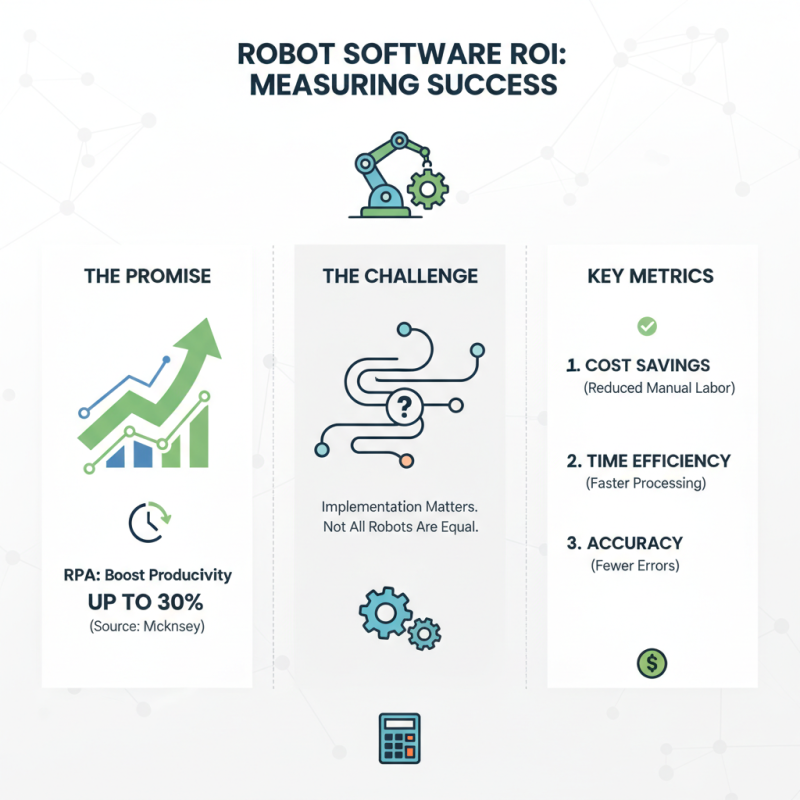
Measuring the ROI of robot software requires thorough analysis. Many businesses adopt robotic process automation (RPA) for efficiency gains. According to a report by McKinsey, companies can boost productivity by up to 30% with RPA. Yet, achieving these results depends on implementation strategies.
However, not every adoption leads to success. Some firms report an ROI lower than expected. A Gartner study noted that 45% of RPA projects fail to meet initial performance goals. This emphasizes the importance of proper planning. Setting measurable KPIs and regular evaluations can provide insights into what’s working and what isn’t.
Data from Forrester indicates that the average ROI from RPA projects is around 200%. Yet, this figure varies greatly by industry and specific use case. Firms should refine their processes and invest in training. To truly harness the potential of robot software, continuous assessment of its impact is critical.