How to Implement Robotic Automation in Your Business Operations?
In today's rapidly evolving business landscape, robotic automation is becoming essential for companies seeking efficiency and scalability. This technology can streamline operations, reduce costs, and minimize human error. However, implementing robotic automation is not without its challenges. Many businesses may struggle with the initial investment and the required adjustments in workflows.
It’s crucial to recognize that robotic automation does not replace the human workforce. Instead, it transforms job roles and enhances productivity. Companies must provide adequate training for their staff to adapt to this new technology. In this way, teams can collaborate more effectively with automated systems to achieve better outcomes.
Understanding both the benefits and potential pitfalls of robotic automation is vital. It involves careful planning and a willingness to adapt. Embracing this technology can lead to significant improvements, but companies must remain flexible and ready to face obstacles along the way. The journey to automation should be approached thoughtfully, considering both immediate needs and long-term goals.

Understanding Robotic Automation: Key Concepts and Benefits
Robotic automation is reshaping business operations across various sectors. Recent studies indicate that companies implementing robotic process automation (RPA) can experience cost reductions of up to 30%. This technology streamlines repetitive tasks, allowing human workers to focus on more strategic initiatives. Moreover, businesses often see a 15% increase in efficiency when utilizing automation tools effectively.
Understanding the benefits is crucial. RPA can enhance accuracy, minimizing human error in tasks like data entry. According to industry reports, organizations report a 40% decrease in errors after adopting automation solutions. However, reliance on automation can lead to challenges. Some employees may feel threatened by technology, fearing job loss. This perception can disrupt workplace dynamics and engagement.
The shift toward robotics must be managed carefully. Companies benefit from mapping out their processes before implementation. Clear communication around the changes is essential. Additionally, training staff to work alongside robots can bridge the knowledge gap. Embracing robotic automation is not just about technology; it's about fostering a culture of collaboration.
How to Implement Robotic Automation in Your Business Operations? - Understanding Robotic Automation: Key Concepts and Benefits
| Aspect |
Description |
Benefits |
| Process Automation |
Using software bots to automate repetitive tasks. |
Increased efficiency and reduced error rates. |
| Data Entry |
Automating the input of data into systems and databases. |
Faster data processing and improved data accuracy. |
| Customer Service |
Utilizing chatbots and automated response systems. |
24/7 service availability and quicker response times. |
| Reporting |
Automating the generation of reports from data sources. |
Time savings and real-time data analysis. |
| Compliance |
Ensuring compliance processes are automated and monitored. |
Minimized risks of non-compliance and enhanced tracking. |
Assessing Business Processes for Automation Opportunities
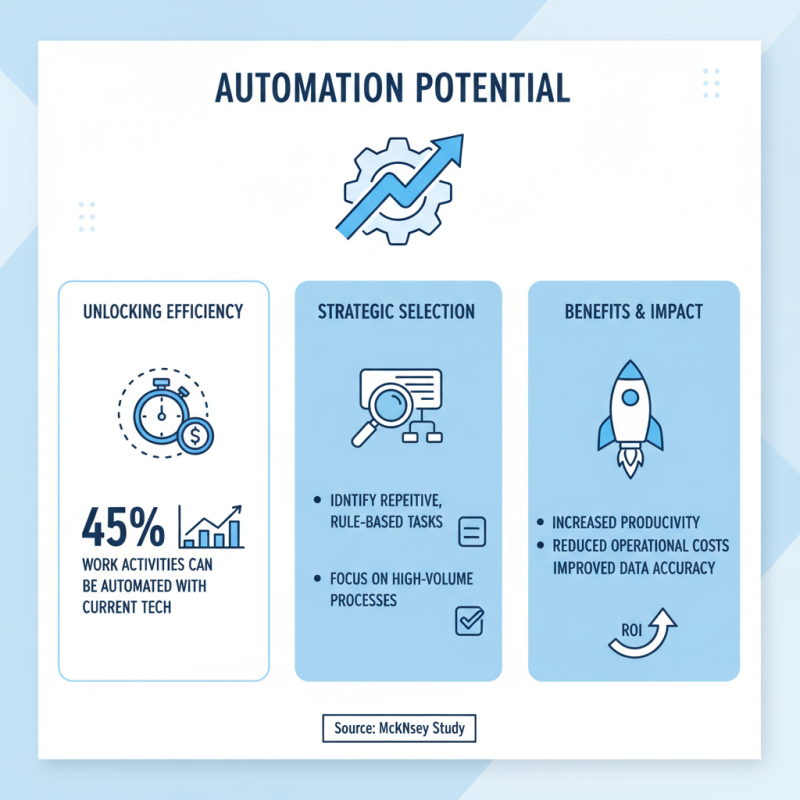
Assessing business processes for automation can unlock significant operational efficiencies. A recent study by McKinsey indicates that 45% of work activities can be automated using current technology. This highlights the potential in various roles across industries. However, not all tasks are equally suitable for automation. Identifying the right processes to target is critical.
Start by mapping out your workflows. Analyze repetitive and rule-based tasks. For instance, data entry and invoice processing are often prime candidates. According to Forrester, automating these tasks can improve efficiency by up to 30%. However, some processes may require human judgment or creativity. When AI and humans work together, it can lead to better outcomes. Relying too much on automation could also overlook potential human insights.
Consider a careful pilot before full implementation. Gathering feedback from your team is essential. They can offer insights into what works and what doesn’t. It’s important to remember that automation doesn’t replace people; it enhances their capabilities. A thoughtful approach allows for adjustments. This will lead to a smoother transition and better results in the long run.
Choosing the Right Robotic Automation Tools and Technologies
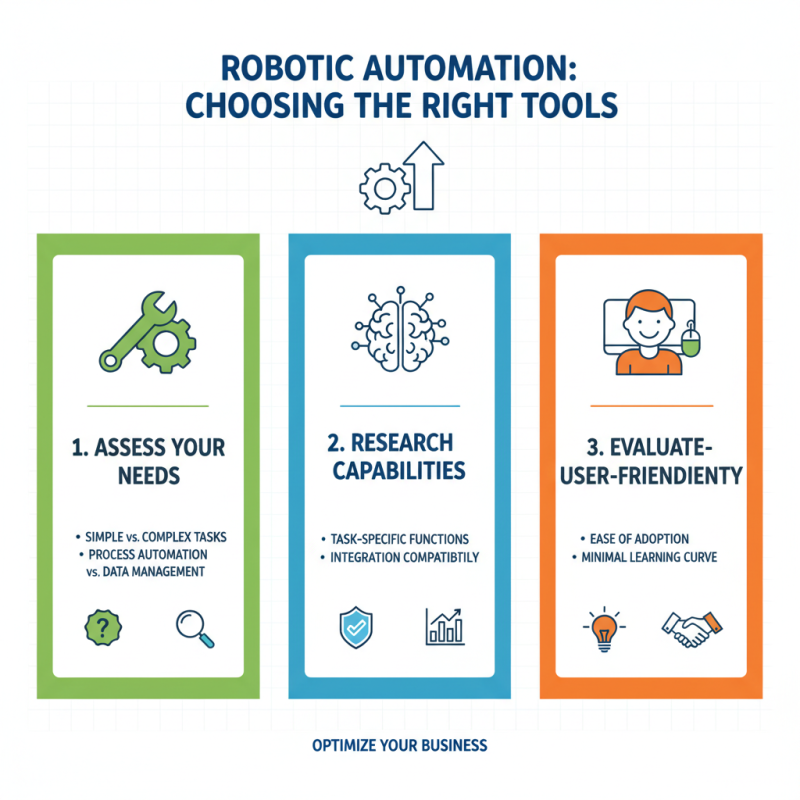
Choosing the right robotic automation tools is critical for any business. Consider your specific needs. Do you require simple tasks, or more complex ones? Different tools cater to diverse functions. Some might excel in process automation, while others are better for data management. Research and assess the capabilities. Is the tool user-friendly? A steep learning curve can hinder adoption.
Integration is another factor to weigh. How well will the tool fit with your existing systems? A seamless connection can enhance productivity. Test the compatibility during the selection process. Additionally, think about scalability. Will this tool grow with your business? Investing in a solution that becomes obsolete is a costly mistake.
Budget also plays a significant role. High-end tools may offer advanced features, but simpler options can be effective. Sometimes, less is more. Evaluate the return on investment. Are you buying functionality or just features? Some tools may look attractive but fail to deliver real value. Analyze past user experiences for insights and avoid common pitfalls.
Implementing Automation: Best Practices and Step-by-Step Planning
Implementing automation in business operations requires careful planning and execution. Recent research shows that businesses can increase productivity by up to 30% through automation. However, this process is not without its challenges. Many companies struggle with integrating new technology into existing systems. This disconnect can lead to wasted resources and stalled projects.
To start successfully, businesses should clearly define their automation goals. Identify repetitive tasks that can benefit from robotic process automation (RPA). Companies report that 45% of tasks are suitable for automation. After identifying these tasks, develop a step-by-step strategy. Creating a thorough implementation plan can prevent miscommunication and confusion among team members.
Additionally, regular training and communication are crucial. Employees must understand how to interact with automated systems. A study highlights that 60% of employees feel unprepared for automation changes. Fostering a culture of adaptability is key. Businesses must be open to revising their approaches as needed, acknowledging that not every automation initiative will yield immediate results. Embracing this iterative process can lead to long-term success in automation.
Implementation of Robotic Process Automation in Businesses
Measuring Impact: Metrics for Evaluating Automation Success
Measuring the impact of robotic automation is critical. Companies must track key metrics to understand their success. According to a recent report by McKinsey, automation can improve productivity by 20-30%. However, not every organization reaps these benefits.
Cost reduction is one important metric. Businesses often hope for a significant drop in operational costs. In many cases, initial investments in automation don't lead to anticipated savings. A survey from Deloitte found that only 30% of companies achieved their expected ROI within the first year. This highlights the need for careful planning.
Another vital metric is employee satisfaction. Automation can free up time for more creative tasks. Still, it can also generate fears of redundancy. Research from the Pew Research Center indicates that 65% of workers worry about losing their jobs to machines. Balancing efficiency and morale is a challenge. Companies must foster a culture that embraces change while supporting their employees.