

Choosing a Hair Removal Laser Machine is not simply a price comparison. It is a clinical and business decision.
A suitable device must match the users, treatment area, hair characteristics, and skin tones you expect to serve. Wavelength matters. Alexandrite, diode, and Nd:YAG systems behave differently across skin types. Cooling also matters when a patient describes a sharp, hot snap near the upper lip. Comfort affects trust, repeat visits, and treatment consistency.
Dr. Tina Alster, a respected dermatologist and laser-treatment researcher, has emphasized, “Laser hair removal must be customized to the patient’s skin type and hair color.” That principle should guide every purchase. A machine with impressive advertising may still perform poorly in inexperienced hands. Examine fluence control, pulse duration, spot size, cooling technology, treatment modes, and safety documentation. Ask whether the manufacturer provides practical training, service support, and transparent maintenance costs.
Do not ignore darker skin tones.
A careful buyer should request demonstrations and review clinical evidence. Patch testing remains important, even when the device appears advanced. Operators also need realistic expectations about multiple sessions, hormonal influences, fine hair, and temporary side effects.
Some choices are uncomfortable. The cheapest machine may not be the most economical. The most powerful machine may not be the safest option for every client. I may be wrong about one feature, because real-world performance depends on training, settings, maintenance, and patient selection. These ten tips provide a clearer framework for comparing equipment responsibly, protecting clients, and building a more reliable treatment practice.
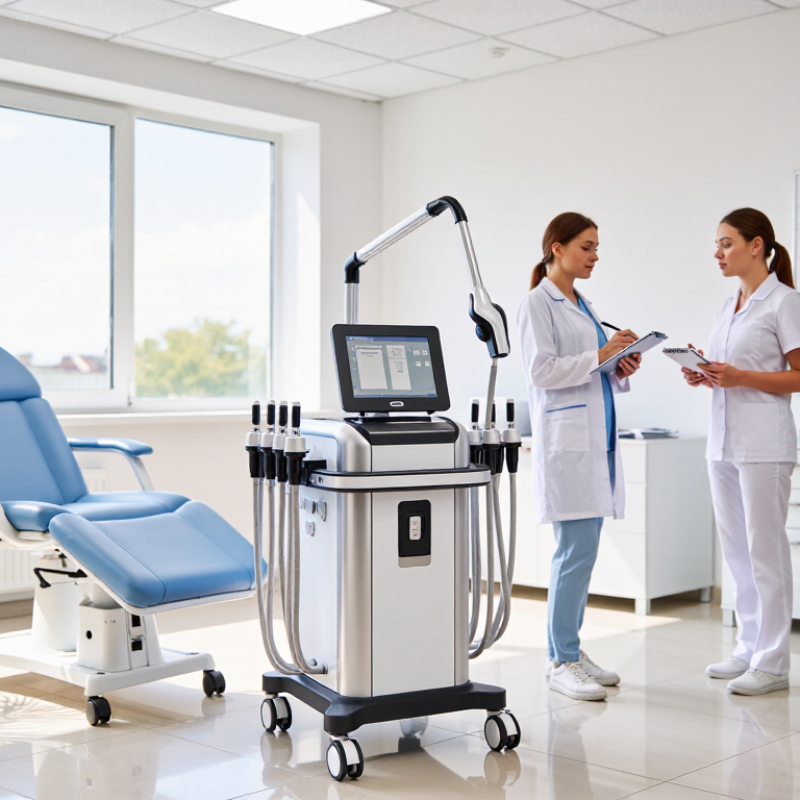
Before comparing a hair removal laser machine, define the treatment result you actually need. Do you want slower regrowth, smoother skin, or long-term hair reduction? The International Society of Aesthetic Plastic Surgery’s 2023 Global Survey recorded more than 3.3 million laser hair-removal procedures worldwide. Demand is substantial, but patient expectations still require careful assessment.
Record the treatment areas, skin tones, hair thickness, and expected treatment schedule. Dark, coarse hair often responds more visibly, while light, gray, or red hair may respond poorly. Skin tone also influences wavelength and energy selection. A suitable device should offer adjustable parameters, effective cooling, and a spot size matching your working areas. Small facial zones need precision. Large legs need speed.
Safety comes before convenience. The U.S. Food and Drug Administration describes these devices as producing permanent hair reduction, not guaranteed complete removal. That distinction matters. Review training requirements, protective eyewear, cooling performance, and patch-test procedures. Ask whether the machine provides treatment records and consistent energy delivery. A practical mistake is choosing a powerful device before understanding skin-response risks. More energy is not automatically better. Current evidence supports professional assessment, yet real-world results can vary because hormones, medication, and maintenance habits affect regrowth. Define measurable goals, such as fewer shaves after three months, before judging performance.
Laser technology must match the client’s skin tone, not only the hair type. Alexandrite lasers use a 755 nm wavelength and often suit lighter skin with dark hair. Diode systems commonly operate near 810 nm. They can offer broader flexibility. Nd:YAG devices use 1064 nm energy and generally provide a safer option for deeper melanin levels, including Fitzpatrick skin types V and VI. The wrong setting can cause burns or uneven pigmentation.
The American Academy of Dermatology Association reports that patients commonly need six or more treatment sessions. Results also depend on hair thickness, growth cycles, hormones, and treatment intervals. A 2023 review in Lasers in Medical Science described Nd:YAG technology as useful for darker skin, but it also noted variable effectiveness. That matters. “Suitable” does not mean risk-free.
Ask for fluence, pulse duration, cooling method, and published clinical evidence. Check whether the device has data across several Fitzpatrick types. IPL is not a laser, although sellers sometimes group them together. That distinction affects expectations.
In practice, I would request a small test area before treating a large zone. I would also record redness, discomfort, and recovery time.
One weakness remains: skin-tone charts simplify real skin. Tanning, medication, and recent irritation can change the risk. A machine may appear technically advanced, yet poor operator training can still produce poor outcomes.
Choosing a hair removal laser machine requires more than comparing wattage. Power affects treatment speed, penetration, and user comfort. Excessive output can increase heat and irritation, especially on sensitive skin. A reliable device should offer adjustable energy levels, pulse duration, and cooling control.
Wavelength selection matters because skin tone and hair depth vary. Shorter wavelengths may target darker hair effectively, while longer wavelengths can support safer treatment for deeper follicles and darker skin. Ask whether the machine provides clear guidance for different phototypes.
A trained practitioner should perform a small test spot before treating a larger area. Never skip this step.
Treatment area options also influence daily efficiency. A small handpiece can work around the upper lip and jawline, but it may slow full-leg sessions. Larger windows cover broad areas faster. Check whether interchangeable heads provide consistent contact and stable energy delivery. Cooling should remain even across the entire window, not only near its center.
Look closely at the controls. They should display fluence, pulse width, repetition rate, and temperature feedback. These details support repeatable treatments and safer adjustments. In practice, operators sometimes focus too much on maximum power. That is a mistake. Hair density, thickness, and growth cycles change between clients. Regular maintenance, documented settings, and proper training make results more dependable. I would also question unclear performance claims, because impressive numbers do not replace controlled testing.
Choosing a hair removal laser machine requires more than comparing treatment speed or screen design. Safety features deserve careful attention. Look for an accessible emergency stop, reliable cooling, protective eyewear guidance, and clear warning indicators. A skin-contact sensor can help prevent accidental firing. It should not replace a trained assessment.
Check the machine’s electrical and optical safety certifications before purchase. Confirm that certificates are current, traceable, and appropriate for your region. Ask for testing documents, operating limits, maintenance instructions, and service records. Vague paperwork is a warning sign. A professional supplier should explain the device’s wavelength, fluence range, pulse duration, and spot size in plain language.
User controls also affect treatment quality. The interface should allow controlled adjustments without hiding important settings. Skin-type presets may support consistency, but they cannot make clinical decisions alone. I prefer systems that display selected parameters before each pulse. That small pause can prevent careless changes.
Cooling settings need practical testing. Place a hand near the treatment head and check whether the contact surface feels stable, not painfully cold. Examine the handpiece cable, buttons, and display after repeated use. Small faults often appear during busy sessions. I once trusted a neat interface too quickly. Now I test every control under realistic conditions, because convenience can disguise a safety problem. No machine is foolproof. Clear training, written protocols, and regular inspection remain essential.
| No. | Evaluation Dimension | What to Check | Relevant Technical Reference | Practical Verification Method | Priority |
|---|---|---|---|---|---|
| 1 | Device Type and Wavelength | Confirm whether the device uses a laser or intense pulsed light (IPL), and identify the stated wavelength or wavelength range. | Laser safety classification is addressed by IEC 60825-1. IPL equipment is generally evaluated under requirements for non-laser light-source equipment, such as IEC 60601-2-57. | Request the technical specification sheet and verify that the wavelength, light source, and intended use are clearly documented. | Essential |
| 2 | Electrical and Mechanical Safety | Look for protective earth, insulation, leakage-current controls, over-temperature protection, and stable housing construction. | IEC 60601-1 covers basic safety and essential performance for medical electrical equipment. | Ask for the applicable test report or declaration of conformity and inspect cables, connectors, emergency controls, and enclosure quality. | Essential |
| 3 | Regulatory Documentation | Check whether the device has market-specific documentation rather than relying only on marketing terms such as “certified” or “approved.” | In the European Union, CE marking indicates conformity with applicable requirements; in the United States, FDA clearance or authorization is device- and indication-specific. | Verify the declaration, registration, clearance number, intended use, and legal manufacturer in the relevant regulatory database or official documents. | Essential |
| 4 | Skin-Tone Detection and Treatment Limits | Confirm whether the machine identifies unsuitable skin tones, blocks unsafe settings, or provides a documented skin-type operating range. | Melanin absorbs optical energy, so darker or recently tanned skin may require different settings and can have a higher risk of burns or pigmentation changes. | Review the permitted Fitzpatrick skin-type range, contraindications, patch-test procedure, and automatic lockout behavior. | High |
| 5 | Cooling and Contact Protection | Evaluate contact cooling, temperature monitoring, cooling consistency, and whether treatment is disabled without proper skin contact. | Cooling can reduce epidermal heat load and improve comfort, but it does not eliminate the need for correct fluence, pulse duration, and patch testing. | Run a short test sequence and check for contact sensors, temperature indicators, cooling alarms, and automatic shutdown functions. | High |
| 6 | Eye and Operator Protection | Check for wavelength-appropriate protective eyewear, warning indicators, controlled access, and a clearly visible emergency stop. | Laser and intense-light hazards require controls appropriate to the emitted optical radiation and the device’s safety classification. | Verify eyewear markings, optical-density information where applicable, warning labels, key or password access, footswitch behavior, and emergency-stop response. | Essential |
| 7 | Energy and Pulse Controls | Make sure the operator can adjust fluence, pulse duration or pulse structure, repetition rate, and spot size when supported by the device. | Fluence is commonly expressed in J/cm², while pulse duration is commonly expressed in milliseconds. The correct values depend on the device, hair, skin, and treatment area. | Confirm that settings are displayed clearly, limits are locked by software, and the user manual provides protocols instead of unrestricted maximum output. | High |
| 8 | Treatment Applicator and Spot Size | Assess applicator ergonomics, interchangeable tips, spot-size options, beam uniformity, and access to small or curved treatment areas. | A larger spot can improve coverage speed, while a smaller spot can provide better access to narrow areas; optical performance must remain uniform across the spot. | Compare the stated spot dimensions, cable flexibility, handpiece weight, trigger response, and treatment-area coverage during a supervised demonstration. | Medium |
| 9 | User Interface and Treatment Records | Look for role-based access, preset protocols, parameter confirmation, treatment counters, error messages, and data recording. | Clear controls help reduce incorrect settings and support repeatable procedures, but presets should not replace professional assessment or patch testing. | Test whether the system prevents accidental parameter changes, records delivered shots, and identifies alarms in plain language. | Medium |
| 10 | Training, Maintenance, and Risk Management | Confirm operator training, preventive maintenance, calibration, consumable replacement, cleaning procedures, and incident reporting. | ISO 14971 provides a framework for medical-device risk management. Maintenance and calibration requirements are defined by the device manufacturer and applicable regulations. | Request the service schedule, calibration certificate format, training records, warranty terms, spare-parts process, and written adverse-event procedure. | Essential |
A reliable machine should be easy to maintain, not merely impressive during a demonstration. Ask how often filters, handpiece windows, cooling parts, and other consumables require inspection. Request the maintenance schedule in writing. Check whether calibration can be verified by qualified technicians. Small service details matter. A neglected cooling system may affect comfort, performance, and equipment life.
Warranty terms deserve careful reading. Confirm the coverage period, included components, labor fees, travel costs, and response times. Some warranties exclude damage caused by incorrect cleaning, unstable electricity, or unapproved repairs. Ask who performs repairs and whether replacement parts are readily available. Independent service records can reveal more than sales promises. Local technical support is valuable when a fault interrupts appointments.
Calculate total ownership cost, not only the purchase price. Include installation, staff training, routine servicing, electricity, consumables, insurance, and possible downtime. A cheaper machine may become expensive after repeated service delays. I once focused too heavily on the initial price, and that decision overlooked training quality. It was a useful lesson, but not a pleasant one. Speak with experienced operators, inspect documented service histories, and request realistic treatment capacity figures. Professional support should include safety guidance, operating updates, and clear escalation procedures. If answers remain vague, pause before signing.
© 1999-2025 The Lincoln Electric Company