Top 10 Stamped Contact Spring Manufacturers Worldwide
The Stamped Contact Spring market rarely receives the attention given to connectors, batteries, or miniature switches. Yet this small component controls pressure, conductivity, and long-term mechanical stability. A spring may look like a thin strip of metal, but its performance depends on alloy selection, stamping accuracy, plating, fatigue resistance, and controlled contact force.
Grand View Research reports that the global electrical connectors market is expanding steadily, supported by automotive electronics, industrial automation, telecommunications, and consumer devices. MarketsandMarkets also identifies electrification and higher connection density as important growth drivers. These trends increase demand for compact and repeatable contact solutions. Stamped Contact Spring products fit this need, especially where space is limited and assembly speed matters.
Ragnar Holm, a leading authority on electrical contact theory, wrote, “The real area of contact is only a small fraction of the apparent area.” That principle remains practical today. A spring that appears correctly formed can still fail under oxidation, vibration, or inconsistent loading. This is where supplier experience becomes visible.
This guide examines ten leading Stamped Contact Spring manufacturers worldwide. The comparison considers production capability, material control, tooling expertise, quality systems, customization, and application support. Public certifications and technical records matter. Marketing language alone is not enough.
The ranking is not absolute. A supplier serving automotive relays may not suit a medical sensor or battery terminal. That limitation deserves attention. Real-world performance depends on design details, testing conditions, and customer requirements. Better questions often reveal better manufacturers.
Definition and Role of Stamped Contact Springs
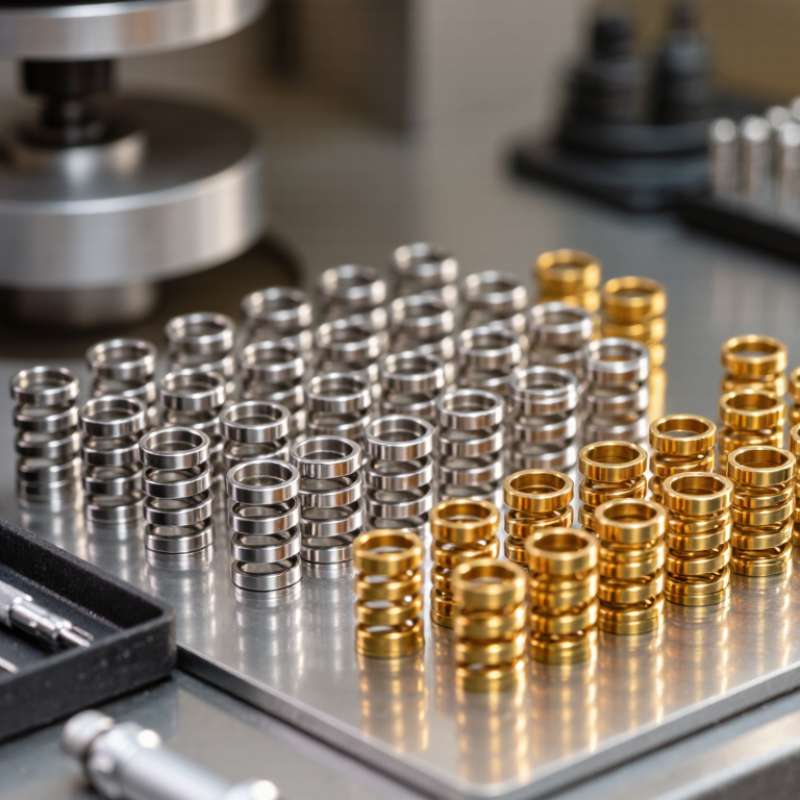
Stamped contact springs are precision metal components formed from thin sheet stock. They create reliable electrical contact while absorbing movement, vibration, and assembly variation. Their role is simple, but their design is not.
A spring must maintain force after thousands of compression cycles. Engineers therefore check contact resistance, working deflection, stress concentration, plating thickness, and burr control. IEC 60512 and EIA-364 test methods support repeatable connector evaluations.
The International Energy Agency reported more than 17 million electric car sales were expected in 2024. That growth increases demand for compact, vibration-resistant contacts in battery and control systems. Automotive connectors also face heat, humidity, and frequent load changes.
A low-profile stamped spring can reduce assembly height and material waste, yet a careless bend radius may cause early fatigue. This is where the design can fail quietly.
Tips:
Specify the normal force at the real operating deflection, not at free height. Request force-displacement data and contact-resistance results from manufacturers.
Review tooling tolerances early; a tiny burr can damage plating or block full contact. Cost comparisons should include die maintenance, inspection, and rejection rates.
A cheaper part is not always cheaper. That assumption deserves review.
Reports from MarketsandMarkets identify connector miniaturization and electrification as major industry drivers, but market forecasts cannot replace application testing. Validate samples under actual temperature, vibration, and mating conditions before approving mass production.
Key Factors for Evaluating Global Manufacturers
When comparing stamped contact spring manufacturers, examine production evidence rather than attractive brochures. Ask how they control spring force, contact resistance, and dimensional variation across production lots. A reliable supplier should provide material certificates, tooling records, and inspection data tied to each shipment.
Ask for evidence.
Experience appears in practical details. Experienced teams can explain how stamping direction affects fatigue, burr formation, and electrical contact stability. Request samples made with the same tooling and material planned for mass production. Check the edges under magnification. Small burrs can damage nearby components or weaken assembly consistency.
Audit the manufacturer’s quality system, laboratory equipment, and corrective-action process. Useful records include capability studies, gauge calibration, salt-spray results, and repeated cycling tests. Confirm whether engineers can adjust tooling without losing traceability. Factory visits also reveal storage conditions, operator training, and contamination controls.
Yet no audit is flawless. A clean production line may hide weak supplier management or rushed inspection practices. Evaluate communication during technical changes, not only during sales discussions. Clear drawings, revision control, and realistic lead times often predict fewer failures. Environmental compliance and worker safety should also be documented for every production location. Low pricing deserves careful questioning when it depends on thin material, limited testing, or unstable tooling. A manufacturer earns trust through repeatable results, transparent limitations, and evidence that survives independent review.
Top 10 Stamped Contact Spring Manufacturers Worldwide
The Top 10 Stamped Contact Spring Manufacturers Worldwide are judged by more than production volume. Experienced suppliers combine precision stamping, material knowledge, and stable quality systems. Their facilities should handle progressive dies, copper alloys, stainless steel, and controlled surface finishes. Small errors matter here.
Reliable manufacturers measure spring force, contact resistance, burr height, and dimensional repeatability. A practical supplier shares inspection reports and supports traceability by batch. Engineers also review tooling life, press alignment, and material hardness before approving production. Samples should survive repeated compression without permanent deformation.
The strongest manufacturers understand real assembly conditions. They test springs under vibration, heat, humidity, and repeated mating cycles. Clear communication is equally important when specifications change. No ranking is flawless. A company may excel in miniature parts but struggle with heavy-force designs. Buyers should compare actual samples, not polished catalogs. I would also question unusually low prices, because hidden tooling wear can appear later. Steady performance remains more valuable than impressive promises.
Top 10 Stamped Contact Spring Manufacturers Worldwide
Material selection is a key performance factor in stamped contact springs. The chart below compares representative electrical conductivity values for commonly used spring-contact materials, expressed as a percentage of the International Annealed Copper Standard (IACS).
Values are typical reference figures for common material families; actual conductivity varies by alloy grade, temper, heat treatment, and plating.
Manufacturing Technologies and Quality Standards
Top 10 Stamped Contact Spring Manufacturers Worldwide
Manufacturing Technologies and Quality Standards
Stamped contact springs begin with precise strip selection. Copper alloys, stainless steel, and nickel-based materials offer different conductivity, strength, and corrosion resistance. Progressive stamping presses can form complex contact geometry at high speed. Tool clearance matters. A small burr can increase resistance or damage a mating surface.
Manufacturers commonly use computer-controlled presses, inline vision inspection, and automated dimensional measurement. Practical checks include spring force, free height, contact resistance, plating thickness, and fatigue performance. IEC 60512 provides recognized test methods for electrical connectors, including mechanical and environmental performance. ASTM B117 salt-spray testing can reveal coating weaknesses, although it cannot represent every real operating environment.
Quality systems support repeatability. The ISO Survey 2023 recorded more than 1.26 million ISO 9001 certificates worldwide, showing how widely documented process control is used. However, certification alone does not prove reliable spring performance. A capable supplier should provide material certificates, control plans, capability data, and traceable inspection records. Industry reports from MarketsandMarkets continue to identify miniaturization and higher connector reliability as major market drivers. These trends demand tighter tolerances and more stable plating processes.
Some production decisions remain imperfect. Higher plating thickness may improve durability but increase cost and forming difficulty. Automated inspection can miss defects hidden beneath plated edges. Experienced engineers still need to examine samples under magnification, test springs through repeated cycles, and question unusual results. That discipline separates attractive prototypes from dependable high-volume parts.
Applications and Selection Considerations for Buyers
Stamped contact springs support reliable electrical connections in battery packs, switches, relays, sensors, and compact control modules. Their formed metal geometry provides contact force while saving space. In a handheld device, a spring may touch a plated terminal only a few millimeters wide. In an automotive enclosure, it may face vibration, heat, and repeated assembly.
Buyers should match the spring to the real operating load, not only the catalog rating. Check continuous current, peak current, working deflection, contact resistance, and expected mating cycles. Material selection matters. Copper alloys offer useful conductivity, while stainless grades may provide stronger spring recovery. Plating must suit humidity, oxidation risk, and the mating surface. Gold-like finishes can support low-level signals, but they may be unnecessary for basic power contacts.
Small errors become expensive later. A tolerance of 0.1 millimeters can affect insertion force or create intermittent contact. Request dimensional reports, force-deflection curves, salt-spray data, and cycle-test results from potential manufacturers. Ask how tooling wear is monitored and whether lot traceability is maintained. Samples should be tested inside the actual housing, at temperature extremes, with vibration when relevant. A design that works on a clean laboratory bench may fail after dust, compression, or repeated handling. I have seen teams focus on conductivity and overlook retention force. That mistake deserves a second review.