
Choosing the best Hdpe Pipe Cutting Tools manufacturers in China requires more than comparing prices or polished product photos. It demands practical judgment. Pipe cutting affects joint quality, installation speed, worker safety, and material waste. A reliable manufacturer should understand these pressures from real construction sites, not only from a catalog.
This guide examines Chinese suppliers through measurable and practical criteria. These include cutting accuracy, blade durability, tool compatibility, production capacity, quality control, and after-sales support. It also considers whether manufacturers provide clear technical data, replacement parts, operating instructions, and responsive communication. Small details matter. A stable handle, clean cutting edge, and properly aligned guide can prevent expensive rework on site.
Experience helps reveal weaknesses.
A strong supplier should explain how its tools perform on different HDPE pipe diameters, wall thicknesses, and working conditions. Certifications and test records can support credibility, but they should not replace independent evaluation. Product claims need careful checking. No shortlist is perfect, and manufacturer information may be incomplete or unevenly presented. Buyers should request samples, confirm specifications, and test tools before placing large orders.
The manufacturers discussed here are evaluated from a professional purchasing and application perspective. Their strengths may differ. One company may offer advanced hydraulic cutters, while another may provide simpler manual tools for routine maintenance. By comparing evidence instead of relying on broad marketing language, buyers can identify dependable partners for infrastructure, plumbing, irrigation, and industrial projects.
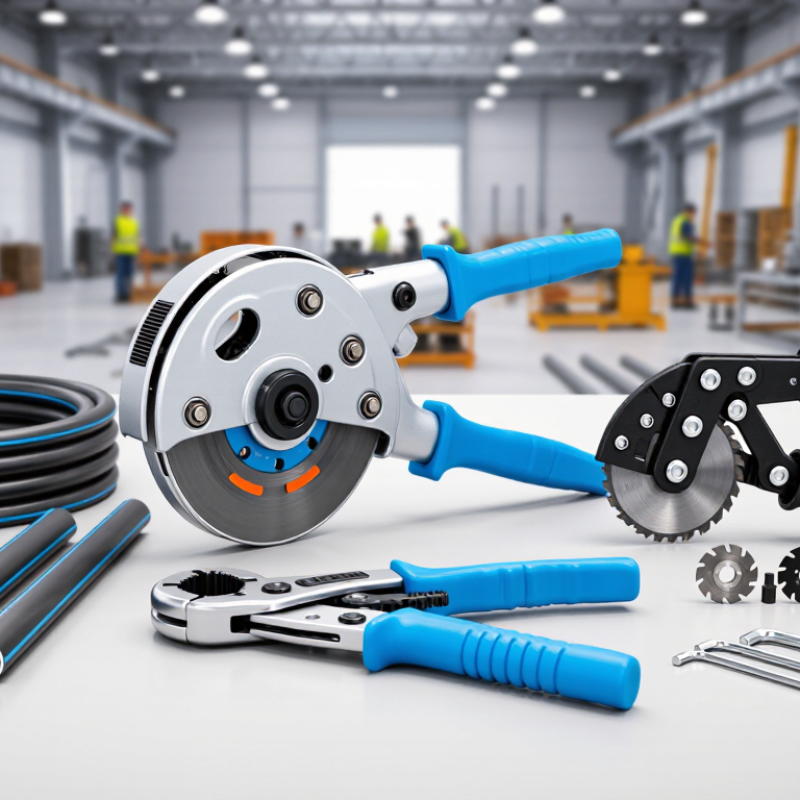
When selecting HDPE pipe cutting tools from China, understand the pipe standard first. PE100 indicates a polyethylene grade with an MRS of 10 MPa under defined long-term testing conditions. It does not mean every pipe handles 10 MPa in service. Temperature, safety factors, and installation conditions still matter.
SDR 11 means the outside diameter is roughly eleven times the wall thickness. For example, a 110 mm pipe has a wall thickness near 10 mm. The exact value depends on the manufacturer’s specification and tolerance. ISO 4427 covers polyethylene water supply and pressure pipe systems, not cutting machines themselves. A suitable tool should create a square, clean end without crushing the pipe wall.
From practical inspections, reliable manufacturers provide rigid clamps, replaceable blades, clear diameter ranges, and repeatable alignment. A cold-cutting design is often preferable because excessive heat can soften PE100 and distort the cut edge. Ask for cutting tests using SDR 11 samples, not only catalog photographs. Check dimensional reports, material certificates, and factory quality records.
Small details matter. A rough edge can complicate electrofusion preparation. Dust may also hide an uneven cut. I once underestimated clamp pressure; the pipe shifted slightly. The result looked acceptable, but alignment was poor. That mistake deserves attention. Good tooling reduces such risks, yet trained operators remain essential. A famous specification cannot repair careless preparation.
Best HDPE Pipe Cutting Tools Manufacturers in China
Cutting Tool Types: Manual, Hydraulic, Electric, and CNC Systems
Manual cutters suit smaller HDPE pipes and field repairs. A ratchet handle offers portability and simple operation. The cut depends heavily on blade sharpness and operator control. Uneven pressure can create a slanted edge. That small error matters during electrofusion preparation.
Hydraulic systems handle larger diameters with steadier force. They reduce hand fatigue and improve repeatability on thick-wall pipe. Look for rigid clamps, readable pressure controls, and replaceable blades. A reliable manufacturer should provide cutting-range data and load-test records. Pressure alone does not guarantee a square cut. The frame must stay aligned.
Electric cutters increase speed on busy installation sites. Guards, emergency stops, and secure clamping deserve close attention. Excessive blade speed may soften the plastic and leave melted edges. Operators need to inspect each cut, not trust the machine blindly. CNC systems offer programmed feed rates and consistent results for repeated production. They require accurate calibration, trained technicians, and stable software. Setup mistakes can produce many identical defects.
When comparing Chinese manufacturers, examine sample cuts, inspection procedures, and material traceability. Ask whether blades are tested against different HDPE wall thicknesses. Check service response, spare-part availability, and operating manuals. Some suppliers present polished specifications but provide limited application evidence. That should invite more questions. A practical trial with your actual pipe size often reveals more than a catalog.
| Cutting Tool Type | Operating Principle | Typical HDPE Pipe Outside Diameter | Typical Cutting Capacity | Power Requirement | Cut Quality and Key Specifications: 20–1600 mm Diameter Range and Wall-Thickness CapacityBest HDPE Pipe Cutting Tools Manufacturers in ChinaWhen evaluating Chinese manufacturers, check whether their tools cover diameters from 20 to 1600 mm. This range supports small service lines, municipal pipes, and large industrial sections. A dependable cutter should maintain stable alignment across different pipe sizes. Clean cuts matter because uneven edges can complicate electrofusion or butt-fusion preparation. Ask for tested performance on both solid-wall and reinforced HDPE pipes. Wall-thickness capacity deserves equal attention. Some machines handle thin pipe smoothly but struggle with heavy-wall sections. Request exact minimum and maximum thickness figures, not general claims. Review blade movement, clamping pressure, cutting speed, and adjustment accuracy. In practical workshops, these details affect downtime and operator safety. Still, published specifications may not reflect every field condition. Samples and trial cuts remain useful. Tips: Confirm the diameter range and wall-thickness chart before ordering. Ask for cutting videos or inspection records. Check whether replacement blades are readily available. Leave room for error. Pipe ovality, temperature, and dirt can reduce cutting accuracy, even with a well-built machine. Choose a manufacturer that explains these limits clearly and provides responsive technical support. China Manufacturer Evaluation: ISO 9001, CE Certification, and Test DataBest HDPE Pipe Cutting Tools Manufacturers in China Best HDPE Pipe Cutting Tools Manufacturers in China — Evaluation FrameworkThis chart presents a neutral evidence-based scoring framework for evaluating HDPE pipe cutting tool manufacturers. ISO 9001 certification, CE compliance documentation, product test data, cutting accuracy, durability testing, and traceability should be verified through current certificates, declarations, and test reports. The scores represent evaluation weights, not claims about any specific company or brand. Selection Criteria: Cut Accuracy, Blade Life, Safety, and After-Sales SupportChoosing HDPE pipe cutting tools in China should begin with cut accuracy, not purchase price. ASTM F2620 requires pipe ends to be square, clean, and parallel before butt fusion. A practical trial should measure the cut face with a machinist’s square, then record deviation across the diameter. Even a small angle can create uneven heating and weak fusion. Repeatability matters more than one perfect cut. Blade life needs measurable evidence. Ask manufacturers for test records showing pipe diameter, wall thickness, resin grade, cutting speed, and cuts completed per blade. The Plastics Pipe Institute’s PE guidance emphasizes controlled preparation before joining, yet it does not guarantee one blade for every application. That distinction is often missed. Request replacement-blade prices and delivery times, too. A cheap tool may become expensive during field work. Safety is equally important. Guarded blades, stable clamps, low-vibration handles, and clear lockout instructions reduce operator exposure. Check whether the design supports two-person handling for large diameters. After-sales support should include calibration guidance, spare parts, training videos, and response targets. ISO 12100 risk-assessment principles provide a useful benchmark for evaluating machine hazards. Do not accept vague claims such as “industrial grade.” Ask for inspection records, warranty terms, and a live cutting demonstration. Some buyers overlook service quality until the first damaged blade arrives. FAQS What should I check on an ISO 9001 certificate? Verify its number, issuing body, scope, and expiry date. The scope should cover design, production, or quality control. A vague scope deserves a closer look. Does CE marking prove a cutting tool is high quality? No. It indicates a conformity declaration, not an independent quality award. Ask for risk analysis, electrical test records, and user instructions. What test results should I request? Request cut squareness, burr height, repeatability, blade life, cutting force, and cycle time. Reports should name the pipe material, temperature, and measuring tools. Are photos enough to judge cut quality? No. A clean-looking cut can hide a slight angle. Measure the cut face across its diameter with a square. How can I check whether results are repeatable? Request at least three trials using different production batches. One perfect sample proves little. This step takes time, but it can reveal variation. What information helps evaluate blade life? Ask for test details, including pipe diameter, wall thickness, material, and cuts completed per blade. Also check replacement prices and delivery times. Which safety features should a tool have? Look for a blade guard, stable clamps, low-vibration handles, and clear lockout instructions. Large pipes may need two-person handling. Check the setup. What should after-sales support include? Look for spare parts, calibration guidance, training materials, response targets, and clear warranty terms. A live cutting demonstration can help. Service is easy to underestimate. ConclusionChoosing the right HDPE pipe cutting equipment requires a clear understanding of pipe standards, cutting methods, and manufacturer quality. Pipes made to PE100 specifications, with an MRS of 10 MPa, SDR 11 classification, and ISO 4427 compliance, require tools capable of producing clean, accurate cuts without damaging the pipe structure. Hdpe Pipe Cutting Tools are available in manual, hydraulic, electric, and CNC configurations, serving applications from basic field work to high-volume industrial production. Buyers should verify whether the equipment supports pipe diameters from 20 to 1600 mm and can handle the required wall thickness. Article Source: |
|---|
© 1999-2025 The Lincoln Electric Company