Top Industrial Robots in China for Global Buyers?
The industrial robot market in China is thriving, reflecting significant growth in recent years. According to a report by the International Federation of Robotics (IFR), China accounted for 44% of global industrial robot installations in 2020. This impressive statistic underscores China’s position as a global leader in robotic automation.
Experts like Dr. Emily Chen, a renowned robotics analyst, emphasize the transformative role of these machines. She states, "Industrial robots are not just tools; they are revolutionizing manufacturing processes." This statement resonates with many buyers looking to enhance productivity and efficiency.
However, challenges persist. Supply chain issues and the soaring demand for advanced technologies require ongoing reflection and adaptation. As the industry evolves, global buyers must remain well-informed. The competition is fierce, but the rewards of investing in industrial robots can be substantial.
Overview of the Industrial Robotics Market in China
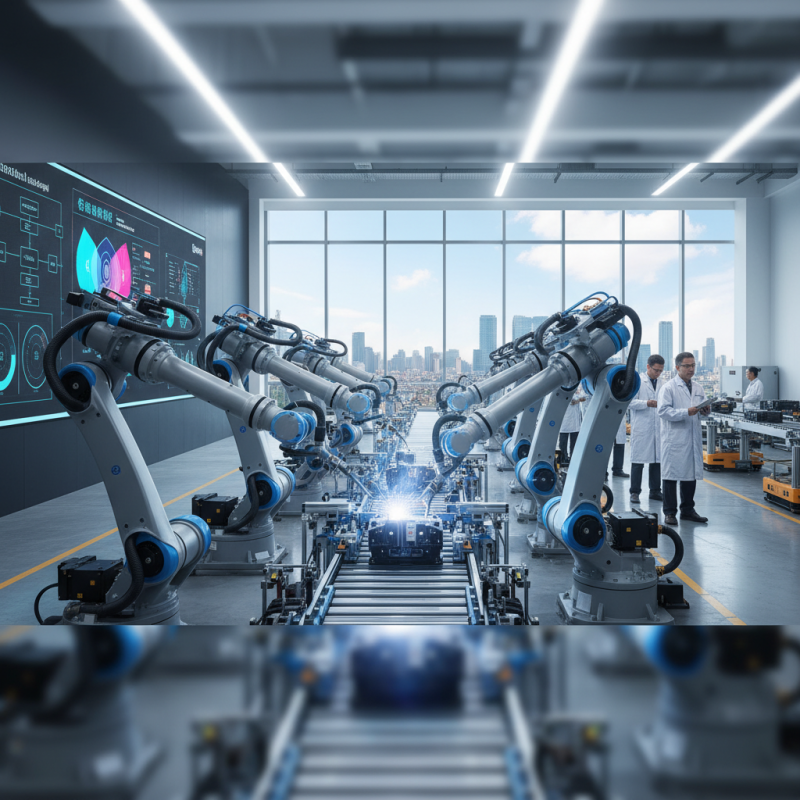
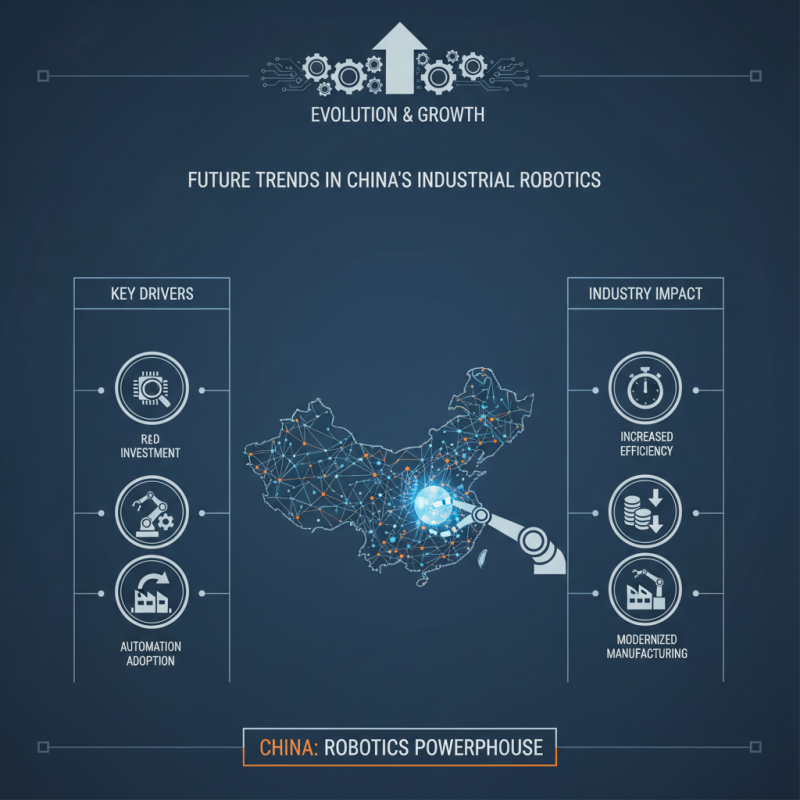
The industrial robotics market in China is experiencing rapid growth. As a leader in manufacturing, China is investing heavily in automation. This investment is driven by the need to increase efficiency and reduce labor costs. Traditional industries are adopting robots to streamline operations. The shift towards automation is visible in sectors such as automotive and electronics.
Challenges remain in integrating these technologies. Many factories struggle with the transition. Workers may feel threatened by robots taking over jobs. Companies need to address these concerns through training and education. While robotics can boost productivity, the human element must not be neglected. Continuous learning will help workers adapt to new roles.
Moreover, as robotics technology evolves, so do the demands of the market. Smaller manufacturing units are hesitant to make the leap. High initial costs and maintenance challenges pose barriers. However, collaboration between tech developers and manufacturers can ease this process. The potential for innovation in the robotics field is vast. Companies that can navigate these complexities will find themselves at a significant advantage.
Top Industrial Robots in China for Global Buyers
| Robot Type |
Payload Capacity (kg) |
Reach (mm) |
Applications |
Annual Sales (units) |
| Articulated Arm |
100 |
1500 |
Welding, Assembly |
5000 |
| SCARA |
5 |
800 |
Pick and Place, Packaging |
3000 |
| Collaborative Robot |
10 |
1200 |
Assisting Humans, Assembly |
2000 |
| Delta Robot |
6 |
600 |
Sorting, Packaging |
4000 |
| Mobile Robot |
50 |
N/A |
Material Handling |
1000 |
Key Players in the Chinese Industrial Robotics Industry
The Chinese industrial robotics industry is rapidly evolving. By 2022, the country had become the largest market for industrial robots. It accounted for over 40% of global demand. Key players are developing advanced technologies that meet diverse industry needs.
A report from the International Federation of Robotics indicates that China produced around 200,000 industrial robots in 2021. This number is projected to keep rising as domestic consumption drives innovation. Major sectors deploying these robots include automotive, electronics, and consumer goods. Each sector has unique requirements, pushing companies to refine their offerings continuously.
However, challenges persist. Integration of robots into existing systems often reveals gaps in technology. Not all companies can adapt quickly. Moreover, a shortage of skilled workers to operate advanced robots remains an issue. As investment pours into this area, the demand for training programs is more critical than ever. Continuous improvement is needed to ensure that the workforce can keep pace with technological advancements.
Innovative Technologies Driving China's Robotics Sector
China's robotics industry is rapidly evolving. Innovative technologies are at its core. Artificial intelligence is transforming how robots operate, allowing for smarter automation. Machine learning is enhancing robots' ability to adapt to new tasks. This adaptation leads to increased efficiency in manufacturing processes.
We are seeing advancements in collaborative robots, or cobots. These machines work alongside human workers. They are designed to be user-friendly and safe. However, there is still a need for better integration. Many businesses face challenges in adopting these technologies efficiently. Some find it difficult to train employees to work with robots. The balance between human labor and robotics requires ongoing evaluation.
Another exciting trend is the integration of 5G technology. It enables real-time data transfer, allowing robots to communicate seamlessly. This connectivity improves remote management and operational monitoring. However, infrastructure for 5G remains inconsistent across different regions. Companies must address these gaps to fully utilize the potential of robots. The journey towards a smarter industrial future is full of possibilities, but there are hurdles to overcome.
Global Partnerships and Export Opportunities for Chinese Robots
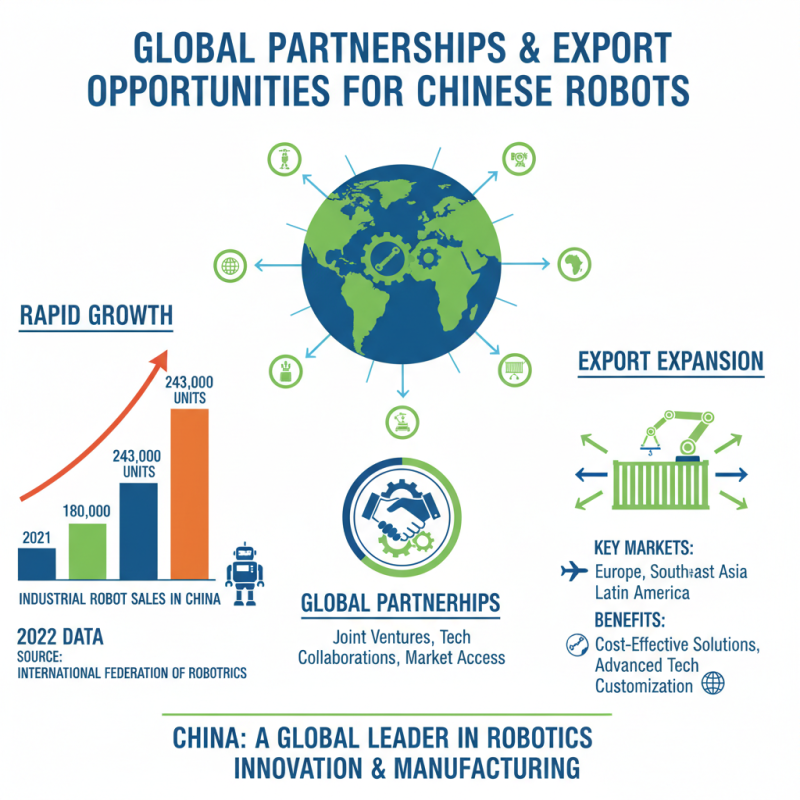
China's industrial robotics sector is experiencing rapid growth, with numerous global partnerships enhancing export opportunities. In 2022, industrial robot sales in China reached a staggering 243,000 units, according to the International Federation of Robotics. This surge in demand highlights China's pivotal role in the global automation landscape. The country is not just a manufacturing powerhouse but is also becoming a key player in robot technology innovation.
Global partnerships are vital for Chinese robotics manufacturers. Collaborations with international firms facilitate access to advanced technologies and diverse markets. Reports suggest that more than 40% of China's robot exports go to countries in Asia and Europe. Yet, there are challenges. Quality control and compliance with global safety standards remain areas for improvement. As China aims to boost robot sales to $12 billion by 2025, addressing these issues will be crucial for sustaining momentum.
Export opportunities continue to blossom. Demand for automation is surging globally, driven by labor shortages and the need for increased efficiency. Companies that leverage China’s competitive advantages in production while adhering to international standards will likely see significant growth. A focus on adaptability and responsiveness is essential for navigating the complexities of global markets.