2026 Top Robotic Welding Systems for Global Buyers?
In the rapidly evolving landscape of industrial automation, robotic welding systems play a crucial role. These systems enhance efficiency, precision, and productivity in manufacturing. Consequently, global buyers are increasingly turning to advanced welding solutions. This article delves into the top robotic welding systems slated for 2026.
The technological advancements in robotic welding systems are remarkable. Innovations in artificial intelligence and machine learning empower these systems to adapt to various welding tasks seamlessly. Quality control is also improving, reducing the chances of defects. However, the challenges remain. Not all systems are adaptable to every environment, and some may require specific expertise for optimal performance.
As we explore these options, it's essential to remember that not all solutions fit every business's needs. Understanding your unique requirements is vital when selecting a robotic welding system. Each company must assess its production needs carefully. This exploration aims to guide buyers toward informed decisions while acknowledging that the landscape is continually changing, and flexibility is key.
Overview of Robotic Welding Technology Trends for 2026
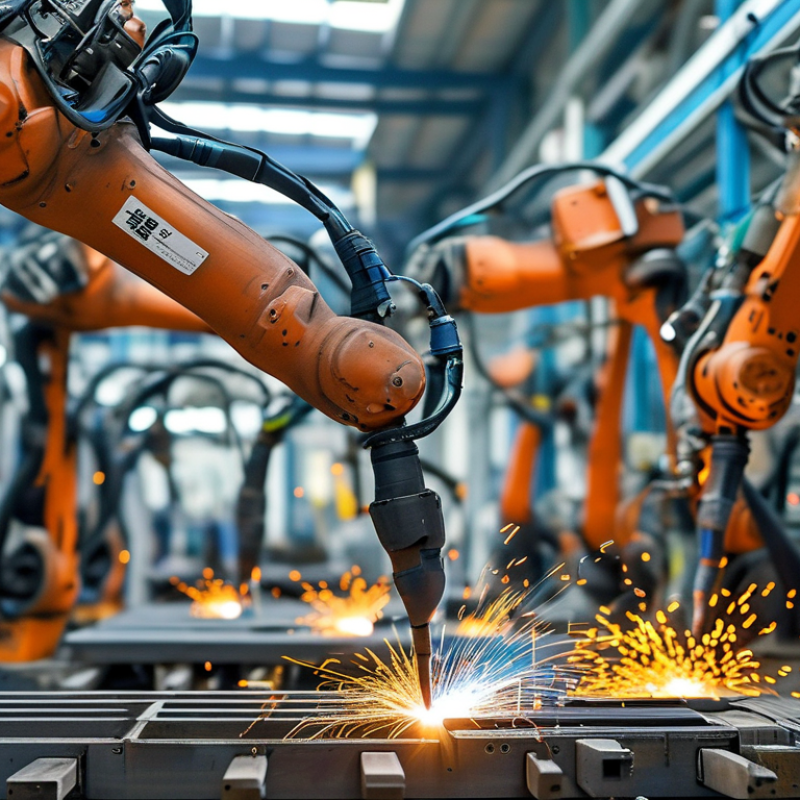
The landscape of robotic welding technology is evolving rapidly as we approach 2026. Innovations are shaping how industries operate. Enhanced precision and increased automation are critical trends. Manufacturers are now focused on integrating artificial intelligence in welding systems. This helps improve accuracy and efficiency in weld quality. Advanced sensors are becoming a standard feature. They provide real-time feedback and adjustments during the welding process.
Tips: Focus on training workers to adapt to new technologies. Upskilling employees ensures smooth transitions. Encourage collaboration between engineers and robotic systems to maximize productivity. Understanding how to leverage these systems will be essential for future competitiveness.
Despite the advancements, challenges remain. Some companies struggle with the initial cost of robotic systems. Integration into existing workflows can also be complicated. Adapting staff to highly automated environments poses its own hurdles. Companies must actively address these issues. Balancing technology and human oversight will be crucial in achieving operational success.
Key Features to Look for in Top Robotic Welding Systems
When selecting robotic welding systems, key features significantly impact performance. Accuracy is crucial. Systems should provide consistent results to meet production standards. A high degree of repeatability reduces errors, ensuring quality output. Ease of programming is another aspect to consider. User-friendly interfaces can minimize training time and increase productivity.
Tips: Look for systems that allow remote monitoring. This feature helps manage operations in real-time. Additionally, consider the mobility of the robotic systems. Being able to reposition robots easily can adapt to different tasks efficiently.
Safety features are non-negotiable. Systems must comply with safety standards to protect workers. Automated safety mechanisms can reduce risks significantly. Nonetheless, advancements in technology mean no system is perfect. Regular maintenance is essential for optimal performance. Always keep an eye on system wear and tear to avoid unexpected downtime.
Leading Manufacturers of Robotic Welding Systems in 2026
The robotic welding industry is witnessing significant growth. Research indicates that the global market size is expected to exceed $6 billion by 2026. This growth is driven by increased automation in manufacturing processes. Industries are moving toward robotic solutions for better efficiency and precision.
Leading manufacturers are innovating to meet diverse needs. They focus on advanced features such as AI integration and improved safety systems. Reports suggest that over 70% of companies are adopting robotic welding to enhance productivity. However, the initial investment in these technologies remains a barrier for smaller firms. Many are still hesitant to embrace automation fully.
The demand for skilled workers to operate these systems is rising. Training programs are essential but often lacking. Industry experts emphasize the need for workforce development. Future success relies heavily on both technology and talent. Companies must address these challenges to utilize robotic welding effectively.
2026 Top Robotic Welding Systems Market Analysis
Comparative Analysis of Robotic Welding Systems for Various Industries
In the ever-evolving landscape of manufacturing, robotic welding systems are pivotal. Various industries are increasingly incorporating these systems to enhance efficiency and precision. Each sector has unique requirements, dictating the choice of welding technology. Automotive manufacturers often prioritize speed and flexibility, while aerospace industries focus on precision and reliability.
Robotic welding systems can be complex. The integration process can be challenging, and the learning curve for operators is steep. Such systems require regular maintenance to ensure optimal performance, which can be overlooked. Moreover, customization options vary widely, leading to potential mismatches between needs and solutions.
Different industries have distinct preferences for welding techniques. For example, while some may lean towards arc welding for thicker materials, others may choose laser welding to minimize heat distortion. It’s crucial for companies to evaluate their specific needs closely. Not all systems can easily adapt to changing production demands. Flexibility remains a key concern, as industries grapple with evolving standards and consumer expectations.
2026 Top Robotic Welding Systems Comparative Analysis
| Industry |
Welding Process |
Payload Capacity (kg) |
Reach (mm) |
Application Type |
Cost (USD) |
| Automotive |
MIG/MAG |
100 |
1500 |
Spot Welding |
50,000 |
| Construction |
TIG |
80 |
1200 |
Pipe Welding |
70,000 |
| Aerospace |
Laser |
60 |
1800 |
Composite Materials |
120,000 |
| Heavy Machinery |
Submerged Arc |
150 |
2000 |
Structural Welding |
90,000 |
| Electronics |
Resistance |
20 |
800 |
Precision Welding |
30,000 |
Future Prospects and Innovations in Robotic Welding Technology
Robotic welding technology is evolving rapidly, reshaping industries. The global market for robotic welding systems is projected to reach $7 billion by 2026. This growth reflects increasing demand for precision and efficiency. Companies are investing in automation to boost productivity.
Future innovations focus on artificial intelligence (AI) and machine learning. These technologies enhance the capabilities of robotic systems. For instance, AI can improve weld quality by adjusting parameters in real-time. A report from Allied Market Research suggests that AI-driven welding solutions could reduce defects by up to 30%.
Challenges remain. Not all sectors are ready for full automation. The high initial costs and required expertise can limit adoption. Moreover, integration with existing systems may present obstacles. Continuous training and development are crucial to address these hurdles. Understanding both benefits and limitations will be vital for global buyers in making informed decisions on robotic welding systems.