2026 Top Trends in Robotic Programming You Need to Know?
As we look ahead to the future of robotic programming, the landscape continues to evolve. Experts like Dr. Emily Tran, a leading figure in the field, remind us, “The next wave of innovation in robotic programming will redefine how we interact with technology.” This statement emphasizes the transformative power of advancements in this area.
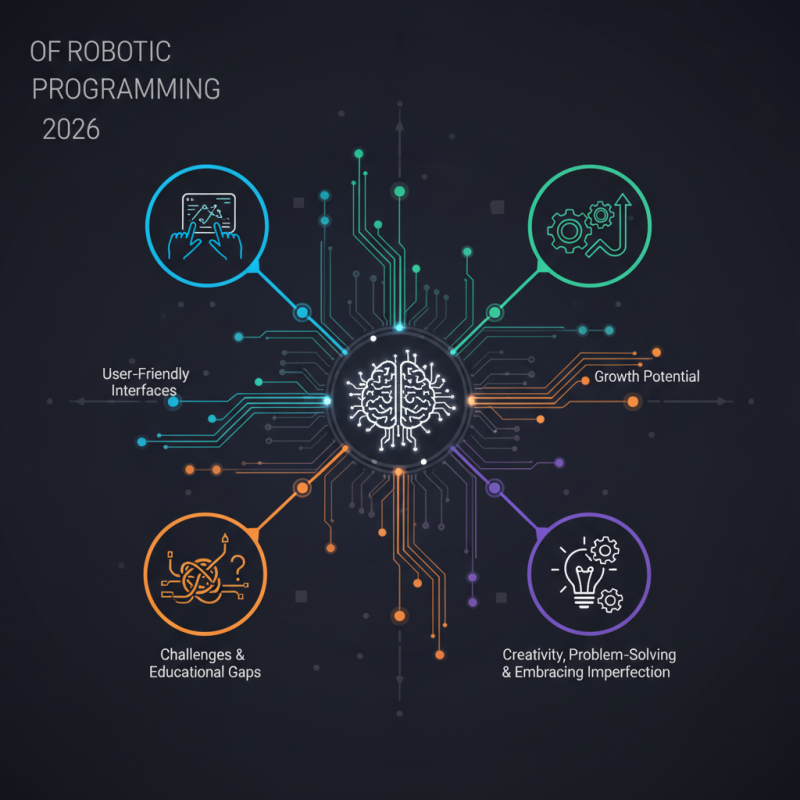
The year 2026 promises to unveil trends that may reshape industries and everyday lives. From machine learning integration to user-friendly interfaces, the potential for growth is immense. Yet, challenges remain. The complexity of modern systems can overwhelm developers. Many question whether current educational programs equip them for these rapid changes.
Robotic programming is not just about code. It involves creativity and problem-solving. Understanding user needs is crucial. As we advance, our methods must adapt. The future is not just about technical skills but also about critical thinking and adaptability. Embracing imperfection in these innovations may lead to breakthroughs.
Key Advances in Robotics Programming Languages for 2026
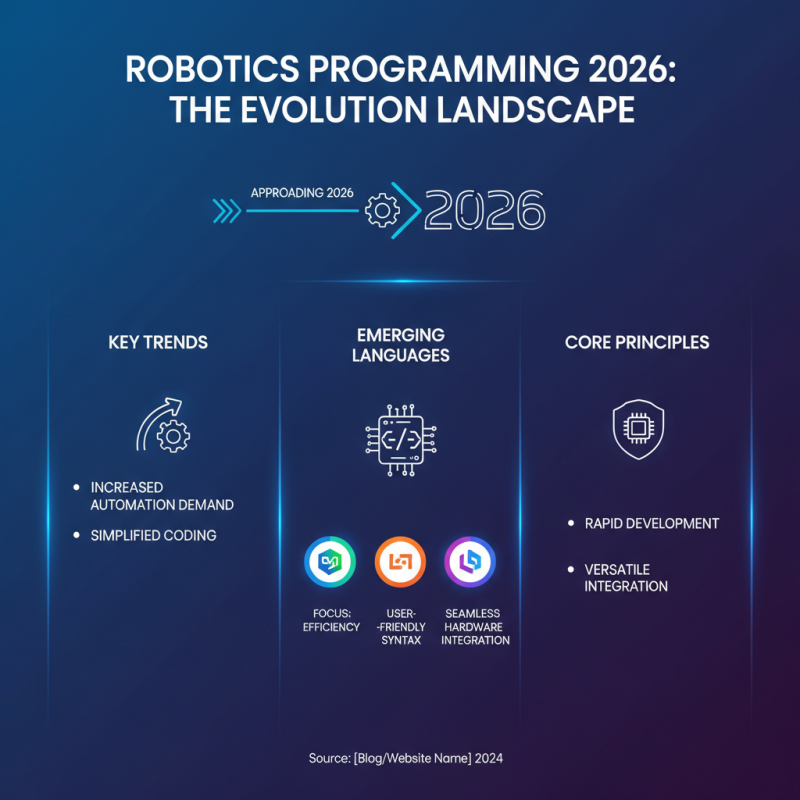
As we approach 2026, the landscape of robotics programming is evolving rapidly. Key programming languages are emerging, driven by increased automation demands. These languages focus on simplified coding for efficiency. They prioritize user-friendly syntax and seamless integration with various hardware.
One trend is the rise of domain-specific languages. These languages are tailored for particular applications. They allow programmers to write less code while achieving more functionality. This shift could lead to more intuitive designs and faster development cycles.
**Tip:** Embrace modular approach. Break down complex problems into smaller segments. It’s often easier to tackle smaller tasks.
Another shift is towards visual programming interfaces. These interfaces use graphical elements to create code. They help in understanding the flow of processes at a glance. However, they may limit advanced customizations for seasoned programmers.
**Tip:** Balance simplicity and control. Rely on build-in features for quick tasks, but be ready to dive into code for complex solutions.
The evolution of robotics programming is filled with potential. It’s essential to remain adaptable. The changes may not always align with existing skills. Embrace learning and growth in these new technologies.
The Role of AI and Machine Learning in Robotic Programming
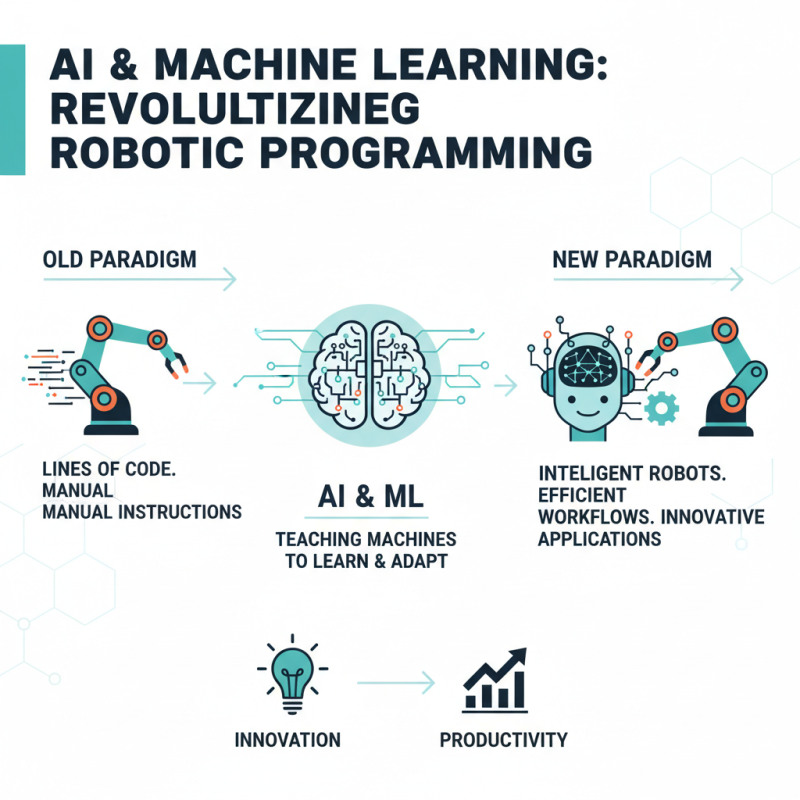
Artificial Intelligence (AI) and machine learning are transforming robotic programming. They bring a new layer of intelligence to robots. Programming a robot is no longer just about lines of code. It’s about teaching machines to learn and adapt. This shift leads to more efficient workflows and innovative applications.
Robots now analyze data from their surroundings. They adjust their actions based on this information. For example, an industrial robot can optimize its movements to reduce energy use. These small changes can enhance efficiency. However, not every implementation is smooth. Sometimes, machines misinterpret data or fail to learn as expected. This prompts developers to rethink their strategies.
Embracing AI in robotics isn’t without challenges. The need for continual learning creates complexity in programming. As robots evolve, developers face the dilemma of keeping pace. Relying on AI can lead to unforeseen errors. Balancing control and autonomy remains a key focus for the future. The path forward is full of potential, yet requires careful consideration.
Emerging Standards for Robotics Programming and Interoperability
Emerging standards for robotics programming and interoperability are becoming crucial. As robotic technology advances, companies are facing challenges in system compatibility. According to a recent industry report, 47% of robotics projects encounter integration issues. This highlights the need for standardized programming practices across platforms.
New initiatives aim to address these barriers. The Robotics API Initiative is one example. This framework encourages uniformity in coding styles. It allows robots from different manufacturers to communicate effectively. Currently, only 25% of projects adhere to these standards, leaving a significant gap for improvement.
Interoperability fosters innovation. It enables developers to create versatile applications. A study from the Robotics Research Institute shows that standardized protocols can reduce development time by up to 30%. However, not all developers are on board. Some resist change, fearing it may limit creativity. Bridging this gap is essential for the future of robotics.
2026 Top Trends in Robotic Programming You Need to Know
| Trend |
Description |
Impact on Industry |
Emerging Standards |
| Increased Interoperability |
Development of frameworks that allow different robotic systems to communicate seamlessly. |
Enhances collaborative tasks across various sectors such as manufacturing and logistics. |
ROS 2, MQTT, OPC UA |
| AI Integration |
Utilization of artificial intelligence to improve decision-making processes in robots. |
Increases efficiency in operations such as autonomous driving and robotic surgery. |
TensorFlow, PyTorch, OpenAI API |
| Modular Programming |
Focus on creating modular components that can be easily integrated and reused. |
Reduces development time and costs for robotic systems. |
Robot Operating System (ROS), Microservices |
| Cloud Robotics |
Leveraging cloud infrastructure to enhance processing power and storage capabilities for robots. |
Facilitates data sharing and real-time updates for robots in the field. |
Cloud Robotics Framework, Kubernetes |
| Safety Standards Development |
Emerging safety protocols specifically for human-robot interaction. |
Promotes safer working environments in industries utilizing collaborative robots. |
ISO 10218, ISO/TS 15066 |
Trends in User-Friendly Interfaces for Robotic Programming
The landscape of robotic programming is changing rapidly. User-friendly interfaces are at the forefront of this evolution. Many programmers still find traditional coding challenging and unintuitive. This is where simplified interfaces come into play, making robotics more accessible to beginners and hobbyists alike.
Graphical programming environments are gaining popularity. They allow users to drag and drop elements instead of writing complex code. This method helps visualize the logic behind programming. Visual learning can clarify confusion about programming structures. However, it doesn’t come without challenges. Users may struggle with advanced functionalities. The simplicity might limit experienced programmers who prefer granular control.
Moreover, voice and touch commands are becoming part of the user experience. They enhance interactivity, but can also perplex users who are not tech-savvy. Feedback loops are crucial; they help developers understand which elements are effective. Continuous improvement is needed in interface design. Users often express confusion over navigation. They might desire a balance between ease of use and comprehensive functionality. As we advance, refining interfaces will play a significant role in shaping the future of robotic programming.
2026 Trends in User-Friendly Interfaces for Robotic Programming
Impact of Cloud Computing on Robotics Programming Development
Cloud computing has sparked significant changes in robotic programming. It enhances data storage and processing power. Developers can access vast resources remotely. This shift allows for more complex algorithms and faster computations. Robots can now process real-time data, improving their adaptability.
The integration of cloud services also encourages collaboration. Programmers from different regions can work on projects. They can share code and integrate innovations quickly. However, this reliance raises concerns about security and data privacy. Developers must consider these aspects seriously. The dynamic nature of cloud platforms means that ongoing training is essential.
As robotics becomes more interconnected, the line between success and failure can be thin. Companies may rush to adopt cloud solutions without fully understanding them. There is a need for cautious exploration. Striking a balance between speed and stability is crucial. Adapting to these rapid changes can be challenging.