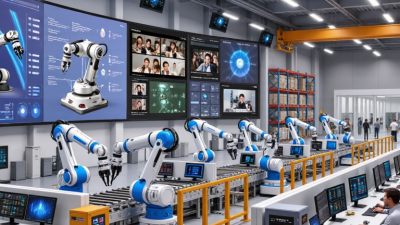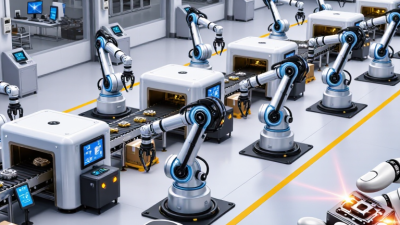

Choosing the best robot software in China requires more than comparing feature lists. The strongest choice depends on the robot’s task, environment, and maintenance requirements. A warehouse robot may need reliable mapping, fleet scheduling, and real-time obstacle avoidance. A factory arm may depend more on motion planning, vision integration, and precise cycle control. Service robots require natural language interaction, safe navigation, and consistent behavior around people.
Context matters. A serious evaluation should examine documented deployments, software updates, technical support, and integration with existing hardware. It should also review cybersecurity practices, safety testing, data handling, and compliance with relevant industry standards. Chinese robotics companies increasingly offer platforms that connect perception, control, simulation, and cloud management. However, impressive demonstrations can hide difficult realities. A robot may perform smoothly in a controlled showroom but struggle with reflective floors, crowded corridors, poor lighting, or changing production schedules. That gap deserves careful attention.
Evidence matters. Useful comparisons should include measurable indicators, such as uptime, recovery time, localization accuracy, deployment cost, and training requirements. Independent testing is valuable, although truly comparable public data remains limited. Some conclusions will therefore remain provisional. The “best” robot software may be the platform with clearer documentation, faster local support, and fewer unexpected repairs, rather than the one with the most advanced slogan. This overview will examine leading software approaches in China, their practical strengths, their limitations, and the conditions where each solution may deliver dependable value.
What Is the Best Robot Software in China?
What defines robot software in China is not a single feature. It is the ability to connect perception, motion planning, control, and factory data reliably. In practical deployments, software must handle dust, changing light, narrow workspaces, and uneven network quality. Chinese factories also value fast local support and clear integration with existing production systems.
Strong software usually offers modular tools, real-time monitoring, and secure data management. It should support simulation before physical testing. This reduces wasted parts and unexpected downtime. A professional evaluation checks positioning accuracy, recovery after errors, update procedures, and operator training. Safety matters too. The system should support risk assessment and recognized industrial safety practices. Performance claims need evidence from repeatable tests, not attractive demonstrations.
Tips: Ask for a live trial using your own workflow. Measure cycle time, failure recovery, and maintenance effort. Check whether engineers can adjust settings without rewriting the whole system. Request documentation in clear language. Do not trust perfect results from one controlled demo. Real sites are messier. I have seen promising systems struggle with small changes in lighting or product placement. That weakness is useful information, not a reason to dismiss the software. A careful buyer records these failures and tests whether updates actually solve them.
A practical comparison framework for evaluating robot software by capability, deployment environment, safety, interoperability, and lifecycle value.
| Evaluation Dimension | What Strong Robot Software Should Provide | Relevant China-Specific Consideration | Suggested Measurement | Importance |
|---|---|---|---|---|
| Motion Planning | Collision-aware path planning, trajectory optimization, coordinated motion, and recovery from common execution errors. | The software should support dense factory layouts, mixed equipment, and rapid production-line changes often found in flexible manufacturing. | Planning time, path quality, collision rate, cycle-time consistency, and recovery success rate. | Critical |
| Perception and Vision | Object detection, pose estimation, depth processing, inspection, localization, and reliable handling of variable objects. | Support for Chinese-language interfaces, local industrial datasets, changing lighting conditions, and high-mix production scenarios can improve usability. | Detection accuracy, false-rejection rate, inference latency, lighting tolerance, and re-training time. | Critical |
| Industrial Connectivity | Stable communication with controllers, programmable logic controllers, sensors, manufacturing systems, databases, and supervisory platforms. | Compatibility with widely used industrial communication protocols and locally deployed factory information systems is essential. | Supported protocols, data latency, connection uptime, API coverage, and integration hours per cell. | Critical |
| Simulation and Digital Twin | Virtual commissioning, layout validation, cycle-time analysis, offline programming, and safe testing before physical deployment. | Simulation can reduce commissioning time when production lines involve multiple suppliers, frequent tooling changes, or geographically distributed engineering teams. | Model-to-reality deviation, commissioning duration, simulated cycle time, and engineering rework. | High |
| Artificial Intelligence | Learning-based perception, adaptive grasping, anomaly detection, predictive maintenance, and data-driven process optimization. | Data governance, on-premise processing, local-language tools, and compliance requirements should be considered before using cloud-based artificial intelligence. | Model accuracy, inference latency, data-labeling effort, drift rate, and measurable productivity improvement. | High |
| Safety and Compliance | Risk assessment support, safety-zone configuration, emergency-stop integration, access control, event logging, and auditable change management. | Deployments should address applicable Chinese national and industry requirements together with internationally recognized robot-safety principles where required by the project. | Safety-function coverage, audit completeness, incident frequency, access-control strength, and validation time. | Critical |
| Ease of Programming | Graphical workflows, reusable templates, scripting interfaces, teach-by-demonstration, diagnostics, and clear error messages. | Chinese-language documentation, local technical support, and training resources can reduce dependence on highly specialized programming staff. | Training hours, time to create a new task, first-pass success rate, and operator error rate. | High |
| Reliability and Maintainability | Watchdog services, automatic restart, health monitoring, version control, remote diagnostics, backups, and controlled software updates. | Fast regional support, spare-system procedures, and offline operation are valuable when production continuity is a priority. | System uptime, mean time between failures, mean time to repair, recovery time, and backup-restoration success. | Critical |
| Cybersecurity and Data Control | Role-based access, encryption, secure authentication, network segmentation, patch management, logging, and least-privilege operation. | Data-location requirements, industrial-network isolation, and the choice between local, private-cloud, and public-cloud deployment should be assessed. | Vulnerability-remediation time, access violations, encryption coverage, audit findings, and recovery readiness. | Critical |
| Scalability | Support for single-cell control, multi-robot coordination, fleet management, centralized monitoring, and standardized deployment templates. | A scalable architecture is useful for manufacturers operating multiple plants or expanding automation across different regions and production processes. | Number of supported robots, deployment time per additional cell, management overhead, and fleet availability. | High |
| Total Cost of Ownership | Transparent licensing, predictable maintenance, reusable software assets, affordable integration, and measurable operational benefits. | The best option is not necessarily the lowest initial-cost option; local support, customization, training, downtime, and long-term upgrade costs should be included. | Five-year cost, payback period, cost per automated cell, annual support cost, and productivity return. | Critical |
What Is the Best Robot Software in China?
Key Types of Robot Software and Their Applications
Robot software in China is not one universal product. The best choice depends on the robot’s task, environment, and required safety level. Control software manages motors, speed, positioning, and tool movement. It supports welding arms, assembly systems, and inspection machines on busy production lines. Good control software also records faults and performance data for maintenance teams.
Perception software helps robots understand their surroundings. Cameras, depth sensors, and force sensors detect boxes, parts, people, and changing surfaces. This technology supports warehouse picking, quality inspection, agricultural sorting, and indoor delivery. Localization and navigation software guide mobile robots through narrow aisles. It can update routes when a cart blocks the planned path. Real floors disagree.
Planning software decides how a robot should complete a task. It calculates movement sequences, avoids collisions, and adjusts actions for different product sizes. Simulation software creates a virtual factory before installation. Engineers can test cycle times, reach limits, and safety zones without stopping production. That distinction matters.
Fleet management software coordinates many mobile robots from one control center. It assigns missions, balances battery use, and tracks charging stations. Data platforms connect robot records with production systems and maintenance schedules. In practice, integration is often harder than expected. A reliable solution should support clear documentation, secure access, local network conditions, and recognized industrial safety practices. Human operators still need training, especially when software updates change familiar workflows.
Key robot software types and their representative industrial applications
The most suitable robot software depends on the production requirement. Motion planning supports handling, welding and assembly; vision software enables inspection and bin picking; simulation reduces commissioning time; fleet and manufacturing-system integration coordinates multiple robots; safety and monitoring software improves operational control; and AI-based optimization helps adapt robot behavior to changing production conditions.
China’s leading robot software platforms are built around practical industrial needs. They connect motion control, machine vision, simulation, and factory management in one workflow. Many local developers focus on flexible middleware for welding, assembly, logistics, and inspection tasks. Their systems often support modular programming, real-time data collection, and integration with existing production equipment.
In field evaluations, a strong platform should recover quickly after sensor errors. It should also provide clear logs, version control, and secure access permissions. Chinese development teams often combine robotics knowledge with manufacturing experience. This helps them shorten deployment time on factory floors. However, software quality can vary between projects. A polished demonstration does not always prove long-term stability. I may also overvalue technical features when maintenance support matters more.
Tips:
Test the software with a small robotic cell first. Check cycle-time accuracy, offline simulation, and hardware compatibility. Ask developers how they handle updates and failures. Review training materials before signing a large deployment contract. Watch the robot repeat the same task for several hours. Small delays can expose hidden integration problems. Reliable platforms should make operators feel informed, not confused. Teams should record every adjustment during testing. This creates useful evidence for later audits and improvements.
China’s robotics market demands more than fast motion. According to the International Federation of Robotics’ World Robotics 2024 report, China installed 276,288 industrial robots in 2023, representing 51% of global installations. This scale makes software selection a practical engineering decision, not a simple feature comparison.
Performance should be tested on real tasks. Measure cycle time, positioning accuracy, recovery speed, and energy use with the same workload. A platform that moves quickly may still lose time during fault handling. That detail matters. Use factory data, not only laboratory demonstrations.
Compatibility depends on open interfaces, controller support, simulation tools, and integration with existing production systems. Check whether the software supports common industrial communication standards and allows controlled data export. The International Society of Automation’s IEC 62443 framework provides useful guidance for industrial cybersecurity. ISO/IEC 27001 can also help assess information-security management.
Security needs practical evidence: role-based access, encrypted connections, patch procedures, audit logs, and offline recovery.
According to the IFR, China’s operational robot stock reached roughly 1.75 million units in 2023. Future software must manage mixed equipment, older controllers, and changing production lines. A perfect platform is unlikely.
My own evaluation would include a limited pilot, but pilots can hide maintenance costs. Measure those costs for several months before deciding.
What Is the Best Robot Software in China?
The future of robot software in China will depend less on one “best” platform and more on adaptable software ecosystems. According to the International Federation of Robotics’ World Robotics 2024 report, China installed 276,288 industrial robots in 2023. This represented 51% of global installations. Its operational robot stock exceeded 1.7 million units.
That scale creates a demanding software environment. A factory may need motion planning, vision processing, fleet management, and predictive maintenance on one network. Future systems will increasingly combine edge computing with artificial intelligence. This reduces delay when robots inspect parts beside a moving production line. Digital twins will also help engineers test routes before changing physical equipment. The Ministry of Industry and Information Technology has identified software integration, intelligent manufacturing, and core algorithms as major development priorities.
Practical experience still exposes weaknesses. Some systems perform well in demonstrations but struggle with dust, poor lighting, or unusual objects. That gap matters. Software should support open interfaces, clear safety logs, and human override controls. Cybersecurity must be designed into every update, not added later. China has strong manufacturing data and engineering talent, yet data quality remains uneven between factories. The next advantage may come from reliable deployment, not impressive laboratory accuracy. It may also require more patience than the market expects.
© 1999-2025 The Lincoln Electric Company