Why Choose Photoelectric Sensors for Your Automation Needs?
In today's rapidly evolving industrial landscape, automation is key. Photoelectric Sensors are crucial for enhancing efficiency and accuracy. According to a report by MarketsandMarkets, the global photoelectric sensor market is expected to reach $4.5 billion by 2025, growing at a CAGR of 6.4%. This growth reflects the increasing need for precise sensing solutions in various sectors.
Industries utilize Photoelectric Sensors for their reliability and versatility. They excel in detecting opaque and transparent objects without direct contact. However, some may overlook the potential limitations, such as sensitivity to ambient light or dust. Proper calibration is vital to overcoming these challenges. Failure to address these aspects can lead to inefficiencies.
Photoelectric Sensors support applications from packaging to automotive industries. Their adoption can significantly reduce downtime and errors. Yet, it’s essential to choose the right type for specific applications. Understanding their strengths and limitations ensures optimal performance. Investing in quality Photoelectric Sensors can lead to long-term gains, but companies must be aware of the nuances that come with their use.
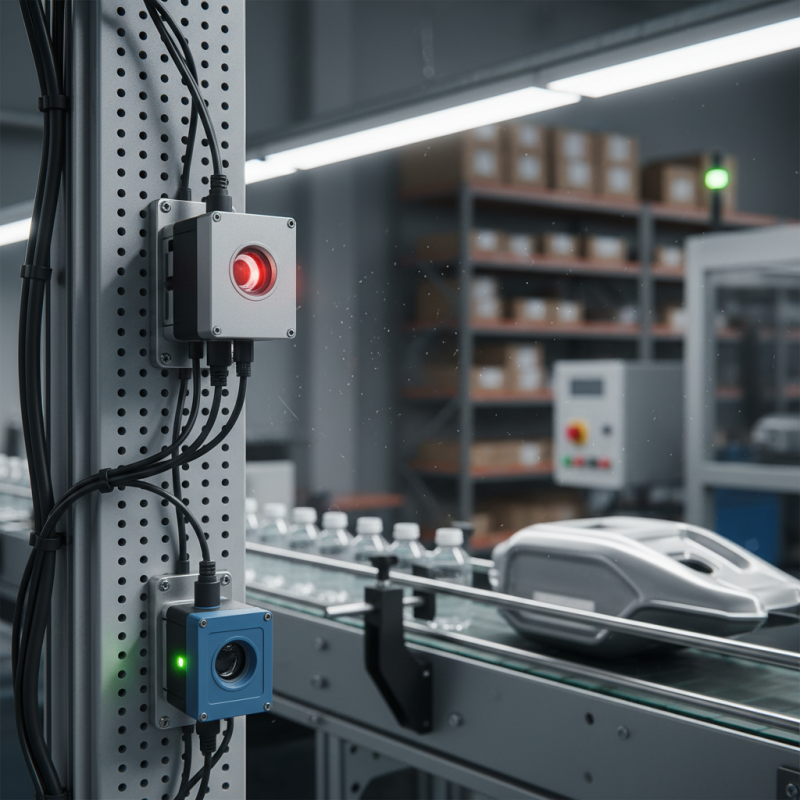
Advantages of Photoelectric Sensors Over Other Sensor Types in Automation
Photoelectric sensors play a vital role in automation, offering unique advantages over other sensor types. These sensors detect objects without direct contact, reducing wear and tear. They work efficiently in various conditions, whether in dusty, humid, or harsh environments. This versatility is a significant plus for many industrial applications.
One of the standout features of photoelectric sensors is their speed. They respond quickly to changes, making them ideal for high-speed operations. This speed can enhance productivity but may also require recalibrating systems to maximize effectiveness. In addition, their long detection range allows for greater flexibility in equipment layout. However, if not properly aligned, they might miss targets, which can lead to costly disruptions.
**Tips:** Regular maintenance checks can prevent misalignment. Ensure the sensors are clean and unobstructed. Also, consider using reflective targets to enhance detection. Testing under various conditions can help understand potential limitations. Having a backup system in place can mitigate risks during unexpected failures.
Advantages of Photoelectric Sensors Over Other Sensor Types in Automation
Key Applications of Photoelectric Sensors in Various Industries
Photoelectric sensors play a crucial role in various industries. These sensors excel in detecting objects and measuring distances. In manufacturing, photoelectric sensors help automate assembly lines. They ensure precise alignment of components. A report from MarketsandMarkets indicates that the global market for photoelectric sensors is expected to reach $3.5 billion by 2025. This growth reflects their increasing importance.
In packaging, photoelectric sensors verify the presence of products. They ensure that only filled containers are sealed. In the automotive sector, these sensors detect vehicle positions during assembly. They enhance safety and efficiency. While photoelectric sensors are reliable, they can struggle in certain conditions. For example, dust, fog, and extreme temperatures can affect their performance.
Tip: Regular maintenance of sensors is essential for optimal performance. Consider using protective covers in dusty environments. Also, conduct periodic checks on sensor alignment. With these practices, you can enhance the longevity of photoelectric sensors. Robust data from industry studies suggests that sensors can improve operational efficiency by up to 20%. This statistic highlights their potential in boosting productivity.
Understanding Different Types of Photoelectric Sensors and Their Functions
Photoelectric sensors are essential in many automation applications. They detect objects without direct contact. This contactless operation enhances efficiency and reduces wear over time. According to recent industry reports, the global market for photoelectric sensors is expected to reach $3.57 billion by 2025, growing at a CAGR of 6.9%. Such growth reflects their increasing importance in manufacturing and logistics.
There are various types of photoelectric sensors: reflective, through-beam, and proximity. Reflective sensors send a beam to a target. When the light hits the object and reflects back, it triggers the sensor. Through-beam sensors, on the other hand, have a transmitter and receiver. They differentiate between presence and absence quickly and accurately. Proximity sensors offer a simple way to detect when an object is nearby without precise alignment, but might lead to misalignment issues under certain conditions.
Understanding these types highlights their unique applications. Reflective sensors may struggle in bright environments. They could also misinterpret shiny surfaces. Through-beam sensors need careful installation, yet offer precise detection. It's crucial to evaluate the setting and choose wisely for optimal functionality. These factors should be considered for effective automation strategies.
Performance Metrics: Reliability and Sensitivity of Photoelectric Sensors
Photoelectric sensors are essential in automation. Their performance metrics, especially reliability and sensitivity, greatly enhance operational efficiency. These sensors detect objects without direct contact, ensuring quick responses. Their sensitivity level can adapt to various materials, whether opaque or transparent. This flexibility simplifies many applications.
When selecting photoelectric sensors, consider your specific environment. Dust, moisture, and vibration can impact sensor performance. Ensure you understand the conditions where the sensors will operate. For instance, a dusty factory might require more robust models.
Tips: Always test sensors in situ. Monitor their response times under various conditions. Sometimes, a slight adjustment can improve sensitivity dramatically. Regular maintenance is key. It can prevent unexpected sensor failures. Adjust and recalibrate periodically to ensure peak performance. Evaluating these aspects can lead to a more reliable automation setup.
Recent Innovations and Trends in Photoelectric Sensor Technology
Recent innovations in photoelectric sensor technology are reshaping automation. In 2023, the global market for photoelectric sensors is projected to reach $3.5 billion. This growth comes from industries seeking enhanced efficiency. New designs offer improved reliability and versatility, which are essential in various applications. The push for automation demands better sensing capabilities.
Emerging trends highlight advancements in sensor miniaturization. Smaller sensors can fit into tighter spaces. This development has led to more applications in confined environments. AI integration is another promising area. Sensors equipped with AI can analyze data in real-time. However, this technology isn't perfect. There are concerns about data accuracy and security. Some industries still hesitate to adopt these solutions fully.
Wireless capabilities are on the rise. Many new sensors rely on IoT technology to transmit data. This makes installation easier and reduces wiring costs. However, wireless systems can face interference issues. Users need to consider these limitations before implementing. The evolution of photoelectric sensors points to an exciting future. Yet, challenges remain that require careful thought.