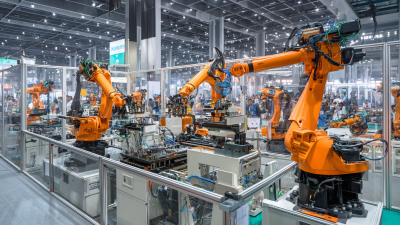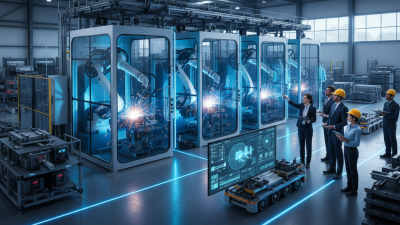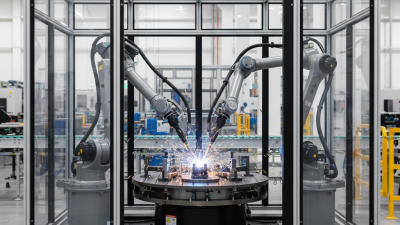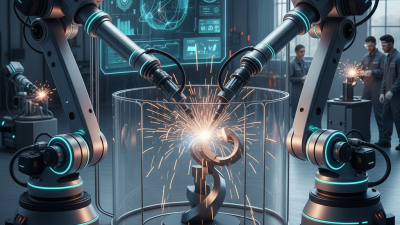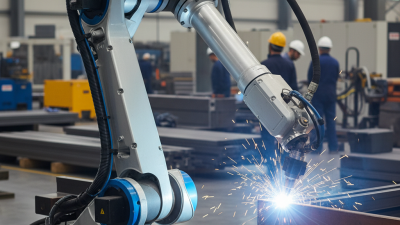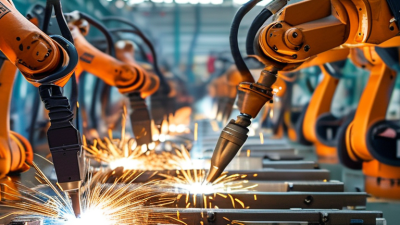

Manufacturers serving global markets face constant pressure to improve quality, speed, and production consistency. Robotic welding solutions offer a practical response when demand changes across plants, shifts, and product lines. A programmed welding arm can repeat the same torch path across thousands of assemblies. It can also maintain stable speed, angle, and heat input. That consistency matters.
Picture a fabrication cell running beside an operator station, with sensors checking joint position and cameras supporting inspection. Weld parameters can be recorded for traceability, helping engineers investigate defects instead of guessing. Production teams may also reduce exposure to intense heat, fumes, and repetitive movement through careful cell design. These benefits can support safer work and more predictable output. Small improvements matter.
However, automation is not a cure-all. Poor joint design, inconsistent materials, or weak maintenance can still create costly failures. Choosing the right robotic welding solutions requires more than comparing equipment prices. Experienced integrators should review part geometry, weld access, cycle time, fixture accuracy, operator training, and local service support. They should also validate performance through sample runs and documented quality checks. Global production needs reliable systems, not impressive demonstrations.
There is room for doubt. Every factory has different constraints. A responsible evaluation therefore balances technical capability with practical experience and measurable results. This introduction examines why robotic welding solutions are increasingly considered for global production, while recognizing their limits and the human expertise required to make them work.
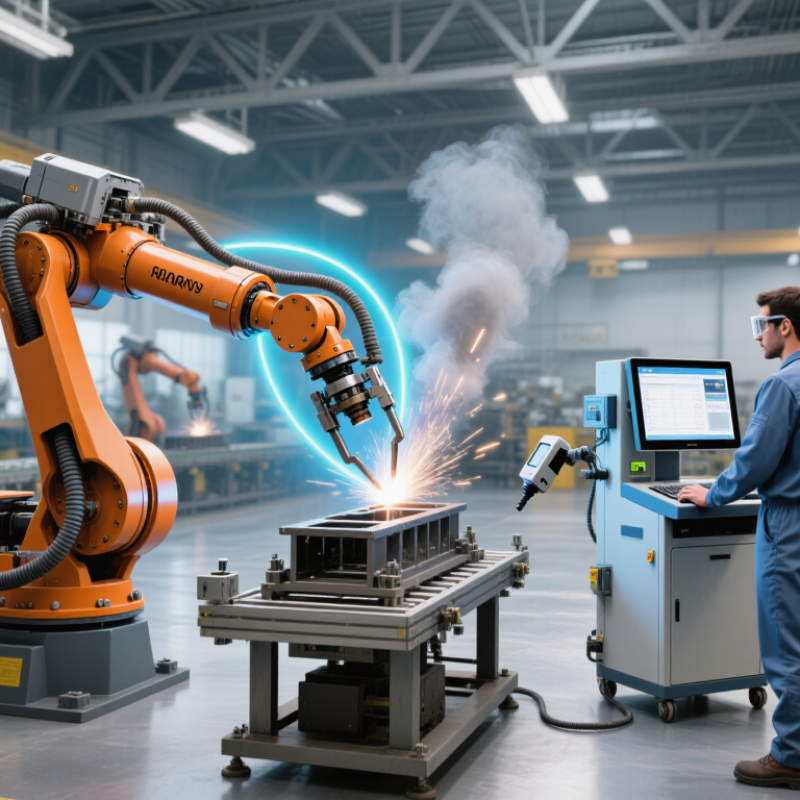
Robotic welding solutions are not simply welding arms. They are integrated production systems that combine a robot, power source, torch, fixtures, sensors, software, and safety controls. Together, these components guide the weld from part positioning to final inspection. The system follows programmed paths while operators supervise setup, maintenance, and quality checks.
In practical workshops, robotic welding is most valuable when parts repeat consistently. A fixture holds each component in the same position. Sensors can detect small changes in joint location or material fit-up. Weld data can also be recorded for traceability and process improvement. This supports stable output across multiple production sites, especially when teams use shared procedures and documented training.
The process is not perfect. A rushed fixture design can create alignment problems. Poorly prepared surfaces may still produce weak welds. Robots need qualified welding procedures, regular calibration, and careful risk assessments. Skilled technicians remain essential for programming, troubleshooting, and deciding when automated settings need adjustment.
Human judgment matters.
For global production, the real solution is the complete workflow. It includes compatible equipment, clear maintenance plans, repeatable inspection methods, and local compliance checks. Small differences in materials, power supply, or operator experience can affect results. A pilot cell often reveals these issues before wider deployment. Even then, production teams should review the data and question assumptions instead of trusting automation blindly.
Before production, technicians teach key points along the joint. They also set current, voltage, wire speed, shielding gas flow, and travel speed. Sensors can detect part position and adjust the torch when a seam shifts slightly. It repeats accurately. However, accuracy depends on clean surfaces, stable fixtures, and correct calibration.
During operation, the system checks movement limits and safety interlocks before starting the arc. The fixture holds each component in the same position, reducing variation between batches. Cameras or seam-tracking sensors may help identify gaps, edges, or misalignment. Quality teams still inspect weld appearance, penetration, dimensions, and records. Automation is not magic. A poorly clamped part can produce a consistent defect at high speed. That is a useful warning for global production teams. Regular nozzle cleaning, wire inspection, parameter reviews, and preventive maintenance keep the process dependable. Human judgment remains important when materials, joint designs, or production conditions change. A robotic cell can improve repeatability, but it cannot replace careful process engineering.
Robotic welding improves consistency across global production sites. A programmed torch follows the same path, angle, and travel speed repeatedly. This reduces variation between shifts, operators, and facilities. It also supports stable output when skilled welders are difficult to recruit. The International Federation of Robotics reported 541,302 industrial robot installations worldwide in 2023. That figure shows strong industrial confidence in automation. Yet automation is not magic. A poorly prepared joint still produces a poor weld.
For global production, robotic welding can shorten cycle times and improve traceability. Sensors can record weld parameters, while digital programs help reproduce approved processes across plants. Operators can focus on setup, inspection, and maintenance instead of repetitive torch movement. In practice, small details matter. A dirty fixture, uneven material, or loose cable can create spatter and rework. The benefits depend on disciplined quality control, suitable training, and regular calibration. These requirements are sometimes underestimated.
Tips: Start with repeatable parts and stable fixtures. Measure cycle time before changing equipment. Test weld quality under different material batches. Keep manual backup procedures for unusual joints. Review safety controls against applicable local standards, including relevant ISO requirements. Do not automate every task simply because technology is available. Pilot results may look promising, but long-term maintenance costs can change the calculation. Capture operator feedback, too. It often reveals problems that production data misses.
Selecting a robotic welding system starts with the part, not the robot. Engineers should review material thickness, joint design, weld length, and expected production volume. A system that handles steel may need different settings for aluminum. That difference matters.
Factory trials reveal practical limits. Test representative parts, including warped panels and small dimensional changes. Check torch access, fixture repeatability, cycle time, and arc stability. A fast robot is not useful if operators spend hours correcting poor fit-up. Sensor feedback can compensate for some variation, but it cannot repair weak fixture design. Less automation may sometimes be wiser.
Deployment also requires disciplined planning. The cell needs guarding, safe access, extraction, emergency controls, and clear maintenance procedures. Operators should learn programming basics, inspection methods, and fault recovery. Local technical support and spare components can reduce extended downtime across international sites. Power standards, workforce skills, and regulatory requirements also vary between countries.
Budget forecasts should include integration, training, fixtures, software updates, and preventive maintenance. A low purchase price can hide expensive commissioning work. Measure results through first-pass yield, downtime, rework, and energy use. Perfect projections are rare. Teams should review production data after launch and adjust the process. Even experienced engineers sometimes overestimate automation’s value. During deployment, honest feedback from welders may expose problems that design reviews miss.
Why Choose Robotic Welding Solutions for Global Production?
Safety begins with controlled movement, not simply faster welding. A robotic cell can separate heat, sparks, fumes, and operators through guarding, interlocks, and defined access points. ISO 10218 and ISO/TS 15066 provide practical frameworks for robot safety and collaborative operation. Risk assessments still require local training and documented procedures. In 2023, manufacturers installed 541,302 industrial robots worldwide, according to the International Federation of Robotics’ World Robotics 2024 report. That scale reflects growing confidence, but also raises the importance of consistent safety management.
Maintenance determines whether automation creates value or hidden downtime. Operators should inspect torch alignment, cable wear, grounding, fixtures, and shielding gas flow during scheduled checks. Small deviations can produce weak joints or excessive rework. Sensors can monitor temperature, vibration, and cycle variation before failures become visible. Deloitte’s 2022 smart manufacturing survey found that 86% of manufacturers viewed smart manufacturing as important for future competitiveness. The figure is persuasive, though implementation quality varies greatly.
Future systems will connect welding robots with digital production records, adaptive sensing, and artificial intelligence. These tools may adjust parameters when gaps or distortion appear. They will not replace qualified judgment. A robot can repeat a poor setup perfectly. That is an uncomfortable limitation. Human technicians still validate weld quality, maintain safety boundaries, and interpret unusual defects. Workforce training must develop alongside hardware, or productivity gains may remain uneven across global facilities.
| Dimension | Measurable Factor | Representative Data | Production Significance | Implementation or Verification Basis |
|---|---|---|---|---|
| Safety | Primary safeguarding methods | Perimeter guarding, interlocked access gates, emergency stops, and presence-sensing devices | Separates personnel from the robot motion envelope, welding arc, hot workpieces, fumes, and spatter. | A risk assessment must determine the required combination of protective measures for each cell. |
| Safety | Applicable robot-safety framework | ISO 10218-1 and ISO 10218-2 | Provides requirements for industrial robot safety and the integration of robot applications and cells. | Use the edition adopted by the target market and confirm local legal requirements before commissioning. |
| Safety | Functional safety controls | Safety-rated stop functions, gate monitoring, speed or separation monitoring where applicable | Helps ensure that hazardous motion is stopped or restricted when a protective device is activated. | Safety-related control systems should be designed and validated according to the applicable machinery-safety standard. |
| Welding Quality | Robot repeatability | Often specified in the range of ±0.02 to ±0.10 mm for industrial welding robots | Supports consistent torch positioning and repeatable weld geometry when fixtures, programs, and process parameters are stable. | Actual performance depends on robot model, payload, reach, calibration, temperature, and installation quality. |
| Productivity | Robot axis configuration | Six-axis articulated robots are widely used for multi-position welding | Provides the wrist orientation and reach needed to access complex joints and maintain suitable torch angles. | The required reach, payload, positioner capacity, and work envelope should be calculated for the specific part family. |
| Maintenance | Daily operator checks | Inspect torch condition, cable routing, gas hoses, grounding, fixtures, and visible contamination | Detects common causes of porosity, unstable arcs, collisions, cable damage, and dimensional drift before production losses increase. | Record findings in a maintenance log and follow the equipment supplier's operating instructions. |
| Maintenance | Preventive maintenance frequency | Daily, weekly, monthly, and annual tasks are commonly scheduled; exact intervals vary by duty cycle | Allows lubrication, inspection, calibration, and replacement work to be planned instead of triggered only by breakdowns. | High arc-on time, abrasive environments, long shifts, and heavy payloads generally require more frequent inspection. |
| Maintenance | Consumable replacement points | Contact tips, nozzles, liners, electrodes, shielding-gas components, and wire-feed rolls | Maintaining consumables within specification helps stabilize wire feeding, arc starting, shielding, and weld penetration. | Replacement intervals should be based on weld current, wire type, arc-on time, spatter level, and measured weld quality. |
| Global Production | Program portability | Standardized weld procedures, digital backups, revision control, and documented coordinate systems | Reduces commissioning differences when the same product is manufactured at multiple international sites. | Validate programs using the local robot controller, welding power source, fixtures, safety circuit, and applicable regulations. |
| Global Production | Operator and technician capability | Training should cover robot operation, teach pendant use, welding-process control, lockout/tagout, and fault recovery | Improves safe changeovers, troubleshooting speed, and consistency across shifts and production locations. | Competency requirements should be documented by role and aligned with local occupational-safety rules. |
| Future Development | Vision-assisted welding | Laser or camera-based seam tracking can detect joint position and compensate for part variation | Can reduce dependence on extremely precise fixturing and help maintain torch position during dimensional variation. | Performance depends on surface condition, joint visibility, sensor calibration, lighting, and process speed. |
| Future Development | Adaptive process control | Real-time adjustment may use arc voltage, current, wire-feed speed, travel speed, or torch position | Enables the system to respond to heat buildup, gap variation, or changes in arc characteristics. | The control strategy must be validated through weld procedure qualification and quality inspection. |
| Future Development | Offline programming and simulation | Digital cell models can be used for reach checks, collision analysis, takt-time estimation, and program preparation | Moves part of programming work away from the production line and can shorten commissioning interruptions. | Simulation results require verification because real fixtures, cable behavior, calibration errors, and process conditions may differ. |
| Future Development | Connected production monitoring | Common monitored indicators include arc-on time, cycle time, downtime, alarm history, weld defects, and consumable usage | Provides evidence for preventive maintenance, bottleneck analysis, traceability, and continuous improvement. | Data governance, cybersecurity, access control, and interoperability should be defined before connecting production equipment. |
© 1999-2025 The Lincoln Electric Company