How to Choose Industrial Automation Solutions in 2026?
Industrial automation decisions in 2026 will demand more than comparing product brochures and software features. Manufacturers must connect machines, people, data, and business goals without creating fragile systems. The right industrial automation solutions should improve throughput, quality, safety, and energy visibility while remaining practical for daily operations.
A useful evaluation begins on the factory floor. Watch an operator change a tool, inspect a rejected part, or recover from a network interruption. These moments reveal requirements that spreadsheets often miss. Check cycle-time records, maintenance logs, cybersecurity controls, integration methods, and training needs. Ask vendors for documented case studies, measurable results, lifecycle costs, and realistic deployment schedules. Independent testing and recognized technical standards can strengthen confidence, but certificates alone cannot guarantee performance.
Pilot the solution on a limited production cell before expanding across the plant. Measure downtime, defect rates, response time, operator workload, and energy use. Review those results with maintenance, engineering, production, and IT teams. A system that looks impressive in a demonstration may struggle beside oil, dust, old controllers, or inconsistent data. That is an uncomfortable possibility. Plan for it. Also question optimistic return-on-investment claims, especially when labor, integration, spare parts, and future upgrades are excluded. Strong decisions balance innovation with maintainability, supplier support, and evidence from comparable environments. In 2026, flexibility will matter, but dependable execution will matter more.
Defining Industrial Automation Goals and Operational Requirements
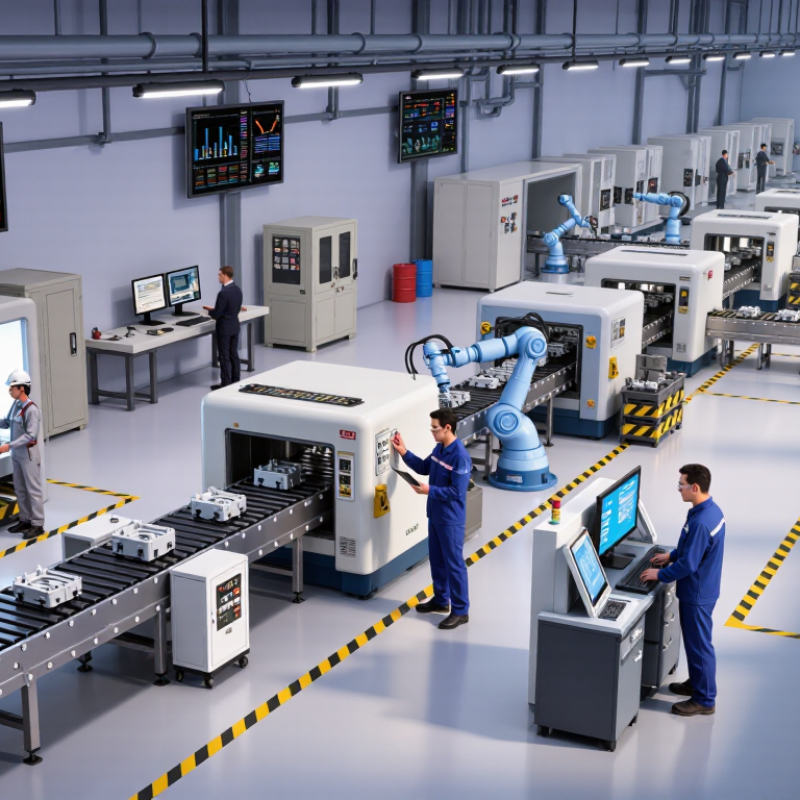
Choosing industrial automation in 2026 begins with a measurable operating problem, not a catalogue of features. Define the outcome in plant language: reduce changeover from 42 minutes to 25, hold fill weight within ±1%, or prevent unplanned stops on a critical line. These targets give engineering and finance a shared reference. They also expose weak assumptions. A faster robot means little if material staging remains slow.
Walk the process during a normal shift, including handoffs, cleaning, maintenance, and operator pauses. Record cycle times, fault codes, energy use, scrap, and the conditions surrounding each event. Speak with operators; their workaround may reveal a sensor blind spot or an unsafe reach. Map required inputs and outputs, then specify response time, uptime, accuracy, throughput, and recovery behavior. Keep requirements testable. “Easy to use” is not enough; “a new operator completes recipe changes within 15 minutes” is clearer.
Plan for the environment, not the showroom. Consider dust, vibration, temperature, washdown, network interruptions, and restricted floor space. Define who approves changes, who accesses data, and how backups are verified. Teams often underestimate integration effort. An old controller may use undocumented signals. That delay is avoidable, but not always. Leave room for pilot testing, operator feedback, and revised assumptions before committing to full deployment.
Assessing Automation Technologies for 2026
In 2026, assessing automation technology should begin with the production problem, not the newest feature. I examine cycle time, changeover frequency, defect patterns, and operator workload on the actual line. A camera system may reduce inspection errors, while a robotic cell may only move the bottleneck elsewhere. Walk the floor. Heat, dust, vibration, and limited space can defeat impressive demonstrations. I also ask how quickly technicians can diagnose a stopped machine at 2 a.m.
Interoperability deserves careful testing. Controllers, sensors, robots, and manufacturing software should exchange usable data through documented interfaces. Edge processing can shorten response times and reduce dependence on constant connectivity. Artificial intelligence can detect drift, but it needs clean histories and human review. A digital twin is valuable when it reflects real maintenance events, not just a polished 3D model.
Cybersecurity must cover remote access, identity controls, updates, and recovery procedures. One overlooked account can weaken an otherwise strong design. For investment decisions, compare total lifecycle cost rather than purchase price. Include integration, training, spare parts, energy, downtime, and eventual replacement.
Pilot one representative process, then measure throughput, quality, safety observations, and unplanned stops over several weeks. Do not trust a perfect pilot. Production pressure is usually higher. Keep humans involved. Worker feedback often reveals adoption problems before technical failures appear. No scorecard is perfect. A practical solution should remain scalable, explainable, maintainable, and honest about its limits.
Comparing Vendors, System Compatibility, and Scalability
How to Choose Industrial Automation Solutions in 2026?
Choosing an industrial automation solution requires more than comparing prices and feature lists. Vendor evaluation should include engineering experience, response times, maintenance coverage, and documented project results. Ask for references from facilities with similar production speeds, environmental conditions, and safety requirements. A polished demonstration can hide difficult integration work.
System compatibility deserves close testing. Confirm whether controllers, sensors, robots, databases, and existing safety systems can exchange reliable data. Request a small pilot using real production signals, not simulated values. Check communication protocols, cybersecurity controls, spare-part availability, and software update policies. I have seen technically capable systems fail because an old interface was overlooked. That mistake is expensive.
Tips: Build a scoring sheet before meeting vendors. Test alarm handling during a power interruption. Measure installation time, training needs, and recovery steps. Treat vague answers as risks. Scalability also needs a practical definition. Can the system add two production lines without replacing its central architecture? Can operators understand new screens after limited training? Choose modular equipment, open interfaces, and licensing terms that support gradual expansion. Still, planned growth estimates are often wrong. Leave physical space, network capacity, and budget flexibility for changes you cannot predict.
The chart uses a normalized 0–100 evaluation scale for six practical procurement criteria. System compatibility reflects support for widely used industrial interfaces and APIs, while scalability measures the ability to expand control, data, and analytics across additional lines or sites. Higher scores indicate stronger suitability for a 2026 automation project.
Evaluating Costs, Cybersecurity, and Workforce Impact
How to Choose Industrial Automation Solutions in 2026?
Industrial automation decisions now require more than comparing equipment prices. In plant assessments, I have seen low-cost systems create expensive integration work. The 2024 Cost of a Data Breach Report placed the average breach cost at $4.88 million. That figure should influence network design, access controls, and recovery planning.
Tips: Request a five-year cost model. Include installation, software updates, training, downtime, and incident recovery. Ask vendors for documented security testing and clear patch responsibilities. Segment operational networks from office systems. Test backup restoration before production depends on it.
Workforce impact deserves equal attention. The 2025 Future of Jobs Report estimates that 39% of workers’ existing skills may change by 2030. Automation can remove repetitive tasks, but it also creates demand for controls technicians, data analysts, and cyber specialists. The 2024 Cybersecurity Workforce Study reported a global workforce gap of about 4.8 million people. Hiring alone may not solve the problem. Paid training and supervised practice often work better, although training budgets are commonly underestimated. A small pilot cell can reveal these gaps. It can also expose uncomfortable assumptions. An operator may understand a process better than the project team. Their feedback should shape interface design, alarm settings, and maintenance procedures. When evaluating solutions, measure reduced manual effort alongside new skills, staffing pressure, and recovery time after failure.
Planning Implementation, Testing, and Continuous Improvement
How to Choose Industrial Automation Solutions in 2026?
Planning should begin with the production problem, not the equipment catalogue. Define target output, acceptable downtime, safety requirements, and operator responsibilities. A useful plan maps each process step to measurable data, such as cycle time, defect rate, and energy use. In practice, our early schedule was too optimistic because installation access had not been checked. Leave space for wiring changes, staff training, and supplier delays. Small details often decide whether a project succeeds.
Tips: Start with one production cell. Record its current performance for two weeks. Set a realistic baseline. Ask operators what fails during night shifts. Their experience may reveal risks missing from formal reports.
Implementation should use controlled stages, with clear approval points before expanding. Test sensors, software logic, emergency controls, and data accuracy separately. Then test the complete workflow under normal loads and unusual conditions. Keep a written record of test results, corrective actions, and responsible personnel. A system that runs well for one hour may still fail after eight hours. Do not treat commissioning as the finish line. It is evidence for the next decision.
Continuous improvement needs regular reviews, not occasional enthusiasm. Compare actual performance with the original baseline each month. Investigate repeated alarms, manual overrides, and unexplained stoppages. Some problems may come from poor procedures rather than technology. That can be uncomfortable. Update training, maintenance intervals, and control settings carefully. Retest every meaningful change, and preserve a rollback plan when results become worse.