How to Choose the Right Industrial Robot for Your Factory?

Choosing the right industrial robot can shape your factory’s productivity, safety, and long-term operating costs. That choice matters. A robot may look impressive in a demonstration, yet fail when handling oily parts, tight tolerances, or unpredictable product flow. The best decision begins with the actual production environment, not a glossy specification sheet.

Start by documenting payload, reach, cycle time, repeatability, mounting position, and working temperature. Measure the heaviest tool and workpiece together. A small calculation error can overload the robot’s wrist. Review real shift data, including stoppages and changeover times. For welding, packaging, assembly, or machine tending, each application demands different speed, precision, and protection. An industrial robot with excessive capacity may waste capital and energy. An undersized model may create vibration, downtime, and maintenance problems.

Reliable selection also requires practical verification. Request performance data from established manufacturers, then test representative parts using your intended gripper and fixtures. Check programming requirements, spare-part availability, operator training, and integration with existing PLCs. Safety assessments should reflect the complete cell, including guarding, sensors, emergency stops, and human access. Applicable standards, such as ISO 10218 and ISO/TS 15066, can guide responsible design. Still, compliance alone does not guarantee a smooth installation. Factory conditions often expose weaknesses that simulations miss. Review the choice with production engineers, maintenance technicians, and operators before signing the purchase order. Their experience may reveal one overlooked detail that brochures never mention.
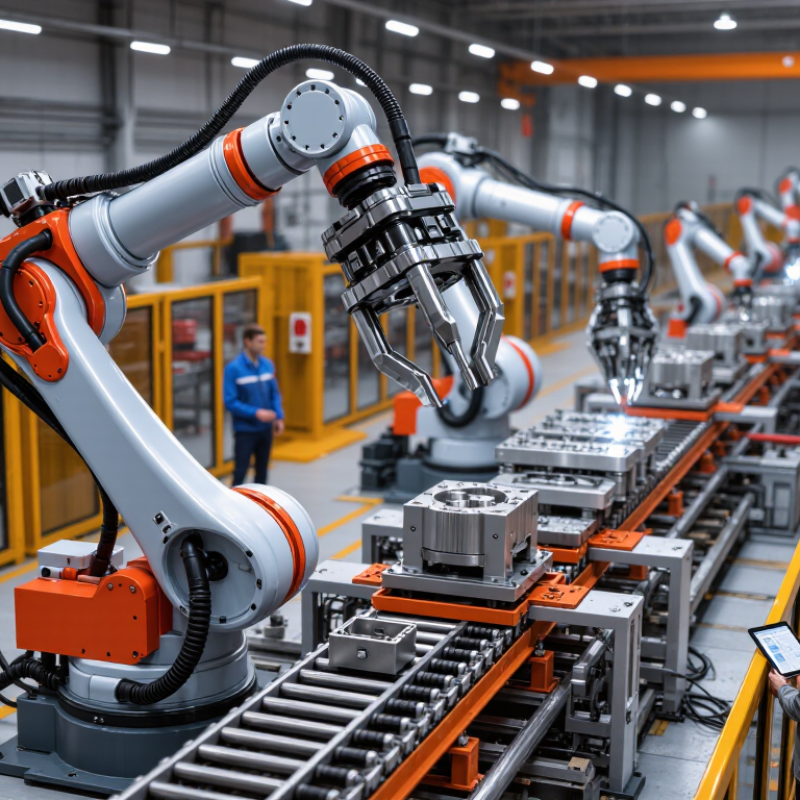
How to Choose the Right Industrial Robot for Your Factory?

Industrial Robot Types and Their Factory Applications

How to Choose the Right Industrial Robot for Your Factory?

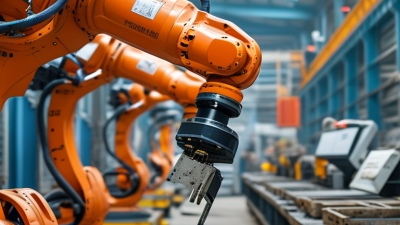
Industrial robots differ by movement, payload, speed, and working range. Articulated robots suit welding, painting, machine tending, and complex assembly. Their multi-joint arms can reach around fixtures and workpieces. However, they need careful programming and a well-designed safety zone.

SCARA robots are effective for fast horizontal assembly, screwdriving, and electronic component placement. Delta robots handle lightweight products at high speed, making them useful for food packaging and sorting.

Cartesian robots provide accurate linear movement for cutting, dispensing, and palletizing. Collaborative robots can support workers with inspection, loading, and repetitive assembly tasks. They are flexible, but their actual speed may be lower than expected.

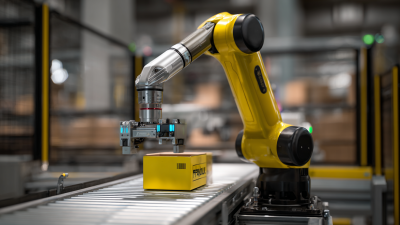
Match the robot to the process, not the sales brochure. Measure product weight, cycle time, reach, accuracy, and daily operating hours. Check the gripper, fixture, vision system, and conveyor as one complete system. A robot may meet the payload requirement but still fail when the gripper and product are included. That mistake is common.

✓

Maintenance access matters. Operators should reach service points without entering unnecessary hazards. Review training needs, spare parts, floor space, and recovery procedures before installation. In a real factory, dust, temperature changes, and uneven product flow can reduce performance. A pilot test with actual materials often reveals problems that simulations miss. The best choice is rarely the most powerful model. Sometimes, a simpler robot is easier to operate, maintain, and improve.

Factory Requirements: Tasks, Payload, Reach, and Operating Conditions

How to Choose the Right Industrial Robot for Your Factory?

A suitable robot begins with the task, not the advertised speed. Observe the real workstation during a full shift. Record cycle time, product weight, grip points, and operator movement. Welding, palletizing, assembly, and machine tending require different motion patterns. A robot that excels at fast picking may struggle with controlled insertion. That difference matters.

Payload calculations must include the tool, cables, clamps, and the heaviest product. Add a reasonable safety margin. Do not rely on the product weight alone. Reach should cover the complete working envelope, not just the farthest point. Check wrist angles, fixture locations, and access around guards. A neat spreadsheet can still mislead.

Operating conditions often expose weak decisions. Measure floor vibration, temperature, dust, humidity, and available electrical supply. In a cold area, grease behavior and startup time may change. In a dusty process, sealing and maintenance access deserve close attention. Confirm the robot’s protection rating against actual exposure. Ask technicians how they will clean it. They may notice problems engineers miss. Floor space is another practical limit. A long reach can create interference with conveyors, doors, or people. I have seen layouts look efficient on paper, then force awkward maintenance access. Leave room for inspection and safe manual recovery. Controls should also match staff skills and training time. The cheapest integration is not always the most dependable one. Sometimes, choosing a slower robot is the more honest decision.

Robot Selection: Speed, Precision, Flexibility, and Integration

How to Choose the Right Industrial Robot for Your Factory?

Robot Selection: Speed, Precision, Flexibility, and Integration

Robot selection should begin with the task, not the robot catalog. Measure cycle time, payload, reach, and working height on the actual production line. A six-second target may fail if grippers need extra time to settle. Speed matters, but uncontrolled speed can reduce accuracy and increase stoppages. Precision must match the process, including part tolerance, fixture movement, and repeated positioning.

In factory assessments, I have seen teams choose high-speed equipment for slow material flow. The result was expensive idle time. Flexibility also deserves practical testing. A robot handling three product sizes may need quick-change tooling, simple programming, and accessible maintenance points. Test these changes with operators beside the cell. Their feedback often reveals awkward movements that specifications hide.

Integration decides.

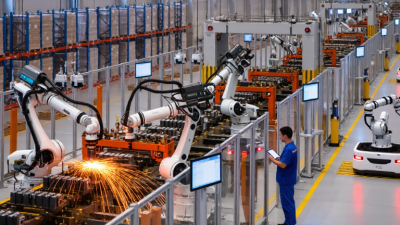
Check communication with conveyors, sensors, controllers, and production software before approval. Confirm available floor space, electrical capacity, guarding, and service access. A technically capable robot can still disrupt a line when its interface is poorly planned. Ask the integrator for a small simulation or trial run using representative parts. Include fault recovery, not only normal operation. I once underestimated cleaning time around a vision sensor; that mistake affected daily output. A second review with maintenance staff can expose similar gaps. Document measurable acceptance criteria, such as cycle time, placement accuracy, changeover duration, and recovery time. Then verify them under real operating conditions.

Safety, Programming, Maintenance, and Workforce Considerations

Choosing an industrial robot starts with the task, not the catalogue. Define payload, reach, cycle time, accuracy, and floor space from real production data. According to the International Federation of Robotics’ World Robotics 2024 report, 541,302 industrial robots were installed worldwide in 2023. This growth makes selection more competitive, but also easier to rush. My first assumption was wrong: higher speed did not always improve our line. Material flow became the constraint.

Safety must cover the complete work cell. Review guarding, emergency stops, access points, risk assessment, and operator visibility against applicable ISO 10218 and ISO/TS 15066 requirements. Programming should match your team’s ability. A clear interface, offline simulation, and documented change control can reduce dependence on one specialist. Maintenance deserves equal attention. Ask about preventive schedules, diagnostic access, critical spare parts, and local technical support. The U.S. Bureau of Labor Statistics reports that maintenance and repair roles remain essential across manufacturing, yet experienced technicians are difficult to replace. Workforce planning is not optional. The World Economic Forum’s Future of Jobs Report 2023 found that 44% of workers’ skills may be disrupted by 2027.

Tips: Run a short pilot with the actual gripper, material, and operator. Measure downtime, recovery time, noise, and minor safety concerns. Train more than one person. Keep the process honest. A perfect simulation is not a perfect factory. Record every assumption, including the uncomfortable ones, and review them after the first production month.

How to Choose the Right Industrial Robot for Your Factory? — Safety, Programming, Maintenance, and Workforce Considerations
Robot Type Typical Payload Range Typical Working Reach Best-Fit Applications Safety Considerations Programming and Integration Maintenance Profile Workforce Requirements Typical Selection Priority
Six-Axis Articulated Robot 3–300 kg, depending on the model and configuration 0.5–3.2 m Welding, machine tending, assembly, material handling, painting, palletizing, and complex multi-angle operations. Usually requires a guarded cell, perimeter fencing, safety-rated interlocks, emergency stops, and risk assessment. Collaborative operation is only appropriate when the complete application has been validated for force, speed, tooling, and workplace conditions. Moderate to advanced programming. Common integration requirements include end-of-arm tooling, vision, PLC communication, conveyor tracking, and offline or teach-pendant programming. Scheduled inspection of joints, cables, dress packs, brakes, tooling, and safety devices. Preventive maintenance is important because multiple axes and cable routes create more service points. Requires trained robot operators, maintenance technicians, and at least one person capable of troubleshooting motion, I/O, tooling, and safety circuits. High flexibility
SCARA Robot 1–20 kg 0.35–1.2 m High-speed pick-and-place, small-part assembly, screwdriving, dispensing, packaging, and electronics manufacturing. Fast horizontal motion requires guarding or a validated protective system. Vertical travel and end-of-arm tooling should be assessed for pinch, crush, and dropped-load hazards. Generally easier to program than a six-axis robot for planar assembly. Integration often includes feeders, sensors, servo presses, vision systems, and assembly control software. Routine checks typically cover lubrication, belts or drive components where applicable, cabling, alignment, tooling, and calibration. High cycle rates can accelerate wear. Operators can be trained relatively quickly for standard recipes; technicians still need skills in motion control, sensors, feeders, and process validation. High speed
Delta Robot 0.1–15 kg 0.4–1.6 m working diameter; approximately 0.2–0.8 m vertical range High-speed sorting, food and consumer-goods picking, lightweight packaging, and product orientation. Moving arms can create high-speed impact and entanglement risks. Transparent guarding, controlled access, hygienic design, and validated grippers are commonly required. Recipe-based programming is suitable for repetitive picking. Vision, conveyor synchronization, product tracking, and accurate gripper timing are critical to performance. Frequent inspection of arms, joints, bearings, end-effector connections, cables, and hygienic surfaces is recommended, particularly in high-cycle or washdown environments. Operators need basic recipe and product-changeover training. Maintenance staff require motion-system, vision, conveyor, and pneumatic or vacuum troubleshooting skills. Very high speed
Cartesian or Gantry Robot 5–2,000 kg, depending on the structure and axis configuration From several hundred millimetres to more than 10 m on large systems Palletizing, CNC loading, large-part handling, dispensing, cutting, 3D printing, and applications requiring a rectangular work envelope. Long travel axes require extensive guarding, safe motion limits, access control, and protection against crushing or shearing between the moving carriage and fixed structures. Programming is often straightforward because motion follows linear axes. Integration may involve PLCs, servo drives, safety controllers, fixtures, and large-area sensors. Maintenance commonly includes linear guides, ball screws or racks, belts, lubrication, servo motors, cable carriers, alignment, and structural fasteners. Technicians should understand industrial controls, servo tuning, mechanical alignment, and safe work procedures for large moving equipment. High load and reach
Collaborative Robot Typically 3–25 kg 0.5–1.8 m Small-part assembly, inspection, packaging, machine tending, screwdriving, and low-volume or frequently changing production. Collaboration is not automatically safe. A documented risk assessment must consider speed, force, payload, sharp edges, pinch points, tooling, workpiece geometry, and human access. Safety functions should be validated after installation and every significant change. Usually accessible to production engineers and trained operators through graphical interfaces and teach-by-hand features. Vision, force sensing, PLCs, and custom tooling may still require specialist integration. Common tasks include inspection of joints, cables, tool mounting, grippers, safety functions, and calibration. Maintenance access is often simpler, but payload and cycle limits must be respected. Lower initial programming barrier, but operators need training in risk assessment, safe setup, manual guidance, changeover, and recovery from protective stops. High flexibility and ease of deployment
Robotic Palletizer 40–1,500 kg, including tooling and product load Typically 2–4 m Case packing, palletizing, depalletizing, layer forming, bag handling, and end-of-line logistics. High payloads and falling-load hazards require guarded cells, pallet and product detection, safe access control, emergency stops, and separation from forklift and pedestrian traffic. Programming is usually pattern-based, but successful deployment requires accurate pallet data, conveyor tracking, layer logic, product recipes, and communication with packaging equipment. Inspection focuses on grippers, vacuum systems, hoses, structural bolts, gear reducers, brakes, cables, pallet sensors, and end-of-line conveyors. Operators need training in product and pallet recipe changes. Maintenance teams require mechanical, pneumatic or vacuum, controls, and safety-system capabilities. High throughput
Mobile Robot or Autonomous Mobile Robot 100–2,000 kg, depending on vehicle type and load platform Facility-wide navigation; route length is limited by layout, traffic, battery, and communication coverage Material transport, line replenishment, warehouse movement, tugging, pallet transfer, and flexible intralogistics. Requires traffic management, speed limits, obstacle detection, pedestrian interaction controls, charging safety, and documented rules for mixed human-vehicle areas. Deployment involves digital maps, fleet management, warehouse or manufacturing execution systems, docking logic, and wireless communication. Site mapping and change management are essential. Routine work includes battery checks, wheels or drive units, sensors, scanners, safety bumpers, charging stations, network connectivity, and navigation-map validation. Staff need training in traffic rules, fleet software, manual recovery, battery handling, route changes, and safe interaction with moving vehicles. High logistics flexibility
Selection guidance: Confirm payload using the complete moving mass, including the gripper, fixture, cables, and workpiece. Verify reach, cycle time, accuracy, environmental rating, floor loading, utilities, and integration requirements through application testing. A robot cell should be designed and validated using applicable machinery and robot-safety requirements, including ISO 10218 and ISO/TS 15066 where collaborative operation is considered.
Reference framework: The comparison uses common industrial robot configurations and typical market ranges. Actual limits vary by model, tooling, speed, duty cycle, environmental conditions, and the manufacturer’s validated technical documentation. Relevant standards may include ISO 10218-1, ISO 10218-2, ISO/TS 15066, ISO 12100, IEC 60204-1, and applicable local occupational-safety regulations.

Total Cost, Performance Evaluation, and Final Implementation Plan

Choosing an industrial robot should begin with total cost, not the purchase price. The IFR World Robotics 2024 report recorded 541,302 new industrial robot installations in 2023. That growth reflects stronger automation demand, but it does not guarantee a fast return.

Calculate the full investment. Include tooling, safety guarding, integration, operator training, maintenance, energy, software, and production downtime. Measure cycle time, repeatability, payload, reach, and uptime on your actual workpieces. A robot rated for 20 kilograms may perform poorly when the tool and product together exceed that limit. Test difficult parts, not only ideal samples. A spreadsheet can still lie.

Use ISO 10218 safety requirements during the design review. Compare three scenarios: manual production, partial automation, and full automation. My early estimates often miss changeover labor and troubleshooting time. That mistake is costly. The final plan should name one owner, define acceptance tests, and reserve commissioning time beside the production line.

Tips: Request a timed pilot using real materials. Record cycle time, rejects, recovery steps, and energy use. Set a payback target, but review it after thirty days of live operation. Do not approve the project until maintenance staff can diagnose common faults safely.

How to Choose the Right Industrial Robot for Your Factory?

Total Cost, Performance Evaluation, and Final Implementation Plan

Five-year planning benchmark: The stacked bars show typical budget categories for selecting an industrial robot by payload class. Costs are representative factory-planning estimates in USD and should be validated with supplier quotations, application trials, and local installation requirements.

Evaluation priorities: Compare payload capacity, reach, cycle time, repeatability, expected uptime, safety requirements, tooling compatibility, and integration complexity—not only the initial robot price.

Final implementation plan: Define the process requirements, shortlist suitable payload and reach classes, run a proof-of-concept, confirm the total cost of ownership, complete risk and safety validation, then deploy in stages with operator training and preventive-maintenance procedures.