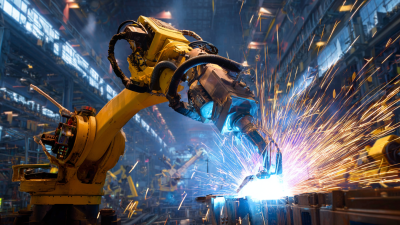
China has become a major sourcing destination for industrial welding automation. Its robotic spot welding manufacturers serve automotive, appliance, metal furniture, and general fabrication buyers. However, choosing a supplier requires more than comparing prices. A capable manufacturer should provide stable weld quality, repeatable cycle times, and practical after-sales support.
This guide introduces leading Chinese companies and explains how buyers can evaluate them with confidence. It considers robot brands, welding controllers, transformer capacity, fixture design, safety systems, and production data. Factory experience matters. Ask whether the supplier has completed projects similar to yours, not only attractive showroom demonstrations. A real production test should show clean weld nuggets, consistent electrode pressure, and reliable part positioning.
Look closely.
Buyers should also review certifications, quality procedures, spare-parts availability, and technician response times. ISO 9001 certification can support credibility, but it does not replace a careful factory audit. Video calls help, although an on-site inspection often reveals details that documents cannot show. Check cable routing, guarding, maintenance access, and the condition of finished cells.
Cost remains important, but the lowest quotation may hide tooling changes, integration fees, or limited training. Total ownership cost deserves attention. Energy use, electrode replacement, software updates, and downtime can affect the final investment. No shortlist is perfect. Supplier capabilities may change, and published claims require verification. Therefore, buyers should request references, sample weld reports, acceptance criteria, and a clear warranty before signing. This article offers a practical starting point for selecting robotic spot welding partners in China.

China’s robotic spot welding market saw strong automation demand in 2023. Automotive, battery, appliance, and metal fabrication plants sought faster production with fewer manual welders. Buyers focused on measurable output, not impressive brochures.
Key metrics included cycle time, line utilization, electrode life, and weld repeatability. A practical target was stable production across long shifts, with limited unplanned stops.
For buyers comparing top Chinese manufacturers, factory acceptance testing became especially important. Engineers checked weld current, pressure, timing, fixture accuracy, and robot positioning. They also reviewed samples from different steel thicknesses.
A cell might meet a 20-second cycle on paper, yet lose time during part loading or tip dressing. Small delays matter. A two-second loss across hundreds of cycles can reduce daily output noticeably.
Energy use and maintenance also shaped 2023 purchasing decisions. Buyers requested power records, fault histories, spare-parts plans, and remote support procedures. Good suppliers explained failure risks instead of hiding them.
Cable routing, cooling performance, and access around the transformer deserved close inspection. These details often determine real uptime. Some projects still underestimated operator training and fixture changeover time. That was a costly lesson. Reliable procurement required trial welds, production-based calculations, and clear acceptance criteria before shipment.
China’s robotic spot welding manufacturers should be evaluated beyond catalog numbers. A six-axis robot must reach door frames, floor pans, and deep body sections without awkward wrist angles. In production trials, I check reach at the farthest weld point, not only at the cell center. This exposes cable drag, singularity risks, and slow repositioning. A 165 kg payload sounds substantial. However, the calculation must include the welding gun, transformer, cables, mounting plate, and acceleration forces. A heavy gun can reduce practical speed.
Repeatability and production conditions Repeatability of ±0.08 mm is valuable for consistent electrode alignment and weld placement. Yet this figure usually applies under defined laboratory conditions. Heat, fixture movement, floor vibration, and tip wear can change results.
I recommend measuring several hundred movements with a calibrated gauge. Record cold-start and warm-production data. Small deviations matter.
The best evaluations also inspect controller response, maintenance access, programming support, and spare-part availability. During one trial, a robot met its repeatability target but needed slower motion near a crowded fixture. That detail was easy to miss. Buyers should request cycle-time evidence using their actual panel geometry and gun weight. A clear test plan builds trust, while attractive specifications alone do not.
China’s leading robotic spot welding suppliers serve automotive, appliance, and metal fabrication buyers with complete production solutions. Their portfolios commonly include six-axis robots, 20–40 kVA welding guns, and integrated welding cells. The best systems match robot payload, arm reach, gun weight, and sheet thickness before installation. Fit matters.
A reliable supplier should provide weld-force data, transformer specifications, cooling requirements, and cycle-time estimates. Buyers should also inspect electrode access around corners and deep panels. In practical cell design, fixture repeatability often affects quality more than robot speed. Small details matter. Ask for sample welds, recorded current curves, and test reports from similar materials. These documents make technical claims easier to verify.
Experienced Chinese manufacturers can engineer turnkey cells with safety fencing, part-position sensors, programmable controllers, and production monitoring. They may also support offline programming and operator training. However, specifications can look stronger on paper than on the factory floor. A quoted cycle time may exclude loading, inspection, or electrode dressing. That gap deserves attention. Buyers should clarify acceptance criteria, spare-part availability, software access, and remote support before signing. I have seen projects delayed by unclear fixture ownership and missing interface drawings. Better communication would have prevented both problems. A careful site audit, witnessed trial run, and staged approval process can reduce such risks while preserving flexibility for later improvements.
China Top Robotic Spot Welding Manufacturers for Buyers
A 3–5 second welding cycle sounds impressive, but buyers should question the test conditions. Was the figure measured with one weld, a light fixture, or a complete body assembly? In factory evaluations, cycle time often changes after adding part loading, clamp movement, inspection, and safety checks. Ask for a timed demonstration using your actual material, weld points, and fixture weight. A stable 4.5-second cycle may be more valuable than a rare three-second result.
Integration scope deserves equal attention. Confirm whether the supplier provides robot programming, welding power sources, fixtures, vision systems, PLC communication, guarding, and operator training. Some quotations include hardware but exclude software tuning and site commissioning. That gap can delay production and increase labor costs. Warranty terms also need practical detail: coverage duration, excluded components, remote response time, technician travel, spare-parts availability, and repair responsibilities. I have seen buyers focus on the warranty length and overlook service exclusions. That was a costly mistake.
Tips: Request a written acceptance test. Record cycle time under production conditions. Ask for two customer references with similar materials. Check whether software updates and refresher training are included. A clear warranty is useful. An impressive promise is not enough. Leave room for review, because early performance can hide maintenance issues.
| Anonymous Manufacturer Profile | Typical Application Focus | Target Cycle Time per Spot-Welding Operation | Robot Configuration | Typical Payload Range | Integration Scope | Fixture and Part-Handling Capability | Welding Power-System Compatibility | Quality and Traceability Functions | Typical Warranty Terms | Buyer Verification Priority |
|---|---|---|---|---|---|---|---|---|---|---|
| Profile A High-Throughput Automotive Cell Builder |
Automotive body-in-white parts, seat frames, battery trays, brackets, and structural sheet-metal assemblies. | 3.0–3.8 seconds per weld point under optimized conditions; total takt time depends on weld count, transfer distance, and loading method. | Six-axis articulated robot with servo-controlled spot-welding gun and positioner integration. | 100–210 kg robot payload; gun payload must be confirmed separately. | Robot programming PLC and HMI Safety fencing Electrical cabinet Line commissioning | Custom dual-station fixtures, pneumatic clamping, automatic part presence detection, and optional pallet transfer. | Transformer-integrated or remote spot-welding systems; medium-frequency direct-current systems are commonly specified for automotive sheet metal. | Weld-current monitoring, electrode-force monitoring, fault alarms, cycle logging, barcode or RFID traceability, and MES interface options. | Commonly 12 months from commissioning or 18 months from shipment, whichever occurs first; consumables and misuse are usually excluded. | Validate demonstrated takt time using the buyer’s actual part, weld schedule, material thickness, and fixture concept. |
| Profile B Flexible Multi-Model Integrator |
Small and medium-batch automotive components, appliances, metal cabinets, and mixed-product production lines. | 3.5–5.0 seconds per weld point in standard layouts; recipe changes and manual loading can increase takt time. | Six-axis robot with quick-change welding-gun or tooling provisions. | 80–165 kg robot payload. | Robot and gun package Changeover design Vision option Safety validation Operator training | Modular fixtures, manual or pneumatic clamps, quick-change nests, poka-yoke features, and optional automatic part identification. | AC or medium-frequency DC spot-welding equipment, subject to required current, duty cycle, electrode force, and material specification. | Recipe management, weld-count records, alarm history, basic current and force monitoring, and optional production dashboards. | Typically 12 months for the complete cell; remote technical support is often included, while on-site service may be chargeable. | Confirm changeover time, fixture repeatability, recipe protection, and the number of product variants included in the quotation. |
| Profile C Cost-Optimized Standard Cell Supplier |
General fabrication, low-to-medium-volume brackets, racks, frames, agricultural equipment, and simple sheet-metal assemblies. | 4.0–5.5 seconds per weld point in a standard single-station arrangement. | Six-axis articulated robot with floor-mounted spot-welding gun and standard positioner. | 50–130 kg robot payload. | Robot cell Basic PLC Safety enclosure Fixture fabrication | Fixed or semi-automatic fixtures, pneumatic clamps, manual loading, and basic part-presence sensors. | Standard AC or medium-frequency welding packages selected according to steel grade, thickness, and required weld nugget size. | Basic weld-cycle counters, fault indication, emergency-stop monitoring, and optional current monitoring. | Commonly 12 months for mechanical and electrical components; robot, welding gun, and controller coverage may follow separate terms. | Check included components carefully, especially welding transformer, gun, chiller, spare electrodes, software licenses, and commissioning labor. |
| Profile D Turnkey Export-Oriented System Integrator |
Export production lines for automotive suppliers, commercial vehicles, construction equipment, and industrial enclosures. | 3.0–4.5 seconds per weld point when the system includes optimized material flow and automated loading. | Multi-robot cell with synchronized robots, servo guns, turntables, or linear tracks. | 100–250 kg per robot, depending on the selected robot and gun arrangement. | Full turnkey engineering Layout and simulation PLC/MES connectivity CE documentation Factory acceptance test Site acceptance test | Automated loading and unloading, transfer units, servo fixtures, part tracking, and multi-station tooling. | Medium-frequency DC systems, servo spot guns, water cooling, electrode dressing, and centralized utility management. | Weld signature monitoring, production traceability, SPC data export, barcode/RFID tracking, remote diagnostics, and maintenance alerts. | Often 12 months after site acceptance; extended warranty and annual maintenance contracts may be negotiated separately. | Review FAT/SAT acceptance criteria, documentation language, spare-parts availability, service response time, and local support coverage. |
| Profile E Custom Heavy-Duty Fabrication Cell Specialist |
Thick-gauge steel components, truck frames, construction machinery, rail-related fabrications, and large welded structures. | 4.5–7.0 seconds per weld point because heavier parts, longer reach, greater clamping force, and slower material handling may be required. | High-payload articulated robot with external axes, positioners, or linear travel tracks. | 150–350 kg robot payload, depending on part weight and tooling design. | Custom engineering Heavy-duty fixtures Positioners Utility design On-site installation | Hydraulic or pneumatic clamping, heavy-duty rotary positioners, adjustable nests, and manual-assisted loading systems. | High-capacity medium-frequency DC or AC systems selected according to material thickness, electrode force, and duty-cycle requirements. | Weld-current and force monitoring, maintenance counters, equipment alarms, and optional digital production records. | Commonly 12 months; high-wear tooling, electrodes, fixtures, and damage caused by excessive loads are normally excluded. | Confirm maximum part mass, fixture deflection, robot reach, electrode access, utility consumption, and structural foundation requirements. |
A reliable robotic spot welding supplier should provide clear compliance evidence, not broad promises. ISO 10218 documentation should cover robot safety, safeguarding, emergency stops, and risk assessment. Buyers should also request records related to GB/T 20867 and confirm their application scope. Requirements can vary by system design, welding process, and installation location.
Factory Acceptance Testing, or FAT, should happen before shipment. Test the complete cell with representative parts, electrodes, fixtures, and production programs. Check cycle time, weld consistency, positioning accuracy, interlocks, alarms, and recovery procedures. Ask for signed test records, videos, calibration details, and unresolved issue lists. A certificate alone is not enough.
Tips: Use a checklist with evidence columns. Require serial-numbered documents. Invite your process engineer to the FAT. Record every deviation, even small ones. Some buyers focus heavily on robot performance but overlook fixture access or cable wear. That is a costly mistake. Service coverage should include commissioning, operator training, spare-part availability, remote support, and defined on-site response times. Confirm who handles software updates and safety changes after installation. A strong supplier explains limitations honestly. Perfect coverage rarely exists, so gaps should be documented before purchase.
© 1999-2025 The Lincoln Electric Company