
Choosing among the top robotic TIG welding machines for global buyers requires more than comparing speed and price. A machine may look impressive in a brochure, yet perform differently on a busy factory floor. This guide examines robotic tig welding systems through practical, production-focused criteria. These include arc stability, torch control, programming, service access, and consumable availability.
Experienced welding engineers usually begin with the workpiece, not the robot brand. Stainless steel tubing, aluminum housings, and thin pressure components demand different control settings. A stable arc matters. So does precise wire feeding. Features such as seam tracking, automatic torch height control, and real-time monitoring can reduce rework around long production shifts. We also consider controller usability, fixture compatibility, safety systems, and integration with existing manufacturing lines.
Regional support can decide the purchase. Buyers should verify training, spare-part delivery, warranty terms, and local technical assistance before signing an order. Certification requirements may also vary by market and application. Published cycle times are useful, but they are not the entire story. Real samples matter more. Request weld demonstrations using similar materials, joint designs, and production speeds.
No single system wins every comparison. That is the honest part. Some advanced machines may offer excellent precision but require expensive integration. Others provide simpler operation and easier maintenance, though with fewer automation features. This overview highlights reliable options while recognizing those trade-offs. The final choice should match measurable production needs, qualified operators, and long-term service confidence.
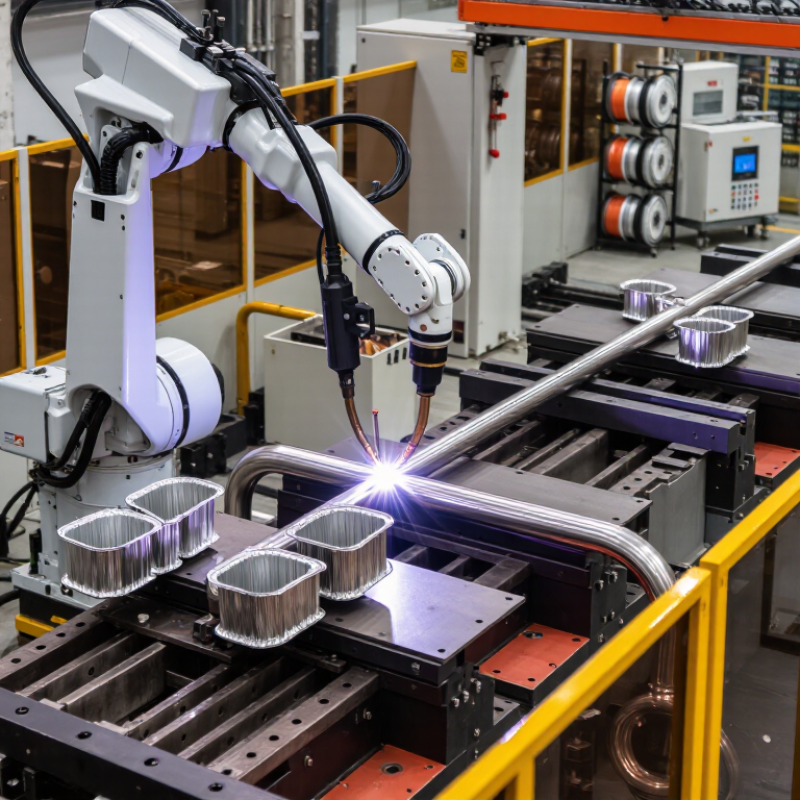
Robotic TIG welding machines are judged by more than travel speed. Process 141 demands controlled tungsten positioning, stable arc length, and clean shielding gas coverage. A robotic torch should hold the tungsten precisely during every programmed movement. Even a small angle change can alter penetration and bead width.
In practical shop trials, operators should inspect torch calibration before testing production parts. The tungsten tip needs consistent grinding, correct extension, and reliable clamping. Joint fit-up also matters. A robot cannot fully correct uneven gaps or contaminated surfaces. ISO 4063 process 141 identifies the TIG method, but it does not guarantee weld quality by itself. Parameters, material preparation, and inspection still require skilled judgment. I have seen accurate robots produce weak welds after poor gas-flow adjustment. That result is easy to overlook.
Tips: Check TCP accuracy with a repeatable gauge. Keep the tungsten centered. Measure shielding gas at the torch, not only at the regulator. Record current, travel speed, arc length, and tungsten extension for each trial. Leave room for revision. Real components rarely match ideal drawings perfectly. Short test welds often reveal problems earlier than full production runs. Also review access, cable routing, and maintenance support before purchasing equipment. A technically capable machine may still be difficult to operate in a crowded fabrication cell.
Top robotic TIG welding machines should be compared by working envelope, not brochure speed. The International Federation of Robotics reported 541,302 industrial robot installations in 2023. That scale reflects strong automation demand, but it also exposes a common mistake: selecting payload before checking arc reach. For medium assemblies, a reach near 1,400–1,800 mm can reduce repositioning. A 6–10 kg payload usually supports a torch, cable package, and sensing equipment. Heavy external hoses can consume capacity quickly.
Six-axis repeatability deserves closer attention. ISO 9283 evaluates pose accuracy and repeatability under defined conditions, not every real welding disturbance. Look for repeatability near ±0.05 mm, then test it with the actual torch, heat, and fixture. Small errors become visible on long fillet welds. They can widen the arc gap and increase rework. Field trials matter more than a perfect factory number. I would record TCP drift after several hours, because thermal expansion is easy to underestimate.
The IFR World Robotics 2024 data also shows a global operational stock exceeding 4.2 million industrial robots. Buyers therefore need maintainable systems, not only impressive specifications. Compare cable routing, torch access, payload at full extension, and software recovery time. A compact arm may reach the joint, yet lose stiffness at maximum stretch. That detail is often missed.
For precision TIG work, ±0.08 mm robot repeatability is a useful benchmark, not a complete promise. It means the robot can return closely to the same programmed point under controlled conditions. It does not guarantee perfect weld placement. Fixture movement, torch wear, heat distortion, and operator setup still affect results.
Seam-tracking capability adds another layer of control. A laser or touch sensor can detect joint position before and during welding. This helps correct minor gaps, curved profiles, and inconsistent part loading.
Buyers should request tests using their actual material, joint design, and welding speed. Examine arc stability, tracking response, and bead width under changing conditions.
Short sample runs can reveal more than polished demonstrations. They may also expose limitations.
Reliable evaluation includes calibration records, repeatability tests, and maintenance access. Ask whether the stated ±0.08 mm value applies to the full working envelope or only a small test area. That distinction matters. Operators should also review sensor cleaning, cable routing, and software adjustment procedures. A capable machine still depends on disciplined setup. I have found that rushed fixturing can undermine excellent robot performance. The specification may be right, but the production result can still disappoint.
For robotic TIG welding, ISO 10218 safety evidence should be part of your purchasing checklist. Ask for the robot cell’s risk assessment, safeguarding layout, emergency-stop tests, and operator access controls. Check whether the documentation covers the complete system, not only the robot arm. A TIG cell also needs protection from arc radiation, hot metal, fumes, and unexpected torch movement. Inspect the teach pendant, interlocks, cable routing, and maintenance access. Request test records with dates, signatures, and corrective actions.
ISO 3834 focuses on welding quality management. Confirm that the supplier has defined welding procedures, qualified operators, controlled filler materials, and suitable inspection methods. Review calibration records for power sources, wire feeders, gas flowmeters, and measurement equipment. Traceability should connect each weld to its program, material batch, operator, and inspection result. For critical assemblies, ask how defects are recorded and repaired. Photos of sample welds are useful, but they cannot replace documented process control.
During factory audits, buyers sometimes accept attractive weld samples too quickly. That is risky. A clean bead may hide weak traceability or unstable shielding gas control. Check actual production records, not prepared demonstrations only. Certificates can also have limited scope, expired dates, or unclear issuing bodies. I would leave room for improvement here: some suppliers meet the standards on paper, yet their daily discipline remains inconsistent. Verify training logs, internal audits, software backups, and after-sales safety support before approving the machine.
Top Robotic TIG Welding Machines for Global Buyers
For global buyers, robotic TIG cost begins beyond the purchase price. Duty cycle shows how long the system can weld before cooling. A machine rated at 60% may perform differently under heavy current and high ambient heat. Compare ratings only when amperage, temperature, and test standards match. Otherwise, the spreadsheet misleads. Energy use deserves equal attention. Record welding current, idle time, cooling demand, and gas consumption during real shifts. Efficient arc control and sleep modes can reduce waste, but savings depend on production patterns.
A realistic service-life model includes torch wear, cable replacement, filter cleaning, calibration, and software support. Sealed cable routing, accessible filters, and stable calibration can reduce unplanned downtime. Preventive maintenance may seem minor beside the purchase price. Repair delays are expensive. Ask for documented maintenance intervals and realistic parts pricing. Include fixtures, consumables, operator training, and commissioning costs. The imperfect part is forecasting failure. A conservative reserve is safer than optimistic calculations.
Global support can determine whether a machine earns money or waits for parts. Check regional technicians, response times, spare-part warehouses, and remote diagnostic capability. Confirm manuals, training materials, electrical compatibility, and local service coverage before ordering. Remote assistance helps, but it cannot replace skilled onsite work. Buyers should also examine warranty exclusions and shipping responsibilities. A lower-priced machine may become costly when a specialized cable travels across borders. That calculation needs factory data, not optimistic estimates.
Total-cost benchmarks: duty cycle, energy use, service life, and global support response
The benchmark compares common industrial machine classes rather than brands. Higher-duty systems generally provide longer continuous operation and service life, but they also require more electrical energy. Energy figures represent estimated input consumption during active arc time; service life assumes scheduled maintenance and normal industrial use. Global support response indicates a practical target for remote technical assistance and parts coordination, not a guaranteed service level.
© 1999-2025 The Lincoln Electric Company