

Top Industrial Automation Solutions Suppliers in China
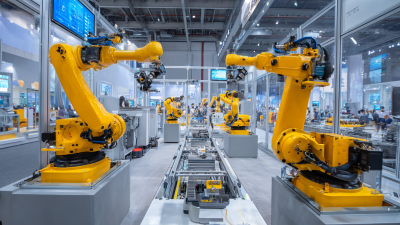
China has become a critical testing ground for industrial automation solutions. In factories across Guangdong, Jiangsu, and Zhejiang, robotic arms handle welding, assembly, packaging, and inspection beside human operators. The scale is difficult to ignore. According to the International Federation of Robotics’ World Robotics 2024 report, China installed 276,288 industrial robots in 2023. That represented more than half of global installations, which reached 541,302 units.
The market is not only about robot quantities. Strong suppliers increasingly combine motion control, machine vision, programmable logic controllers, digital twins, and industrial cybersecurity. Their real value appears on the factory floor. A vision camera rejects a scratched component. A sensor warns engineers before a motor overheats. A cloud dashboard reveals an unexpected production delay. Small details matter.
“China is by far the world’s largest robot market,” said Marina Bill, former President of the International Federation of Robotics, in commentary linked to the World Robotics 2024 findings. “More than half of all newly installed robots worldwide were installed in China.” Her observation gives this supplier review useful context, but it does not settle every purchasing decision. Scale can hide differences in integration quality, software openness, maintenance response, and training support.
That is the difficult part. A lower initial price may create higher downtime later. Some suppliers publish impressive specifications, yet provide limited evidence from comparable factories. This outline therefore examines leading Chinese industrial automation solutions suppliers through measurable capabilities, application experience, certification, after-sales service, and customer reliability. The evidence will not always be perfect. That limitation deserves attention.
Definition and Scope of Industrial Automation Solutions in China
Top Industrial Automation Solutions Suppliers in China
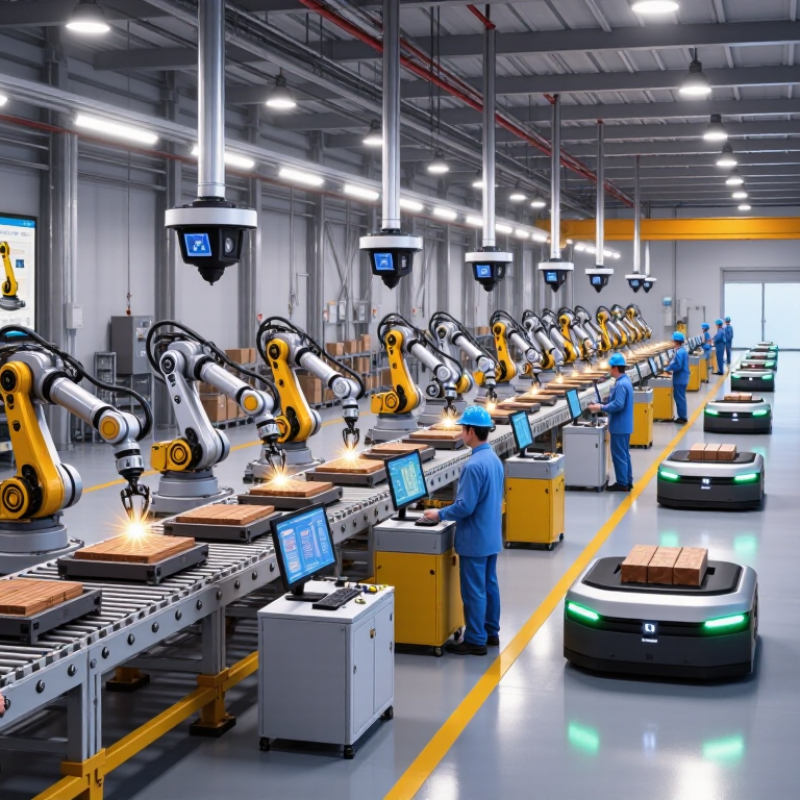
Industrial automation solutions in China refer to integrated technologies that control, monitor, and improve industrial production. They may include sensors, programmable controllers, servo drives, robots, machine vision, industrial networks, and supervisory software. The scope extends beyond equipment supply. It also covers system design, installation, commissioning, operator training, maintenance, and production data management.
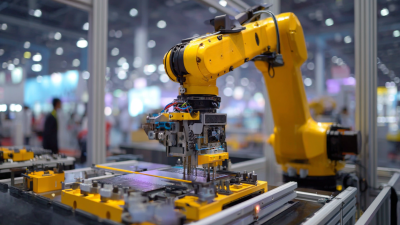
In a typical workshop, sensors detect a part on a conveyor, while a controller adjusts motion within milliseconds. A vision system can check surface defects before packaging. Supervisory software then records output, downtime, and energy use. Suppliers may serve automotive, electronics, food processing, chemicals, logistics, and general manufacturing. Their work can involve a new production line or a careful retrofit of older machinery.
A reliable supplier needs practical engineering experience, not only attractive product lists. Evaluation should include electrical design, software integration, safety controls, cybersecurity, spare parts, and local service capacity. Compatibility matters when several systems must exchange data. A low initial price can become expensive after repeated stoppages. The boundary between automation equipment and full industrial solutions is not always clear. Some projects still depend too heavily on manual judgment. That weakness deserves honest review. Field testing, documented performance, and measurable maintenance response provide stronger evidence than promotional claims.
| Solution Category | Definition | Typical Industrial Scope in China | Primary Control or Data Layer | Typical Deliverables | Relevant Standards or Protocols | Common Evaluation Metrics |
|---|---|---|---|---|---|---|
| PLC-Based Control Systems | Programmable control systems used to monitor inputs, execute logic, and control machines or production lines in real time. | Discrete manufacturing Packaging Material handling Process skids | Field-control and machine-control layer. | Control-panel design, PLC programming, HMI configuration, electrical drawings, commissioning, and operator training. | IEC 61131-3; IEC 60204-1; GB/T 5226.1-2019; Ethernet-based industrial communication. | Cycle time, availability, I/O capacity, program maintainability, and commissioning time. |
| SCADA Systems | Supervisory systems that collect operational data, display process conditions, manage alarms, and support centralized monitoring. | Water and wastewater Utilities Energy Multi-line factories | Supervisory and operations-management layer. | Process graphics, alarm management, historical databases, reports, user permissions, remote monitoring, and system integration. | OPC UA; Modbus TCP; IEC 62443 cybersecurity principles; ISA-18.2 alarm-management concepts. | Data availability, alarm response, historian coverage, user access control, and system uptime. |
| Distributed Control Systems | Control architecture designed for continuous or batch processes, with control functions distributed across plant areas. | Chemical processing Petrochemical processing Power generation Pharmaceutical production | Process-control, supervisory, and plant-operations layers. | Process control configuration, operator stations, alarm and trend management, batch functions, redundancy, and control-room integration. | IEC 61131-3; IEC 61511 for safety instrumented functions; OPC UA; ISA-88 batch concepts. | Control-loop performance, redundancy, process availability, alarm load, and batch repeatability. |
| Motion Control and Servo Systems | Integrated control of position, speed, torque, and synchronization for machinery with coordinated movement. | Packaging machinery Printing Textile equipment Electronics assembly | Machine-control and motion-control layer. | Servo sizing, axis configuration, trajectory programming, electronic gearing, synchronization, tuning, and acceptance testing. | IEC 61800 series; PLCopen Motion Control; EtherCAT; PROFINET; CANopen. | Position accuracy, repeatability, settling time, maximum speed, synchronization error, and energy consumption. |
| Variable-Frequency Drive Systems | Motor-control systems that regulate motor speed and torque by varying the frequency and voltage supplied to the motor. | Pumps Fans Compressors Conveyors HVAC | Motor and equipment-control layer. | Drive selection, motor parameterization, panel integration, braking configuration, harmonic assessment, and maintenance documentation. | IEC 61800 series; IEC 60529 enclosure ratings; Modbus RTU/TCP; industrial Ethernet protocols. | Speed stability, motor efficiency, overload capability, harmonic distortion, fault response, and energy savings. |
| Industrial Robotics and Flexible Automation | Use of programmable robotic systems, end-effectors, fixtures, and peripheral equipment to automate repeatable physical tasks. | Welding Assembly Palletizing Machine tending Logistics | Machine, cell, and production-line automation layers. | Robot-cell design, tooling, safety assessment, offline or online programming, vision integration, line balancing, and operator training. | ISO 10218-1/-2; ISO/TS 15066 for collaborative applications; ISO 13849-1; GB/T 15706-2012. | Throughput, reach, repeatability, utilization, changeover time, safety performance, and integration time. |
| Machine Vision and Inspection | Automated image acquisition and analysis used for measurement, identification, guidance, and quality inspection. | Electronics Automotive components Packaging Food and beverage | Machine-control and quality-inspection layer. | Lighting design, camera selection, image-processing algorithms, inspection recipes, traceability records, and reject handling. | GigE Vision; GenICam; OPC UA; industrial Ethernet; ISO 9001 quality-management practices. | Detection accuracy, false-reject rate, inspection speed, repeatability, image availability, and traceability coverage. |
| Manufacturing Execution Systems | Software that coordinates production operations between enterprise planning systems and shop-floor control systems. | Production scheduling Quality tracking Electronic work instructions Traceability | Manufacturing-operations and plant-information layer. | Production dispatching, genealogy, work-in-process tracking, quality records, downtime analysis, electronic records, and ERP integration. | ISA-95; ISA-88; OPC UA; relational databases; REST or message-based integration interfaces. | OEE visibility, schedule adherence, genealogy completeness, paper reduction, data latency, and user adoption. |
| Industrial Internet of Things | Connected sensing, edge computing, communication, and analytics used to collect and act on industrial operating data. | Condition monitoring Energy management Remote service Asset management | Connected edge, plant-network, and analytics layers. | Sensor connectivity, gateways, data models, dashboards, edge analytics, cloud or private-platform integration, and data-governance procedures. | MQTT; OPC UA; HTTPS; ISA/IEC 62443; ISO 50001 energy-management concepts. | Data completeness, latency, device coverage, cybersecurity controls, predictive-alert accuracy, and platform availability. |
| Functional Safety Systems | Hardware, software, and protective measures designed to reduce risks to an acceptable level when hazardous conditions occur. | Emergency stopping Guard monitoring Safety interlocking Process shutdown | Independent or integrated safety-control layer. | Risk assessment, safety requirements specification, safety circuits, validation, proof testing, documentation, and operator procedures. | ISO 12100; ISO 13849-1/-2; IEC 62061; IEC 61508; GB/T 16855.1-2018. | Performance level or safety-integrity level, diagnostic coverage, response time, validation completeness, and lifecycle documentation. |
| Electrical Control Panels and Systems Integration | Engineering and assembly of power, control, instrumentation, communication, and protection equipment into an operating automation system. | OEM machinery Factory retrofits Production lines Plant expansion | Electrical distribution, control, instrumentation, and communication layers. | System architecture, electrical schematics, panel fabrication, wiring, software integration, factory acceptance testing, and site acceptance testing. | IEC 60204-1; GB/T 5226.1-2019; IEC 61439; IEC 60529; applicable local electrical codes. | Wiring accuracy, enclosure protection, test-pass rate, documentation quality, installation time, and maintainability. |
| Automation Retrofit and Modernization | Replacement or upgrade of obsolete control, drive, instrumentation, or supervisory equipment while preserving usable plant assets. | Legacy equipment Capacity upgrades Spare-parts risk reduction Energy improvement | Existing plant-control and modernization layers. | Site survey, migration plan, hardware replacement, software conversion, interface adaptation, staged commissioning, and operator retraining. | IEC 61131-3; IEC 60204-1; OPC UA; Modbus; IEC 62443 security practices. | Downtime avoided, migration accuracy, production recovery time, compatibility, lifecycle support, and return on investment. |
| Lifecycle Service and Technical Support | Post-deployment services that maintain system performance, availability, safety, cybersecurity, and operational capability. | Preventive maintenance Troubleshooting Spare-parts planning Training | All automation layers throughout the operating lifecycle. | Remote assistance, on-site support, backup management, preventive maintenance, cybersecurity updates, spare-parts strategy, and training. | ISO 9001; IEC 62443; equipment-specific maintenance procedures; documented change-management practices. | Response time, mean time to repair, first-time fix rate, spare-parts availability, training completion, and service-level compliance. |
Related Posts
-
How to Choose Industrial Automation Solutions in 2026?
-
How to Choose the Best Industrial Automation Solutions for Your Business Needs
-

Top Industrial Automation Solutions Driving 2026 Innovations?
-
Unlocking Growth: Industrial Automation Solutions at China's 138th Canton Fair 2025
-
Exploring Industrial Automation Solutions at the 138th Canton Fair China 2025 Industry Insights
-
Exploring Industrial Automation Solutions at the 138th Canton Fair 2025 Insights and Innovations