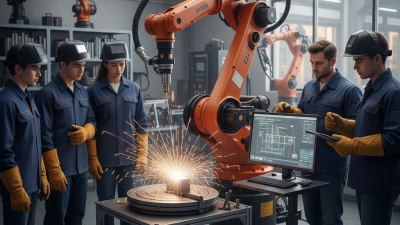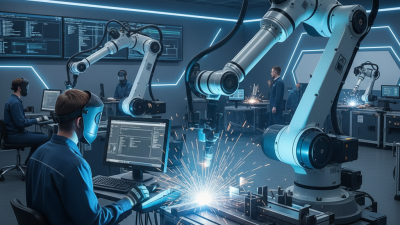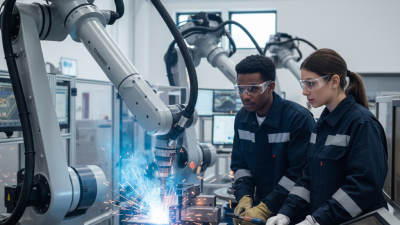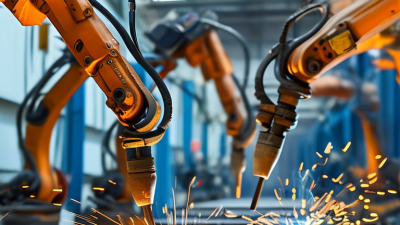

China has become an important destination for industrial robotics training and welding technology. Its providers serve manufacturers, technical schools, and international learners. A well-designed robotic welding course should offer more than classroom theory. It should connect programming skills with real production conditions.
This guide examines ten notable robotic welding course providers in China. The comparison considers curriculum depth, instructor experience, workshop equipment, certification practices, and after-training support. Learners may encounter ABB, FANUC, Yaskawa, or locally developed robotic systems. They may also practice torch calibration, seam tracking, fixture setup, and basic fault diagnosis. These details matter on a busy factory floor.
Not every provider fits every learner.
Some programs focus on operator skills. Others emphasize integration, simulation, or engineering management. Course quality can also vary between advertised content and actual workshop time. That difference deserves careful attention. A modern training room may look impressive, yet limited hands-on practice can reduce confidence.
The providers discussed here are assessed through practical and professional criteria. These include safety procedures, instructor qualifications, equipment availability, project realism, and learner feedback. Reliable training should explain why a weld fails, not merely show which button to press. It should also respect workplace safety and responsible industrial practices.
This list is not a permanent ranking. Training facilities, software versions, and teaching teams can change. Readers should verify current schedules, language support, fees, and certification details before enrolling. The strongest choice is usually the provider matching a learner’s skill level, production goals, and available time.
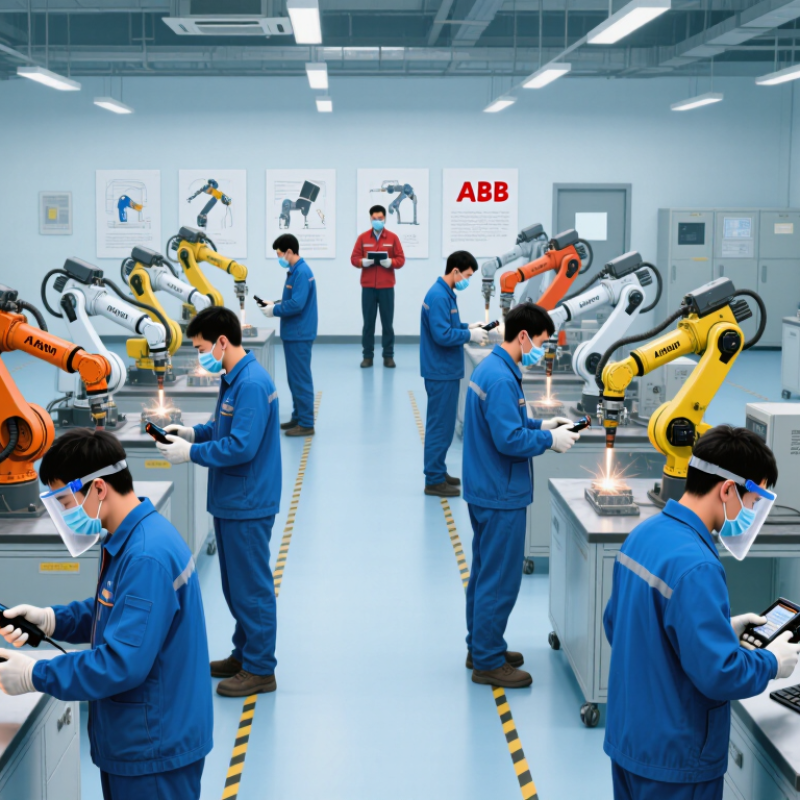
Robotic welding courses in China combine welding practice, robot operation, programming, and production safety. They are not limited to pressing start and stop buttons. A complete course usually covers torch positioning, welding parameters, fixture alignment, sensor use, error diagnosis, and basic maintenance. Trainees may program a six-axis robot beside a steel frame, then inspect bead width and penetration.
The market need is substantial. The International Federation of Robotics reported 276,288 industrial robot installations in China during 2023, representing about 51% of global installations. Its World Robotics 2024 report also recorded 470 robots per 10,000 manufacturing employees in China.
These figures suggest rising demand for practical operators, technicians, and process engineers. However, robot density does not prove that training quality is consistent.
Within this scope, courses should include risk assessment, safeguarding, emergency procedures, and standards-based integration. ISO 10218 addresses industrial robot safety, while ISO/TS 15066 provides guidance for collaborative robot applications. Strong programs use real fixtures, welding coupons, digital simulation, and measurable tests.
They should assess arc stability, cycle time, weld appearance, and rework rates.
Some training remains too classroom-focused. That weakness deserves honest attention.
A useful provider comparison should examine instructor experience, laboratory hours, equipment access, assessment records, and post-course technical support. Naming the top ten requires transparent criteria, not popularity alone.
Evaluating China’s top robotic welding course providers requires more than comparing tuition and classroom hours. Strong programs employ instructors with documented experience on factory welding lines. Their expertise should cover robot programming, fixture setup, weld inspection, troubleshooting, and production planning. Ask whether instructors still understand real shop-floor constraints. Theory alone is not enough.
Training facilities should include industrial robots, positioners, welding power sources, sensors, and realistic metal assemblies.
Watch the arc. A useful course lets learners adjust travel speed, torch angle, wire feed, and shielding gas settings.
It should also teach risk assessment, machine guarding, electrical safety, and approved operating procedures.
Transparent providers explain equipment age, class size, practice hours, and assessment methods.
Reliable courses measure practical performance rather than attendance. Look for documented projects, instructor feedback, skill tests, and certificates with clear evaluation standards. Independent reviews can help, but verify who wrote them and when. Ask for sample lesson plans and graduate outcomes. Be cautious of guaranteed employment claims. They sound attractive, yet employment depends on local demand and individual ability. Language support matters when technical manuals or software interfaces are not fully translated. Post-course assistance, updated programming content, and access to troubleshooting guidance add practical value. Some providers may offer impressive laboratories but limited robot time. That weakness is easy to miss. A careful comparison should record both strengths and gaps before enrollment.
China’s Top 10 robotic welding course providers serve a rapidly expanding manufacturing base. The International Federation of Robotics reported 276,288 industrial robot installations in China during 2023. That represented 51% of global installations. The country’s operational robot stock reached about 1.76 million units. These figures create strong demand for practical welding instruction, not only classroom theory.
Reliable providers usually combine robot programming, arc welding, fixture setup, safety control, and fault diagnosis. Trainees should see real cells, teach pendants, wire feeders, sensors, and uneven workpieces. The best courses include supervised practice and measurable assessments. The IFR also recorded China’s manufacturing robot density at 470 units per 10,000 employees in 2023. Course quality must keep pace.
A credible top-ten selection should examine instructor experience, workshop equipment, curriculum hours, assessment methods, and employer feedback.
Some programs look impressive online but offer limited machine time. That is a weakness worth questioning. Training should also address weld porosity, torch collision, poor grounding, and changing joint positions. Short courses can build confidence, but they may not create production-ready technicians. Providers with transparent outcomes and updated equipment deserve closer attention, even when their marketing appears less polished.
A strong course should begin with welding fundamentals, robot safety, and cell preparation. Trainees learn torch angle, wire speed, current, voltage, and shielding gas control. Practical lessons often use steel coupons, positioners, and simulated production tasks.
Students should adjust programs beside the machine, not only watch demonstrations. Small errors matter. A slightly incorrect torch angle can create porosity, undercut, or uneven penetration.
Effective training combines classroom instruction with supervised lab work. Experienced instructors explain coordinate systems, tool center points, welding paths, and recovery procedures. Some programs use offline programming software before allowing access to live equipment.
This reduces avoidable mistakes, although software practice cannot fully reproduce arc glare, vibration, or fixture distortion. Reliable providers record performance through practical tests, troubleshooting exercises, and attendance-based assessments.
Certification options differ in value and purpose. A completion certificate may confirm participation, while a skills certificate should reflect measured competence. Strong programs explain assessment criteria, retesting rules, course hours, and certificate validity.
They may include written examinations, weld samples, programming tasks, or instructor evaluations. Independent verification is useful when employers compare candidates. However, certificates alone cannot prove production readiness.
I would examine instructor credentials, equipment maintenance, safety records, and graduate feedback before choosing a course. Some published course details remain vague, so asking direct questions is essential.
Selecting the right robotic welding training provider requires more than comparing course prices. The International Federation of Robotics reported 541,302 industrial robots were installed worldwide in 2023. That growth increases demand for operators who understand programming, weld quality, and safe cell recovery. Look for instructors with documented production experience, not only classroom certificates. Ask to inspect the training cell. It should include a controller, welding power source, positioner, fixtures, and realistic fault conditions. A clean demonstration is useful, but it proves little.
Course content should match your actual work. Check whether learners practice torch angle, travel speed, wire feed, arc sensing, fixture checks, and parameter adjustment. Training should also address risk assessment and lockout procedures. ISO 10218 provides widely recognized safety requirements for industrial robot systems. Request measurable outcomes, such as producing an approved sample weld or restoring a stopped cell without guessing. Assessment matters. Attendance alone is weak evidence.
Tips: Compare instructor-to-learner ratios and ask for recent completion data. A small class allows closer correction of hand position and programming errors. Confirm whether refresher support is available after training. Ask how the provider records practical results. Beware of impressive equipment with outdated lessons. I would rather choose a modest lab with current procedures than a polished room lacking real faults. The selection process is imperfect, because published success rates may not reflect shop-floor performance. Speak with two former clients and request specific examples.
A practical comparison framework for evaluating robotic welding training providers in China
| Rank | Anonymous Provider Profile | Best Suited For | Core Training Coverage | Typical Format | Recommended Practical Time | Evidence to Request | Selection Priority |
|---|---|---|---|---|---|---|---|
| 1 | Specialized welding-robot training center | Production welders, robot operators, and maintenance technicians | Robot operation, workpiece positioning, welding parameters, torch alignment, fault recovery, and preventive maintenance | On-site practical training | 60–120 hours | Instructor qualifications, equipment list, course outline, practical assessment method, and safety procedures | Very High |
| 2 | Industrial automation vocational institute | New technicians and vocational learners | Industrial robotics, electrical control, sensors, basic welding, programming logic, and workplace safety | Classroom plus laboratory | 80–160 hours | Laboratory access, instructor-to-student ratio, practical project list, and assessment records | Very High |
| 3 | Technical university continuing-education program | Engineers, supervisors, and process-development staff | Welding process selection, robot programming, automation planning, quality control, and production optimization | Part-time or modular | 40–100 hours | Academic and industrial instructor background, laboratory schedule, and project-based evaluation | High |
| 4 | Equipment-neutral robotics academy | Companies operating more than one robot platform | General robot concepts, coordinate systems, offline programming, troubleshooting, and cell integration | Blended learning | 40–80 hours | Multi-platform curriculum, software access, simulation exercises, and transferable programming methods | High |
| 5 | Enterprise in-house welding academy | Large factories with standardized production processes | Company-specific programs, standard operating procedures, quality checkpoints, and production changeover | On-site customized | 24–80 hours | Customized lesson plan, confidentiality terms, production-cell access, and measurable improvement targets | High |
| 6 | Welding procedure and quality institute | Quality engineers, welding supervisors, and inspectors | Welding procedure control, defect prevention, inspection methods, documentation, and robotic process verification | Theory plus demonstrations | 24–60 hours | Inspection equipment, quality syllabus, sample procedure documents, and competence assessment criteria | Medium-High |
| 7 | Robot-cell integration training provider | System integrators, controls engineers, and commissioning teams | Cell layout, fixtures, safety circuits, external axes, PLC communication, commissioning, and acceptance testing | Project-based workshop | 40–100 hours | Safety validation process, integration case studies, test protocols, and live commissioning exercises | Medium-High |
| 8 | Regional manufacturing skills center | Small and medium-sized manufacturers | Basic robot operation, welding fundamentals, fixture setup, routine fault handling, and safe production practice | Short intensive course | 16–40 hours | Training equipment availability, class size, hands-on percentage, and post-course technical support | Medium-High |
| 9 | Online robotic welding theory provider | Beginners, managers, and pre-training learners | Robot fundamentals, welding terminology, safety concepts, process planning, and production economics | Online self-paced | 10–30 hours | Instructor identity, technical references, knowledge tests, learning objectives, and practical-training pathway | Medium |
| 10 | Maintenance and troubleshooting academy | Maintenance staff and production support teams | Electrical and mechanical checks, alarm diagnosis, calibration, consumable replacement, and recovery procedures | Hands-on technical workshop | 24–60 hours | Fault simulation capability, maintenance manuals, diagnostic exercises, and safety-lockout procedures | Medium-High |
© 1999-2025 The Lincoln Electric Company