
What Are the Top 10 Types of Industrial Robots?

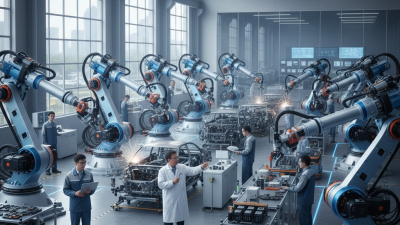
Choosing the right industrial robot begins with understanding how each design moves, handles loads, and fits a production line. This guide examines the top 10 types used across manufacturing, packaging, welding, assembly, inspection, and material handling. It introduces articulated, SCARA, Cartesian, delta, cylindrical, polar, gantry, collaborative, parallel, and mobile robot systems. Each type solves a different operational problem.

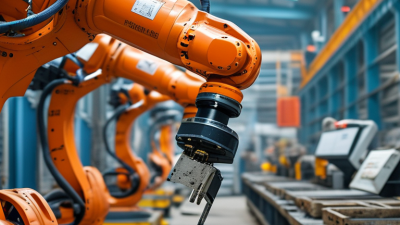
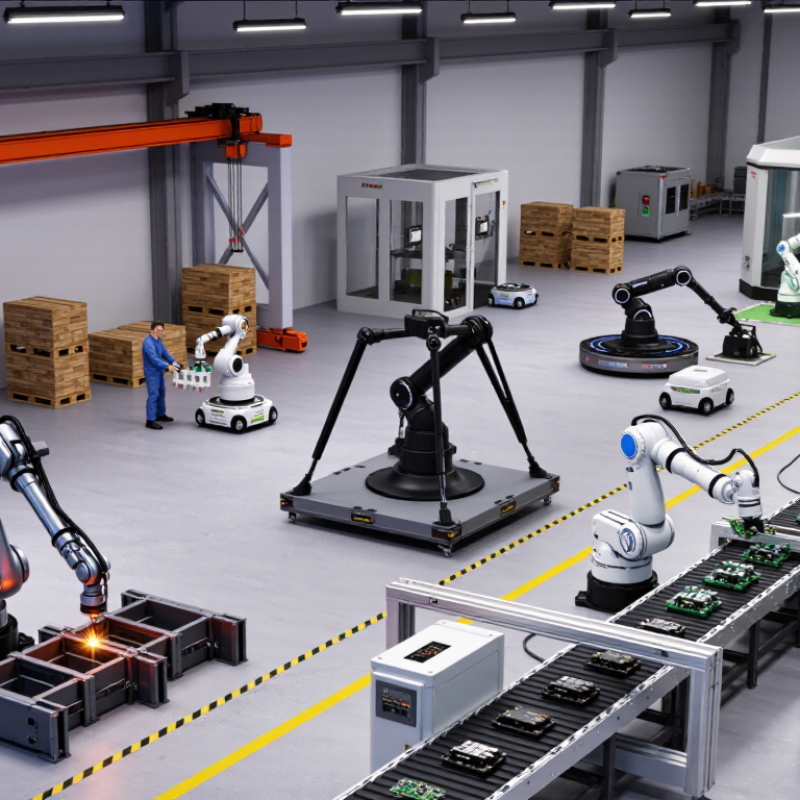
An articulated industrial robot uses rotary joints to reach around fixtures and welding cells. A SCARA robot moves quickly across horizontal workspaces, making it useful for electronic assembly. Delta robots can pick small products at remarkable speed, while Cartesian robots offer predictable linear movement. Gantry systems cover large areas, often above pallets or machining equipment. Collaborative robots add force sensing and flexible deployment, although their safety depends on proper risk assessment and application design. Mobile robots bring navigation into warehouses, but floor conditions and traffic can limit performance.

This is not a universal ranking. Production goals matter more.

The discussion considers payload, reach, repeatability, speed, integration effort, maintenance, and operator safety. These criteria reflect practical engineering decisions, not marketing claims. Manufacturer specifications should be checked against real cycle tests, tooling weight, and environmental conditions. A robot rated for 10 kilograms may carry less after grippers and cables are installed. That detail is easy to miss. Some classifications also overlap, which can confuse new buyers. The guide therefore explains both the technical differences and the trade-offs behind each choice. Readers can use this foundation to compare robot architectures with greater confidence, while recognizing that no machine replaces careful commissioning, training, and continuous review.
What Are the Top 10 Types of Industrial Robots?

Classify the Top 10 Industrial Robots Using ISO 8373 and IFR Definitions

What Are the Top 10 Types of Industrial Robots?

ISO 8373:2021 defines an industrial robot as an automatically controlled, reprogrammable manipulator with three or more programmable axes. Using this definition and IFR terminology, the ten practical categories are articulated, SCARA, Cartesian, gantry, cylindrical, polar, parallel, delta, collaborative, and mobile industrial robots. Some categories overlap. A gantry robot is usually Cartesian, while a delta robot is a parallel robot. This classification needs care.

Articulated & SCARA Articulated robots use rotary joints, often reaching around fixtures and welding cells. SCARA robots suit fast assembly and pick-and-place tasks.
Cartesian & Gantry Cartesian and gantry robots move along linear axes, offering predictable accuracy.

Cylindrical robots work within a cylindrical envelope. Polar robots use rotary and linear movements. Parallel and delta robots are lightweight and extremely fast. Collaborative robots are designed for monitored human interaction, not unlimited contact. Mobile industrial robots add autonomous movement, but their status depends on the complete system design.

541,302
new industrial robot installations worldwide in 2023.
4.2 million
operational stock exceeded this figure.

The IFR World Robotics 2024 report recorded 541,302 new industrial robot installations worldwide in 2023. The operational stock exceeded 4.2 million units. These figures show broad adoption, yet they do not prove that one robot type fits every factory.

Tips: Check payload at full reach, not only the catalog maximum. Measure cycle time with the real gripper, product, and safety limits. Also confirm whether “collaborative” describes the robot or the validated application. That distinction is often missed.

Examine Types 1–3: Articulated, SCARA, and Cartesian Robots

What Are the Top 10 Types of Industrial Robots?

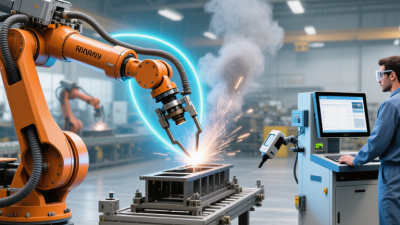
Articulated robots use linked rotary joints, much like a human arm. Six-axis models can reach around fixtures, approach angled surfaces, and change tool orientation quickly. In production cells, they often handle welding, machine tending, painting, and complex assembly. Their flexibility is valuable, but programming takes practice. A small calibration error can place the tool several millimeters away from its intended path. That detail matters near tight tolerances.

SCARA robots are built for fast horizontal movement and controlled vertical insertion. Their arm stays relatively rigid during pressing, fastening, and electronic assembly. They work well when parts arrive in a repeatable pattern. I have seen cycle times improve when feeding systems are aligned carefully. Yet SCARA robots are not universal. They become less suitable when the workpiece needs frequent changes in angle or deep three-dimensional access.

Cartesian robots move along straight X, Y, and Z axes. Their structure is easy to visualize, measure, and troubleshoot. A gantry system can place a heavy load over a large rectangular workspace. This makes it useful for packaging, dispensing, cutting, and material transfer. It also needs a clear frame and enough floor or ceiling space. My early preference for simple Cartesian layouts was sometimes too optimistic; cable routing and frame stiffness can create unexpected maintenance problems. Careful testing remains essential.

What Are the Top 10 Types of Industrial Robots? - Examine Types 1–3: Articulated, SCARA, and Cartesian Robots

The specifications below are typical industry ranges rather than fixed limits. Actual performance depends on robot size, configuration, tooling, payload, motion profile, and operating conditions.
Comparison Dimension Articulated Robots SCARA Robots Cartesian Robots
Basic Structure Serial arm with rotary joints connected in a chain. Two parallel rotary joints for horizontal motion, plus vertical motion; many models also include wrist rotation. Linear axes arranged along the X, Y, and Z directions, usually in a gantry or frame structure.
Typical Number of Axes 4 to 7 axes; six-axis configurations are common for general-purpose work. Usually 4 axes. Typically 3 axes; additional rotary or linear axes can be added when required.
Primary Motion Combined rotary motion around multiple joints. Fast planar X-Y movement with vertical Z movement and optional end-effector rotation. Independent linear movement along orthogonal axes.
Typical Reach or Working Envelope Approximately 0.5 to 3.0 meters for many general industrial models; larger systems are available. Approximately 0.2 to 1.2 meters of arm reach, depending on configuration. Customizable by axis length; working envelopes commonly range from small machine cells to several meters.
Typical Payload Range Approximately 5 to 500 kg for many production applications; specialized heavy-duty systems can carry more. Approximately 1 to 50 kg, with most high-speed applications using lighter payloads. Approximately 1 to 1,000 kg or more, depending on the frame, drive system, and axis arrangement.
Typical Repeatability Approximately ±0.02 to ±0.10 mm for many industrial models. Approximately ±0.005 to ±0.02 mm, making SCARA robots suitable for precise assembly and handling. Approximately ±0.02 to ±0.10 mm; precision depends strongly on guideways, screw drives, and system calibration.
Speed Characteristics Good overall speed, but acceleration and cycle time vary with reach, payload, and the number of coordinated axes. Very high horizontal acceleration and short cycle times, particularly for repetitive pick-and-place tasks. High and predictable linear-axis speed; acceleration is influenced by axis length and transported mass.
Flexibility Very high; can approach workpieces from many directions and handle complex orientations. Moderate; highly effective for planar work but less suitable for tasks requiring complex three-dimensional orientation. Moderate; motion is highly programmable, but the fixed linear geometry limits approach angles unless extra axes are added.
Common Applications Welding, painting, machine tending, material handling, assembly, palletizing, and complex multi-axis processing. High-speed assembly, electronic component handling, packaging, sorting, dispensing, and small-part pick-and-place. 3D printing, machining, packaging, dispensing, cutting, gantry handling, automated storage, and large-area positioning.
Main Advantages Broad workspace, excellent orientation control, high payload options, and strong adaptability to complex production cells. High speed, strong repeatability, compact footprint, and efficient performance for horizontal assembly operations. Simple coordinate control, scalable dimensions, rigid structure, straightforward maintenance, and efficient use of rectangular workspaces.
Main Limitations More complex programming and maintenance; joint positioning errors can accumulate through the arm. Limited three-dimensional orientation and generally lower payload capacity than larger articulated or gantry systems. Requires substantial frame space; less naturally suited to curved paths or workpieces requiring many approach angles.
Best Fit Flexible production environments with varied parts, complex paths, or demanding tool orientation requirements. High-volume, repetitive operations requiring rapid and precise movement over a relatively compact area. Applications needing long travel, predictable linear motion, heavy loads, or a customized rectangular workspace.

Compare Types 4–6: Delta, Cylindrical, and Polar Robots by Motion

Among the top ten industrial robot types, delta, cylindrical, and polar robots stand apart through their motion patterns. Industrial robot selection often starts with geometry, not marketing. The International Federation of Robotics reported about 541,000 new industrial robot installations worldwide in 2023. That scale makes motion efficiency increasingly important.

Delta robots use parallel arms and a fixed base. Their end effector moves rapidly across a shallow, dome-shaped workspace. This suits high-speed picking, sorting, and lightweight packaging. They offer excellent repeatability, but their vertical reach and payload remain limited. Cylindrical robots combine rotary movement with linear travel. Their workspace resembles a cylinder around the base. They can serve machine tending, assembly, and material handling where access is mostly horizontal. The design is practical. It is not always flexible.

Polar robots use rotary joints and a telescoping arm. Their spherical workspace can reach around obstacles and into deep areas. This makes them useful for casting, welding, and large-part handling. However, calibration and collision control can be less straightforward than expected. In plant assessments, floor space and access often decide the result, not speed alone. That detail is easy to miss.

The IFR’s World Robotics 2024 report estimates more than 4.2 million industrial robots operated globally by the end of 2023. Yet these figures do not reveal which motion type fits a specific cell. A delta robot may win a cycle-time test, while a cylindrical robot may reduce integration effort. The “best” choice is rarely absolute. It depends on payload, reach, cycle time, tooling, and maintenance skills. My own caution is simple: published specifications describe potential, not guaranteed production performance.

Assess Types 7–8: Gantry and Collaborative Robots Under ISO/TS 15066

What Are the Top 10 Types of Industrial Robots?

Assess Types 7–8: Gantry and Collaborative Robots Under ISO/TS 15066

Gantry robots use overhead rails and coordinated linear axes to move loads across large workspaces. Their motion can resemble a ceiling-mounted bridge. They suit palletizing, machining, inspection, and material transfer. A gantry system may improve floor space and positioning accuracy, but its size creates serious hazards. A moving crossbeam can strike a person before anyone reacts. Physical guarding, access control, emergency stops, and validated safety distances remain essential.

Collaborative robots are designed for controlled interaction with people. They may support hand guiding, speed and separation monitoring, or power and force limiting. ISO/TS 15066 provides guidance for collaborative applications, including limits related to contact force and pressure. It does not automatically make a robot safe. The complete application requires risk assessment, suitable tooling, verified stopping performance, and clear operating procedures.

Details matter.

For example, a soft gripper may reduce one hazard while a sharp workpiece creates another. A slow robot can still cause injury near the elbow or head. Operators should test real production conditions, not only ideal demonstrations. We have seen layouts change after reviewing reach zones, blind corners, and unexpected restart behavior. That practical review is valuable, although it is easy to underestimate small gaps in protection. Gantry and collaborative systems both require documented validation, trained personnel, and ongoing inspection after tooling, software, or workflow changes.

Evaluate Types 9–10: Mobile and Hybrid Robots Against IFR’s 4.28M Stock

Mobile and hybrid robots deserve a careful place in the top ten industrial robot types. The International Federation of Robotics reported 4.28 million operational industrial robots worldwide in 2023. That figure mainly reflects installed industrial systems, often working inside fixed cells. Mobile robots may not fit the same counting boundary. The comparison is imperfect.

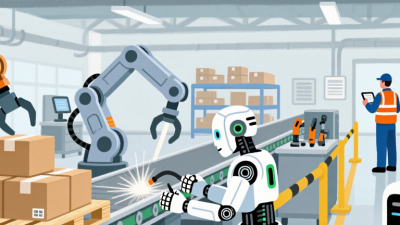
Mobile robots carry parts, tools, or materials across changing factory routes. In a real facility, they reduce repeated walking and can connect storage areas with production lines. Their value depends on navigation accuracy, floor conditions, traffic control, and charging routines. A small obstacle can interrupt an entire shift. That detail is easy to underestimate.

Hybrid robots combine mobility with manipulation, such as an arm mounted on an autonomous platform. They can inspect large structures, load machines, or reach several workstations without separate cells. However, mobility adds safety zones, sensor checks, communication demands, and maintenance points. I have seen productivity estimates fail when travel time was ignored. Hybrid systems also need clearer performance metrics than fixed robots. Counting them against 4.28 million units may create a misleading comparison, especially when one platform replaces several traditional stations. The stock figure remains a useful industry benchmark, but not a complete measure of robotic capability.